

All Content
Welcome to the Institute for the Study of States of Exception (ISSE) main content page, a single source for all posts from the Institute, including commentary on global events, book reviews, academic literature, links to our podcasts, and additional resources. Check back regularly for more content from us.
“Sovereign is he who decides the exception.”
— Carl Schmitt (Political Theology: Four Chapters on the Concept of Sovereignty, 1922)
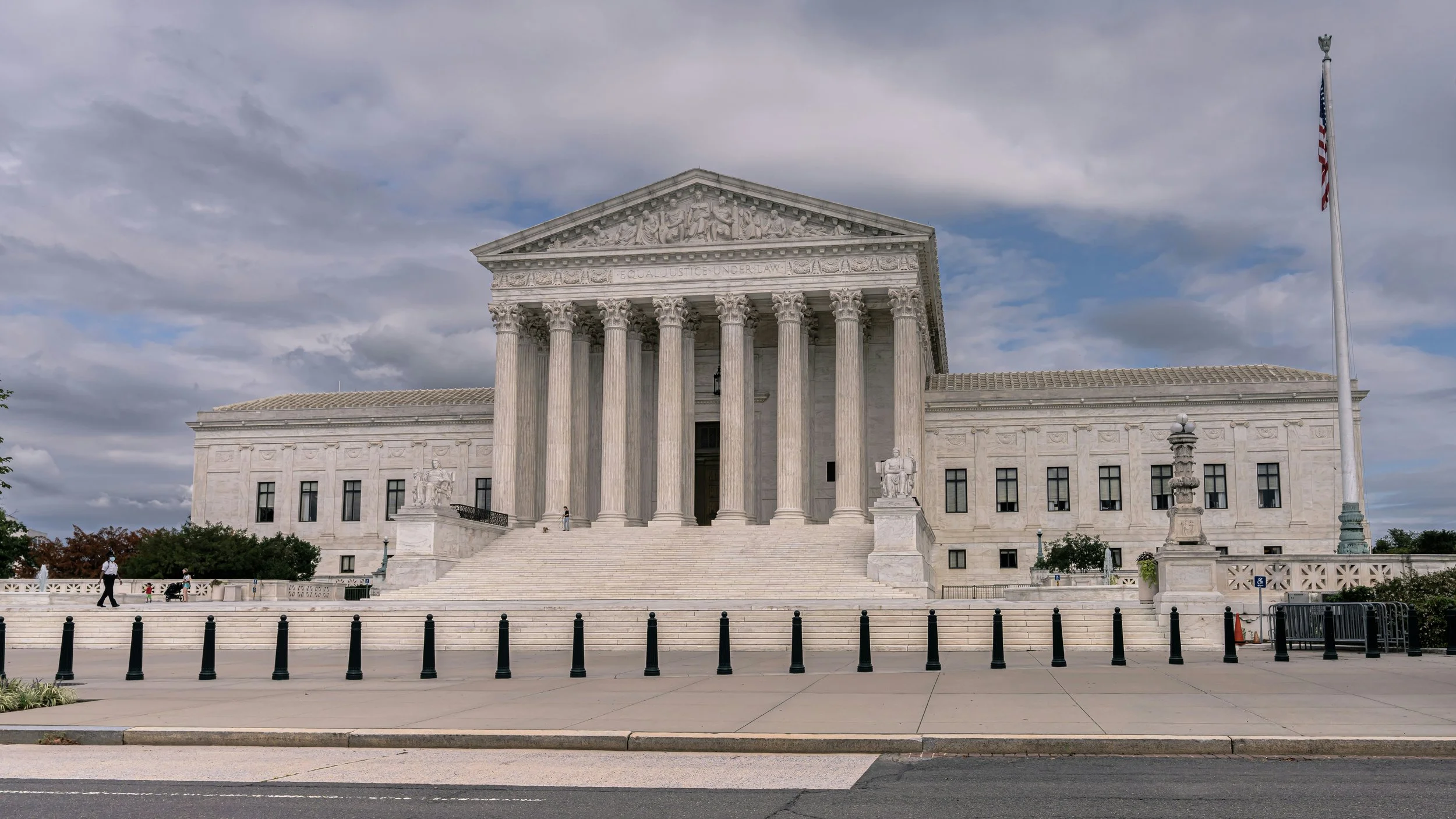
Emergency Tariffs and the Supreme Court: The IEEPA Decision
On February 20, 2026, the Supreme Court issued its decision in the consolidated tariffs cases, Learning Resources, Inc. v. Trump and Trump v. V.O.S. Selections, Inc., holding 6–3 that the International Emergency Economic Powers Act (IEEPA) does not authorize the President to impose tariffs. Writing for the majority, Chief Justice Roberts concluded that although IEEPA grants broad authority to regulate economic transactions during declared national emergencies, it does not include the distinct power to levy tariffs or duties — authorities constitutionally assigned to Congress under Article I. The Court further held that the Major Questions Doctrine applies even in the context of emergency statutes addressing foreign affairs, and that Congress must speak clearly if it intends to delegate tariff-setting authority of such vast economic and political significance. Because IEEPA contains no explicit reference to tariffs or duties, the challenged “Liberation Day” and reciprocal tariffs were deemed unlawful.
The IEEPA Decision and the Architecture of Emergency Governance: A Partial Check on Executive Power - ISSE Analysis
The Supreme Court’s decision in Learning Resources, Inc. v. Trump blocks the use of the International Emergency Economic Powers Act to impose tariffs, drawing an important statutory boundary around executive emergency authority. But the ruling turns on textual limits, not on scrutiny of the underlying emergency itself. As a result, while the Court prevented one expansion of presidential power, it left intact the broader architecture through which emergency declarations can accumulate authority over time. The case illustrates a central tension in contemporary governance: judicial intervention may constrain specific statutory overreach, even as the structural normalization of emergency power continues.

Guatemala’s 2026 State of Siege: Crisis, Authority, and the Boundaries of the Ordinary - ISSE Analysis
In January 2026, Guatemala invoked a 30-day state of siege after prison riots and coordinated attacks linked to the transnational gang Barrio 18 left 11 police officers dead. Ratified by Congress, the measure temporarily expanded police and military authority and was followed by a nationwide state of prevention once the siege expired. Government officials reported substantial security gains, including arrests, major drug seizures, and reductions in extortion and homicide. This analysis considers the episode through the framework of the state of exception, examining how constitutional democracies authorize extraordinary powers in moments of crisis and how those powers, even when formally time-bound, illuminate the delicate line between safeguarding public order and redefining the contours of ordinary law.
The Hidden Nondelegation Issue Raised by Trump v. Slaughter - Lawfare
The Supreme Court’s consideration of Trump v. Slaughter raises more than a dispute over agency removal protections. In the accompanying Lawfare article, Michael R. Dreeben examines whether overruling Humphrey’s Executor might be counterbalanced by renewed limits on congressional delegation. ISSE’s analysis builds on that doctrinal discussion to explore a related structural question: how weakening agency independence could reshape the architecture of emergency governance. Together, the pieces illuminate how shifts in administrative design may alter not only separation-of-powers doctrine, but also the institutional channels through which exceptional authority is exercised.
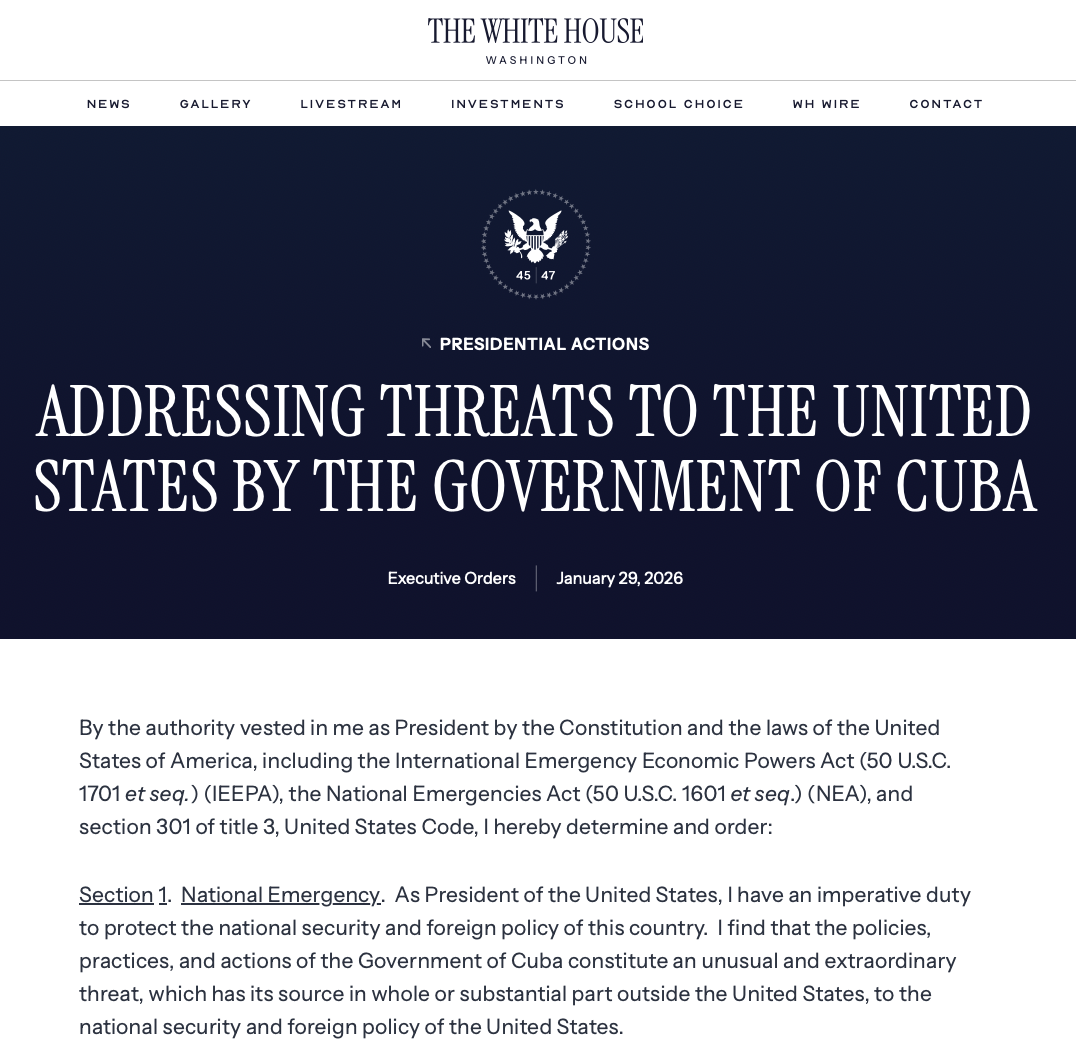
ISSE Explainer: The 2026 U.S. National Emergency Declaration on Cuba
On January 29, 2026, U.S. President Donald J. Trump signed an Executive Order titled “Addressing Threats to the United States by the Government of Cuba,” declaring that the current geopolitical dynamics involving Cuba constitute an “unusual and extraordinary threat” to U.S. national security and foreign policy, and as such further constitute a formal national emergency under the National Emergencies Act (NEA) and the International Emergency Economic Powers Act (IEEPA).
This explainer situates the declaration within the broader framework of U.S. emergency powers, outlining the legal authorities invoked and the mechanisms through which the order is intended to be implemented. ISSE’s analysis focuses on clarifying how this emergency functions in practice, what it enables as a matter of law, and why its invocation matters in the context of the growing normalization of emergency authorities in U.S. governance. The piece is intended to provide readers with a clear, accessible account of the declaration itself and its immediate implications, rather than a normative assessment of U.S.-Cuba policy.
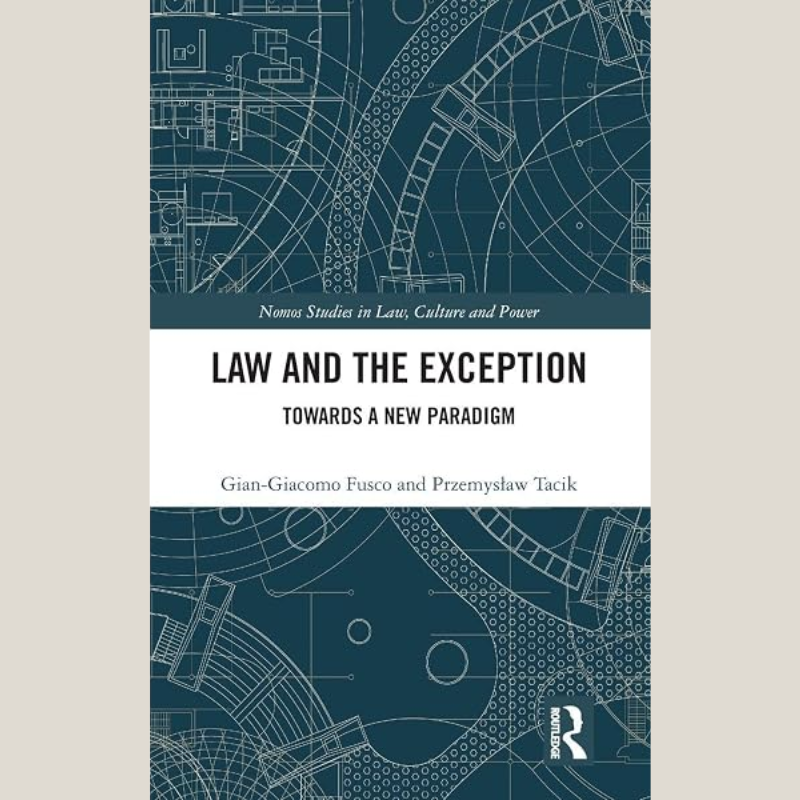
Law and the Exception: Towards a New Paradigm
This book proposes a paradigm shift in the way that ‘the state of exception’–as it is usually named in legal and political theory–is to be understood. Building on the assumption that the exception is a heuristic idea that is still a relevant category for a critical deconstruction of law, this book argues that it needs to be rethought outside the boundaries of its traditional understanding. To this end, the book offers two strategies. First, it develops the ideas of ‘exceptionality’ and ‘exceptionalisation’ in order to grasp how measures, norms and mechanisms that clearly have an exceptional character are no longer confined within the boundaries of classic institutions such as the state of exception, martial law, the state of emergency and so on. As demonstrated recently during the COVID-19 pandemic, legal systems may dissimulate the exceptional as the normal, avoiding the use of formal states of exception and adopting measures that are of exceptional nature. This book maintains that it is necessary to think of ‘exceptionality’ outside of its usual legal footholds. Emergency laws are considered here as part of a more general sphere of exceptionality that must be understood as the product of a process of the accumulation of symbols, practices, notions and images that are only partially expressed through law, despite having long populated the legal imagination. Second, the book offers an analysis of the inner exceptional life of liberal constitutionalism: the subterranean authoritarian drives dissimulated by the rule of law.
This book will interest scholars and researchers in legal and political theory, as well as continental philosophy.
Judicial Limits on Exceptional Executive Power: Two Recent U.S. Court Decisions
While public attention has recently focused on events in Venezuela and the ICE killing of Renee Good in Minneapolis, two court decisions issued shortly before Christmas (one by a federal district court and one by the Supreme Court) warrant closer scrutiny. In each case, the judiciary imposed at least temporary limits on the current administration’s assertion of extraordinary executive authority. Although neither arose from a formally declared state of emergency, both reflect an expansive conception of presidential power in which certain actions are treated as categorically insulated from judicial review.
In this respect, the cases illustrate how exceptional power may be exercised without explicit invocation of emergency authorities, not by suspending the law temporarily, but by asserting that entire domains of executive action lie beyond ordinary legal constraint. This mode of governance closely aligns with the most maximalist contours of unitary executive theory and functions as a de facto state of exception embedded within constitutional interpretation itself.

ISSE Statement on the U.S. Capture of Nicolás Maduro
The U.S. capture of Venezuelan President Nicolás Maduro represents a striking assertion of state power beyond established international norms. Seizing a foreign leader by military force, whether that leader’s legitimacy is disputed or not, without international authorization or lawful justification undermines the basic rules designed to restrain conflict and protect sovereignty, including those set out in the United Nations Charter. Such actions do not occur in isolation; they reflect a broader pattern in which governments increasingly treat legal constraints as optional when exercising power. ISSE examines this episode as an example of how the normalization of exceptional measures erodes accountability and weakens the legal guardrails that underpin both international order and democratic governance.
El Salvador’s State of Exception - “Inside CECOT”
In late December 2025, renewed media attention turned to Centro de Confinamiento del Terrorism (CECOT), El Salvador’s flagship mega-prison, after CBS news executives postponed a 60 Minutes broadcast of an investigative report about the facility, called “Inside CECOT.” While the media controversy itself is newsworthy, the importance of the investigative report highlights another important reality: CECOT is not an anomaly or a temporary security measure, but a central institution of a state of exception that has now governed El Salvador for nearly four uninterrupted years. On December 22, 2025, American journalist Yashar Ali claimed to have obtained a video portion of the postponed investigative report, and published it on his Substack “The Reset.” Ali’s Substack, and the included video portion alleged to be part of the postponed 60 Minutes segment, is included here by ISSE for research and informational purposes only.

Lithuania’s Parliament Declares a State of Emergency Amid Hybrid Threat Concerns
In December 2025, Lithuania declared a state of emergency following repeated airspace incursions by unmanned balloons launched from neighboring Belarus, which authorities described as part of a broader hybrid threat affecting public safety and border security. Notably, the emergency was declared not by executive decree but by Lithuania’s parliament, the Seimas, acting under clear constitutional authority. The declaration is strictly time-limited, subject to legislative oversight, and embedded within ordinary constitutional procedures rather than suspended from them. As democracies increasingly invoke emergency powers in response to unconventional security challenges, Lithuania’s approach offers a contemporary example of how states can confront perceived threats while preserving parliamentary control and guarding against the normalization of exceptional measures.

Declaration of a crime emergency in the District of Columbia
On December 4, 2025, the three judge U.S. Court of Appeals for the District of Columbia Circuit granted the Trump Administrations’s request to halt a lower court judge’s November 20, 2025, order concluding that President Trump’s deployment of 2000 National Guard troops to Washington, D.C., was illegal. The November 20 order had been postponed by the lower court’s judge from coming into effect until December 11, 2025, in order to give the Trump Administration time to appeal the decision. Initially, the D.C. attorney general had filed suit in September over the deployment, following President Trump’s August announcement that he would take over the city’s police department in conjunction with the National Guard deployments. As a result of the December 4, 2025, ruling, this suit filed by the D.C. attorney general will now continue.

ISSE comments on Former JAGs Working Group statement on September 2, 2025 lethal strikes
On November 29, 2025, the Former JAGs Working Group issued a statement concerning the lethal strikes taken by the US Military on September 2, 2025, against a civilian boat allegedly carrying narcotics. The statement, which is linked here, is unequivocal in its conclusion that if the second strike, which targeted two survivors of the initial strike, occurred as was reported by both the Washington Post and CNN, then the giving and execution of the order to kill the survivors constituted a war crime, murder, or both.
From the point of view of ISSE, the September 2 strike that reportedly killed eleven civilians, and subsequent strikes against civilian boats that are reported to have killed over seventy additional civilians, are connected to, and logically flow from, the administration's use of emergency powers.
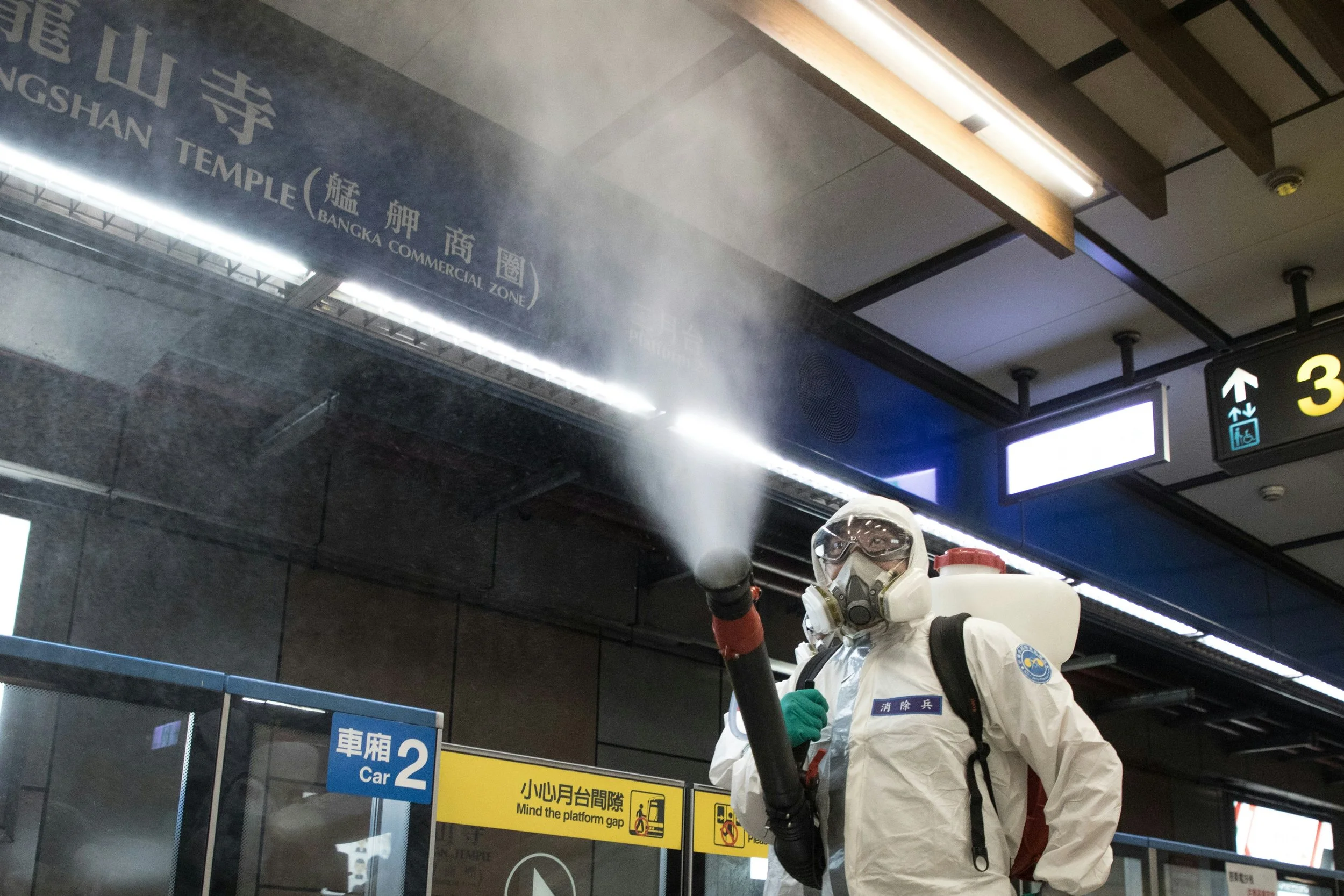
Emergency powers during COVID-19: when democracies stepped outside normal bounds
When COVID-19 swept the world, governments invoked sweeping emergency powers and tools meant for war or catastrophe to restrict movement, control information, and consolidate authority. The pandemic tested the balance between public health and civil liberties, revealing how quickly exceptional emergency powers could become normalized.
The pandemic forced governments to navigate the tension between urgency and accountability. Rapid action saved lives, but emergency governance could further erode trust in institutions where transparency was weak. And once leaders exercised exceptional powers, rolling them back proved politically difficult.

What to look for in the November 5, 2025, oral arguments before the U.S. Supreme Court in the IEEPA tariffs case
Oral arguments are scheduled for November 5, 2025, in V.O.S. Selections, Inc. v. United States, also known as the Tariffs Case or the International Emergency Economic Powers Act (IEEPA) case. The fundamental issue at stake is whether the President has authority under IEEPA’s grant of emergency powers to rewrite the United States tariff schedule. While IEEPA grants the President broad authority to “regulate . . . importation or exportation” of property as necessary to address “unusual and external threat(s)”, IEEPA does not specifically grant the authority to impose tariffs. The ability to impose tariffs has traditionally been viewed as a core aspect of Congress’s Article 1 authority to collect taxes, duties, imposts and excises, and to raise revenue.

Welcome to the Institute.
Greetings! It is with deep humility and a strong sense of purpose that I formally welcome you to the Institute for the Study of States of Exception (ISSE). ISSE is a 501(c)(3) nonprofit organization dedicated to advancing scholarship and dialogue on the misuse and abuse of states of exception worldwide–scenarios when laws or even entire constitutions are suspended under purported emergency circumstances, but in reality are intentionally framed improperly to enable democratic backsliding.
States of Exception: Law, History, Theory
This book addresses the relevance of the state of exception for the analysis of law, while reflecting on the deeper symbolic and jurisprudential significance of the coalescence between law and force.
The concept of the state of exception has become a central topos in political and legal philosophy as well as in critical theory. The theoretical apparatus of the state of exception sharply captures the uneasy relationship between law, life and politics in the contemporary global setting, while also challenging the comforting narratives that uncritically connect democracy with the tradition of the rule of law. Drawing on critical legal theory, continental jurisprudence, political philosophy and history, this book explores the genealogy of the concept of the state of exception and reflects on its legal embodiment in past and present contexts – including Weimar and Nazi Germany, contemporary Europe and Turkey. In doing so, it explores the disruptive force of the exception for legal and political thought, as it recuperates its contemporary critical potential…
Political Theology
Carl Schmitt’s influential treatise, Political Theology (1922), represents a seminal and provocative contribution to political theory, particularly in its exploration of sovereignty, law, and states of exception. It remains a pivotal, yet contentious work for understanding the mechanics of sovereign power and the legal foundations of states of exception. Schmitt's central thesis, that the sovereign is defined primarily by the authority to decide upon exceptions or extraordinary circumstances, recasts traditional understandings of political legitimacy and authority…

State of Exception
Giorgio Agamben’s State of Exception (2005) is among the most influential texts in contemporary political philosophy addressing the implications of emergency powers and their relationship to democratic governance. Agamben not only builds upon but fundamentally reconfigures Carl Schmitt's seminal theory of sovereignty, meticulously unpacking what he identifies as the central paradox facing modern states: how democratic governments suspend the law purportedly in its defense. For Agamben, the state of exception represents a "zone of indistinction" where the boundaries between law and lawlessness, democracy and authoritarianism, become dangerously blurred…
Necropolitics
In Necropolitics (2019), Achille Mbembe, expanding upon a 2003 essay of the same name, offers a profound reconceptualization of sovereign power that significantly advances our understanding of states of exception. Building upon Michel Foucault's biopolitics, Mbembe introduces "necropolitics"—the politics of death whereby sovereign power, deeply entrenched in colonial and racial hierarchies, dictates who may live and who must die. What distinguishes Mbembe's intervention is his insistence that states of exception have evolved beyond temporary suspensions of normal legal order (as theorized by Carl Schmitt and Giorgio Agamben) into permanent techniques of governance, particularly for subjugated populations…
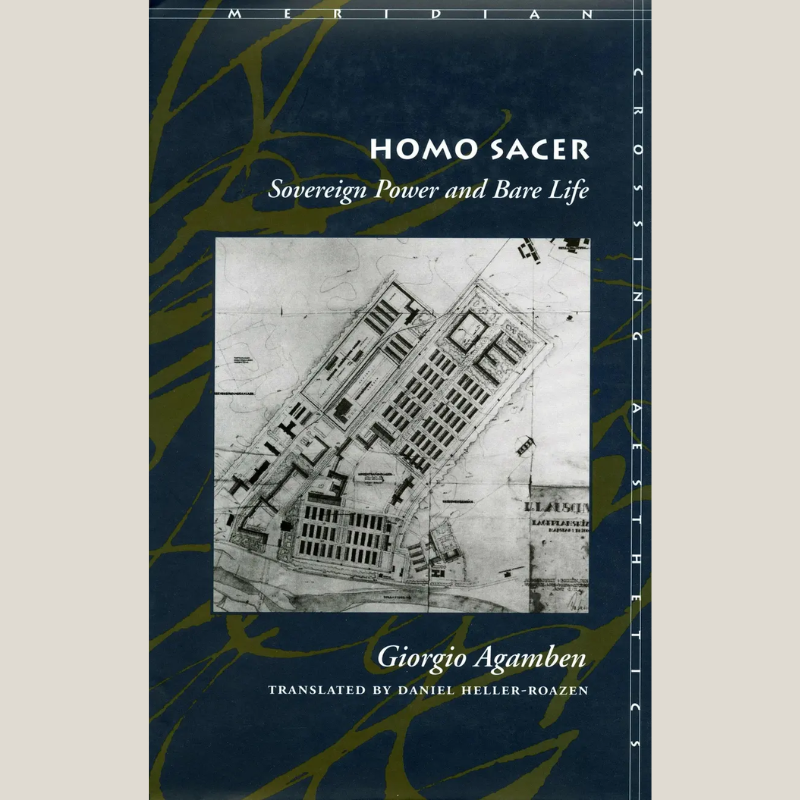
Homo Sacer
Giorgio Agamben’s Homo Sacer: Sovereign Power and Bare Life (1995) stands as a watershed text in political philosophy, offering an incisive analysis of how states of exception can threaten democratic governance. Building on Carl Schmitt's provocative claim that "the sovereign is he who decides on the exception," Agamben uncovers the troubling paradox at the heart of modern political systems: that the legal order in fact depends on the power to suspend itself…