All Content
Welcome to the Institute for the Study of States of Exception (ISSE) main content page, a single source for all posts from the Institute, including commentary on global events, book reviews, academic literature, links to our podcasts, and additional resources. Check back regularly for more content from us.
“Sovereign is he who decides the exception.”
— Carl Schmitt (Political Theology: Four Chapters on the Concept of Sovereignty, 1922)

Why Is the Weaponization Report So… Normal? - Lawfare
In this recent essay for Lawfare, Kate Gilbert examines how the Department of Justice’s first “Weaponization Working Group” report uses the language and procedures of ordinary bureaucracy to frame extraordinary political claims. The article raises broader questions central to ISSE’s work, including how exceptional political logics become embedded within routine governance and how expansive interpretations of Unitary Executive Theory may reshape institutional independence, prosecutorial discretion, and traditional constitutional guardrails.
ISSE Explainer: When Executive Power Becomes Exceptional — Unitary Executive Theory as a State of Exception
Recent legal disputes over the revocation of security clearances and the attempted federalization of National Guard units raise questions that extend beyond statutory interpretation or executive overreach. They point instead to a deeper theory of presidential power, one that treats certain executive actions as categorically insulated from judicial review. This explainer situates those claims within the framework of unitary executive theory and examines how its most expansive forms can function as a standing state of exception within constitutional law.
A Threat to the Constitutional Order - American Enterprise Institute
This op-ed examines the Supreme Court’s pending consideration of Trump v. Slaughter, a case that could significantly expand presidential authority over independent federal agencies and further institutionalize expansive interpretations of Unitary Executive Theory. The piece argues that permitting presidents to remove officials from independent regulatory agencies absent malfeasance would fundamentally alter the constitutional balance between Congress and the executive branch, placing large portions of the administrative state under direct presidential policy control. Particularly relevant to ISSE’s work is the article’s warning that the gradual concentration of executive authority can occur not only through formal emergency declarations, but also through judicial reinterpretations of constitutional structure that normalize increasingly centralized forms of governance over time. The essay also highlights broader debates surrounding separation of powers, democratic accountability, administrative independence, and the erosion of institutional guardrails originally designed to prevent excessive concentrations of executive power. More broadly, the article raises important questions about how constitutional democracies preserve constraints on executive authority when doctrines justified in the name of efficiency, accountability, or national leadership begin to reshape the ordinary functioning of state institutions themselves.
The Imaginary Unitary Executive - Lawfare
Contrary to the “Decision of 1789” myth, history shows that the first Congress rejected the exclusive unitary model of the presidency—and thus the presidential removal power should be subject to more congressional control than recent Supreme Court decisions have held.

Hungary: New Government Needs to Restore Rule of Law - Human Rights Watch
Human Rights Watch’s analysis of Hungary highlights how emergency powers have become embedded in the country’s political system. Under Viktor Orbán, who was voted out of office in April 2026, crisis-driven authorities have evolved into durable tools for governing, shaping media, institutions, and electoral competition. Rather than temporary measures, emergency frameworks have been renewed and repurposed across migration, pandemic, and security contexts. Weak domestic and external constraints have allowed these powers to persist with limited oversight. For ISSE, Hungary illustrates the normalization of exceptionality, where extraordinary powers become a routine feature of democratic governance.
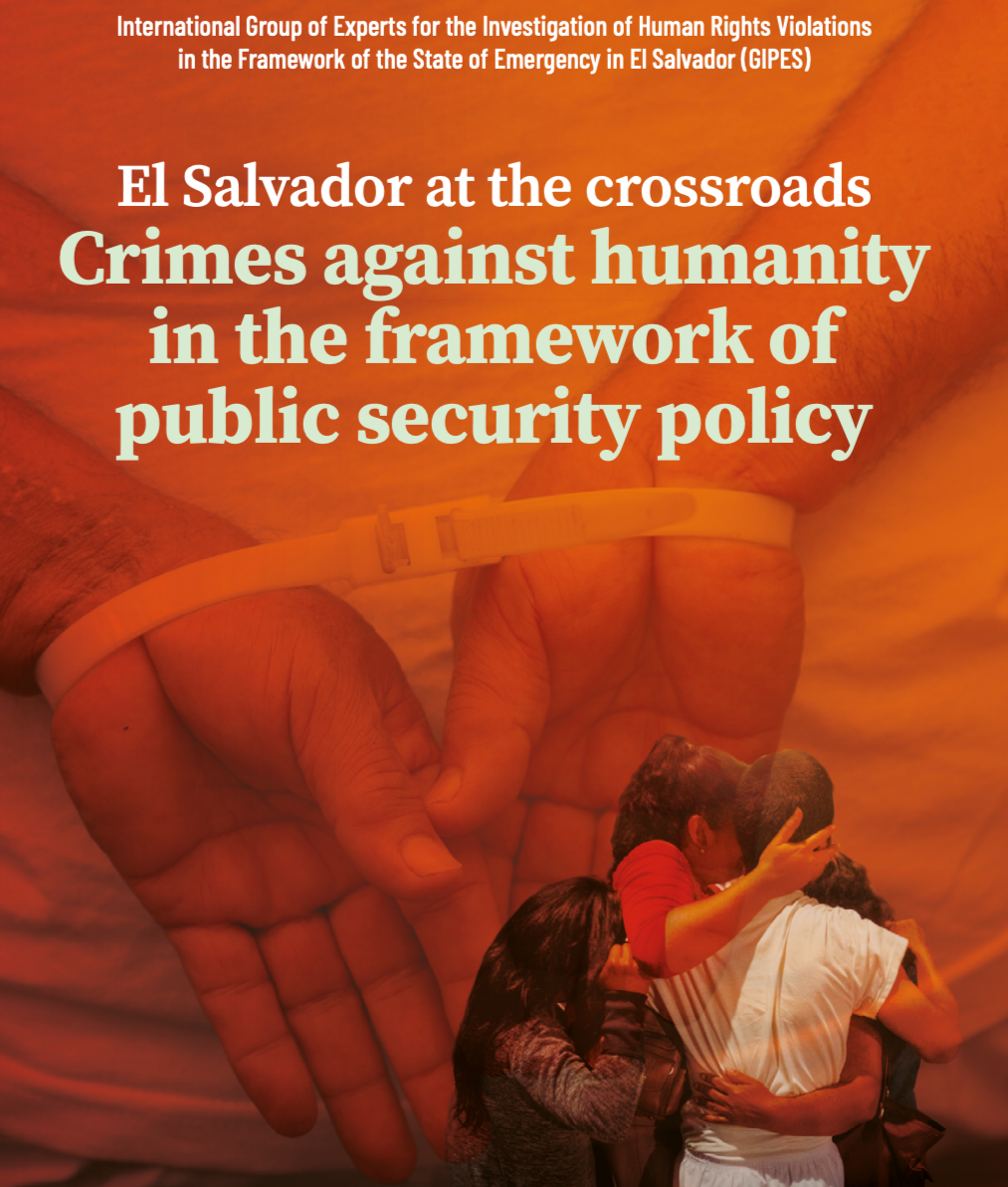
El Salvador at the Crossroads: Crimes against Humanity under the Public Security Policy - Due Process of Law Foundation, et al.
An international panel of legal experts has concluded that serious human rights violations committed under El Salvador’s ongoing state of emergency may constitute crimes against humanity. The report examines allegations including arbitrary detention, torture, enforced disappearances, sexual violence, and persecution carried out as part of the government’s security policy since March 2022. Beyond documenting abuses, the study argues that the prolonged state of exception has weakened democratic safeguards, eroded separation of powers, and concentrated authority within the executive branch. The report also calls for independent case review mechanisms and greater international accountability efforts. For ISSE, the findings highlight the long-term institutional risks posed by entrenched emergency governance.
One Emergency After Another - Lawfare
A surge in executive “emergency” actions is reshaping the balance of power in the United States. This analysis finds that the scale, pace, and scope of recent emergency orders, particularly outside traditional frameworks like International Emergency Economic Powers Act (IEEPA), are historically unprecedented and increasingly directed toward domestic policy goals. The use of declarations such as the “National Energy Emergency” illustrates how emergency authorities can be leveraged to bypass Congress and statutory constraints. With legislative checks weakened since INS v. Chadha and judicial review often limited, meaningful oversight is increasingly difficult. The piece from Lawfare argues that courts may need to adopt more searching review to prevent the normalization, and weaponization, of emergency powers.
Emergency powers: Presidents unleashed? - The Miller Center
This Miller Center conference examines the history, expansion, and constitutional risks of presidential emergency powers in the United States. Convened after the Supreme Court’s February 2026 decision rejecting President Trump’s use of emergency authority to regulate tariffs, the discussion brings together leading scholars and practitioners to assess how presidents, Congress, and the courts have shaped the emergency-powers framework. Panelists trace the issue from the founding era through FDR, Watergate, 9/11, and the modern presidency. For ISSE, the event is important because it shows how exceptional powers can become routine tools of governance when Congress is weak, courts are cautious, and presidents face incentives to act unilaterally. The result is a constitutional system under strain, where emergency authority risks replacing democratic deliberation.
US/El Salvador: Deportees Forcibly Disappeared - Human Rights Watch
A Human Rights Watch report finds that some Salvadorans deported from the United States within the last year have been detained in El Salvador without access to lawyers, families, or courts, raising concerns about enforced disappearance. The report links these cases to El Salvador’s ongoing state of emergency, which has suspended key due process protections. Many families report being unable to determine the whereabouts or legal status of detained relatives. Authorities in both countries have provided limited transparency, while judicial and oversight mechanisms have offered little recourse. The findings highlight the risks that arise when deportation policies intersect with emergency governance frameworks.
U.S. Democratic Backsliding in Comparative Perspective - Carnegie Endowment for International Peace
This Carnegie Endowment report analyzes democratic backsliding in the United States under President Donald Trump in comparative perspective. It finds that recent developments align with patterns of executive aggrandizement seen in countries such as Hungary, India, and Türkiye, particularly through efforts to consolidate power within the executive, weaken institutional checks, and constrain civil society. At the same time, the U.S. case is distinguished by the speed and breadth of these efforts, as well as a focus on intra-executive control and indirect pressure on institutions. While U.S. democratic institutions remain more resilient than many global counterparts, the report concludes that the pace and scope of recent changes present a significant test for American democracy.
Three Hundred Habeas Cases in Which the (U.S.) Government Has Defied Court Orders - Lawfare
This Lawfare U.S.-based analysis compiles a nationwide dataset of more than 300 immigration habeas cases in which federal authorities failed to comply with court orders. While courts generally succeed in securing eventual compliance, the cases reveal recurring patterns, such as delayed releases, unauthorized transfers, and failures to justify detention, that require repeated judicial intervention to enforce legal limits. Situated within a broader framework of sustained emergency authorities and expanded enforcement activity, these dynamics point to structural strain within the system of legal oversight.
Viewed in aggregate, the dataset suggests not a breakdown of legality, but a shift in how it operates in practice. Individuals remain formally protected by law, yet the realization of those protections often depends on administrative action and continued judicial enforcement. This pattern also raises questions about the limits of judicial enforcement itself, and whether repeated, low-consequence noncompliance risks becoming normalized over time. For ISSE, these dynamics highlight how prolonged reliance on emergency frameworks may contribute to the emergence of exception-like practices within routine governance.
U.S. Helsinki Commission on Security and Cooperation in Europe presses Georgia over emergency‑style crackdowns
The U.S. Helsinki Commission issued a formal statement on March 18, 2026, entitled “Bipartisan Helsinki Commission Leadership issue Statement on OSCE Report on Human Rights Abuses in Georgia,” condemning Georgia’s systemic abuse of emergency‑like legislative powers and urging U.S. sanctions to compel compliance with international recommendations. This marks an explicit, bipartisan U.S. government acknowledgment that Georgia is leveraging emergency‑style laws to consolidate political control and suppress democratic opposition. The call for sanctions signals rising international pressure and potential policy movement if Georgia fails to reverse course.
Do states of emergency in the Caribbean suppress gang violence or spread it? The cases of Jamaica and Trinidad and Tobago - The Armed Conflict Location & Event Data Project (ACLED)
Key Report Takeaways:
Transnational trafficking of drugs and weapons, combined with the fragmentation of the gang landscape, fueled an escalation in violence that peaked in 2023 in both Jamaica and Trinidad and Tobago.
In response, governments adopted states of emergency (SoEs) to curb gang violence. While violence declined in 2025, evidence does not support a direct or sustained link to SoEs.
SoEs produce uneven and localized reductions in violence. They can temporarily suppress violence, but often they displace gang activity to other areas.
The resilience and adaptability of gangs — through leadership succession, splintering, and mobility — have blunted the long-term impact of SoEs, with violence and rivalries frequently resuming after short-lived lulls.
Militarized security operations under SoEs have fueled police brutality and rights abuses, with effects that extend beyond emergency periods and erode public trust in law enforcement.
Canadian Courts Are Holding the Line on National Emergency Powers - Lawfare
In a recent Lawfare piece, Jeffery Tobin argued that the Americas are fast becoming a “Hemisphere of Exceptions.” From Ecuador, to Honduras, to the United States, executives across the region are increasingly deploying emergency measures—once conceived as temporary constitutional relief valves—as central instruments of governance to bypass legislative paralysis and manage chronic instability. As Tobin observes, this drift signals a dangerous transformation in which “legality [yields] to expediency” and crisis becomes a standing justification for rule by fiat.
However, one nation has emerged as a notable exception to this trend. In January, Canada’s Federal Court of Appeal (FCA) delivered a landmark unanimous decision in Canada (Attorney General) v. Canadian Civil Liberties Association. The decision affirmed that the federal government’s 2022 invocation of the Emergencies Act in response to the anti-lockdown “Freedom Convoy” was both unreasonable and ultra vires. In doing so, it upheld an earlier Federal Court ruling in Canadian Frontline Nurses v. Canada, which had found that the Cabinet lacked objectively reasonable grounds to believe a national emergency existed.
While counsel for the government still needs to review the decision and weigh a final appeal to the Supreme Court of Canada, the FCA’s ruling currently stands as the definitive interpretation of the act’s various thresholds. Consequently, Canada is emerging as a notable exception to the regional drift toward emergency powers, owing to decisive judicial interventions that have reasserted statutory limits on executive power.
The Hidden Nondelegation Issue Raised by Trump v. Slaughter - Lawfare
The Supreme Court’s consideration of Trump v. Slaughter raises more than a dispute over agency removal protections. In the accompanying Lawfare article, Michael R. Dreeben examines whether overruling Humphrey’s Executor might be counterbalanced by renewed limits on congressional delegation. ISSE’s analysis builds on that doctrinal discussion to explore a related structural question: how weakening agency independence could reshape the architecture of emergency governance. Together, the pieces illuminate how shifts in administrative design may alter not only separation-of-powers doctrine, but also the institutional channels through which exceptional authority is exercised.
It’s Carl Schmitt’s Moment - Democracy Journal
Summary: “Sovereign is he,” wrote the German political theorist Carl Schmitt in 1922, “who decides on the exception.” The opening line of Political Theology was meant to shock even a century ago. In a liberal democracy, after all, sovereignty rests in “the people,” not in a “he” who “decides” on an “exception.” But Schmitt is the great prophet of liberal breakdown. He understood liberalism as an Enlightenment project that would not survive the modern era of mass industry, mass media, and mass politics. The liberal state runs smoothly on its rails of law and norms until it encounters the “exception”—a strike, a beer-hall putsch. Then, and only then, when someone (some “he”) steps forward to fill the vacuum with action (the decision) do we discover where true power—that is, sovereignty—lies. At the moment of crisis, the flimsy structure of liberal normativity collapses and power reveals itself. Schmitt was the twentieth century’s own Thomas Hobbes. Perhaps we would regard him today as the preeminent rival of Jürgen Habermas or John Rawls—the great liberal thinkers of the twentieth century—had he not, at the decisive moment of his career, welcomed, celebrated, and justified the Leviathan of his own day: Adolf Hitler.
It is a safe bet that Donald Trump had not read Political Theology when he declared his own version of a state of exception on January 20. Trump did not need an actual crisis in order to issue a torrent of executive orders usurping the independence of federal agencies, preempting the role of Congress, threatening the press, mobilizing the armed forces against immigrants, etc. As Trump himself put it, “He who saves his country does not violate any law.” He had filled the vacuum with decisive acts. Whether Trump will turn out to be “America’s Hitler,” as Vice President J.D. Vance once suggested before changing his mind, he is a kind of fulfillment of Schmitt’s dire expectations.
Until very recently we would have said that history had proved Schmitt wrong. In the decades after the Second World War, Germany, Japan, Italy, Spain, Portugal, and other autocratic powers made a peaceful transition to liberal democracy. Europe became, as the pundit and historian Robert Kagan put it, “a Kantian paradise.” Now we have to wonder if Schmitt’s dark prophecies were merely premature, and it was not the industrial but the post-industrial era that put the quietus to liberalism.
This is Carl Schmitt’s moment. In the past year, two New York Times columnists have accused Trump and his followers of borrowing from Schmitt’s playbook. J.D. Vance has insisted that, on the contrary, it is liberals who share Schmitt’s fixation with raw power.
The Schmittian inheritance
The theories of Carl Schmitt, who was a controversial German jurist who supported the Third Reich as a Nazi, have re-emerged in contemporary politics recently through UK Attorney General Lord Hermer's criticism of Conservatives allegedly echoing Schmitt's "realist" jurisprudence that favors raw power over international law. Schmitt's most dangerous contribution was his argument that liberalism and mass democracy are fundamentally incompatible, as he believed parliaments were outdated liberal institutions disconnected from the "will of the people," which can be expressed through public acclamation and even dictatorship. His legal theories helped dismantle the Weimar Republic, particularly through his defense of the 1932 Prussian coup that paved the way for Hitler's rise to power, exemplifying his doctrine that "the sovereign is he who decides on the exception." Today, Schmitt's ideas are influencing authoritarian movements globally, including US President Donald Trump's approach to presidential power, Russian President Vladimir Putin's ultranationalism through ideologue Alexander Dugin, and Germany's AfD party, which draws on Schmitt's theory of spheres of influence to justify policies like dismantling NATO. While Schmitt's influence remains limited at present, his toxic legacy continues to spread through illiberal movements that embrace emergency powers and reject constitutional constraints in favor of authoritarian rule.
EU Crises and Emergencies: What’s in a Name? - EmergEU Working Paper Series 1/2025
This workshop brought together scholars of law, political science, and related disciplines to interrogate how the European Union (EU) defines, governs, and is transformed by crises and emergencies. Against the backdrop of the Eurozone crisis, the migration crisis, the COVID-19 pandemic, and Russia’s war in Ukraine, the EU has increasingly been confronted with extraordinary events that test its constitutional foundations, governance mechanisms, and legitimacy. Yet despite the relevance of these events in the institutional and academic discourse, there remains no settled understanding of what qualifies as a ‘crisis’ or ‘emergency’, nor of how such labels shape institutional responses and longer-term integration trajectories.
The workshop opened with a keynote lecture by Professor Bruno de Witte (Maastricht University), who situated the debate in the broader legal context of EU emergency law. He underlined that, unlike many national systems, the EU Treaties provide no general emergency clause. Instead, the Union has relied on a scattered set of emergency competences and flexible interpretations of ordinary Treaty bases. In his view, emergency responses have demonstrated the EU’s capacity to adapt within the constraints of its legal order. This framing provided a point of reference for the four panels that followed, which explored how crises and emergencies are conceptualised, how they reshape governance structures, and how they are navigated in conditions of uncertainty.
The first explored the definitional boundaries of ‘crisis’ and ‘emergency’, revealing both disciplinary divergences and shared efforts to construct conceptual frameworks. The second examined how crises have reshaped the EU’s internal structures and external orientation, highlighting tensions between security, autonomy, and democratic legitimacy. The third turned to multilevel governance and emergency powers, tracing how regulation, financial autonomy, procurement mechanisms, and tacit states of exception transform the EU’s constitutional order. Finally, the fourth panel brought an epistemic perspective, foregrounding the role of institutions, individuals, and knowledge in navigating uncertainty.
The colonial origins of the ‘permanent state of exception’
During times of crisis, states have historically drawn upon ‘exceptional’ or emergency powers in order to govern. These typically involve the assumption of new kinds of dictatorial authority, the curtailment of basic civil rights, and a blurring of the ordinary distinctions between executive, legislative, and judicial forms of power.
Once the crisis has passed, states are meant to surrender these extraordinary powers, and return to a state of normalcy. But what if this state of affairs ceases to be temporary, and instead becomes a permanent feature of how governments operate?
Giorgio Agamben traces the origins of this permanent state of exception to the First World War, which saw an unprecedented number of countries around the world declare states of emergency or siege in order to manage the crises presented by a modern, industrial total war. For Agamben, the First World War opened up the possibility for a radically new form of state power that was fundamentally anti-democratic, authoritarian, and which operated through the mechanisms of a permanent state of emergency.
Agamben’s work is inherently Eurocentric, but if we turn our gaze beyond Europe to the imperial world a very different picture emerges. The unequal nature of European colonial power, premised on racial difference, rendered colonialism an inherently authoritarian and anti-democratic enterprise from the outset. Emergency was thus not something merely episodic or interruptive, but was a ‘technique of governance’ embedded into the everyday functioning of colonial regimes.
The ‘Ratchet Effect’: Presidents, Emergency Powers, and the Crisis of Institutional Faith - The Miller Center
An accelerating trend toward unilateral executive action has characterized the post-Cold War American presidency. Confronted with intense partisan polarization and the resulting legislative stalemate, presidents have increasingly resorted to the tools of direct authority—executive orders, memoranda, and proclamations—to bypass a gridlocked Congress and enact their policy agendas.
The most potent tool is the declaration of a national emergency. This action unlocks a litany of latent statutory powers, allowing a president to redirect funds, deploy military personnel, and regulate sectors of the economy with minimal immediate oversight. This practice represents a fundamental shift in the locus of policymaking, moving it from the deliberative, legislative sphere to the decisive, executive one.
The expanding use of presidential emergency powers is an effect of the secular decline of public faith in the nation’s core democratic institutions. Decades of data indicate that citizens are losing confidence in our constitutional system of checks and balances to address pressing problems. This loss of confidence suggests that citizens become more amenable to leaders who promise to cut through procedural constraints, thereby rewarding unilateralism and further eroding the norms of deliberative democracy. It creates a self-perpetuating cycle of distrust and overreach, in which each unilateral act delegitimizes the bypassed institutions, reinforcing public cynicism and increasing the political demand for executive action.