INSTITUTE FOR THE STUDY OF STATES OF EXCEPTION

Tracking Abuses of Executive Emergency Powers.
Promoting Informed Dialogue.
The Institute for the Study of States of Exception was founded in response to a troubling global trend: when suspensions of rule of law, known as states of exception typically invoked under executive emergency powers, are deployed not so much because of an emergency, but instead with the aim of increasing and consolidating unchecked executive authority. Our goal is to serve as a global hub for scholarship, community, and raising awareness regarding this increasingly common threat to rule of law and democratic principles.
Explore our work, contribute to the conversation, and support our mission to build a more resilient, democratic world.
“The state of exception appears to have become the rule, not only in the legal sense but in the structural sense of how power operates today.”
— Achille Mbembe (Necropolitics, 2003)
Featured Content:

On January 29, 2026, U.S. President Donald J. Trump signed an Executive Order titled “Addressing Threats to the United States by the Government of Cuba,” declaring that the current geopolitical dynamics involving Cuba constitute an “unusual and extraordinary threat” to U.S. national security and foreign policy, and as such further constitute a formal national emergency under the National Emergencies Act (NEA) and the International Emergency Economic Powers Act (IEEPA).
This explainer situates the declaration within the broader framework of U.S. emergency powers, outlining the legal authorities invoked and the mechanisms through which the order is intended to be implemented. ISSE’s analysis focuses on clarifying how this emergency functions in practice, what it enables as a matter of law, and why its invocation matters in the context of the growing normalization of emergency authorities in U.S. governance. The piece is intended to provide readers with a clear, accessible account of the declaration itself and its immediate implications, rather than a normative assessment of U.S.-Cuba policy.
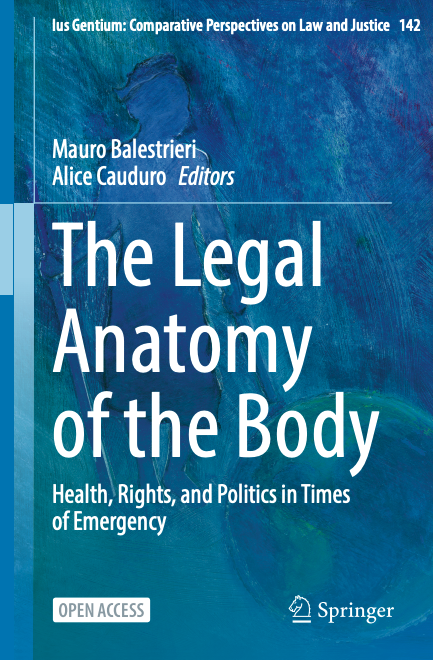
This book proposes a paradigm shift in the way that ‘the state of exception’–as it is usually named in legal and political theory–is to be understood. Building on the assumption that the exception is a heuristic idea that is still a relevant category for a critical deconstruction of law, this book argues that it needs to be rethought outside the boundaries of its traditional understanding. To this end, the book offers two strategies. First, it develops the ideas of ‘exceptionality’ and ‘exceptionalisation’ in order to grasp how measures, norms and mechanisms that clearly have an exceptional character are no longer confined within the boundaries of classic institutions such as the state of exception, martial law, the state of emergency and so on. As demonstrated recently during the COVID-19 pandemic, legal systems may dissimulate the exceptional as the normal, avoiding the use of formal states of exception and adopting measures that are of exceptional nature. This book maintains that it is necessary to think of ‘exceptionality’ outside of its usual legal footholds. Emergency laws are considered here as part of a more general sphere of exceptionality that must be understood as the product of a process of the accumulation of symbols, practices, notions and images that are only partially expressed through law, despite having long populated the legal imagination. Second, the book offers an analysis of the inner exceptional life of liberal constitutionalism: the subterranean authoritarian drives dissimulated by the rule of law.
This book will interest scholars and researchers in legal and political theory, as well as continental philosophy.
Summary: “Sovereign is he,” wrote the German political theorist Carl Schmitt in 1922, “who decides on the exception.” The opening line of Political Theology was meant to shock even a century ago. In a liberal democracy, after all, sovereignty rests in “the people,” not in a “he” who “decides” on an “exception.” But Schmitt is the great prophet of liberal breakdown. He understood liberalism as an Enlightenment project that would not survive the modern era of mass industry, mass media, and mass politics. The liberal state runs smoothly on its rails of law and norms until it encounters the “exception”—a strike, a beer-hall putsch. Then, and only then, when someone (some “he”) steps forward to fill the vacuum with action (the decision) do we discover where true power—that is, sovereignty—lies. At the moment of crisis, the flimsy structure of liberal normativity collapses and power reveals itself. Schmitt was the twentieth century’s own Thomas Hobbes. Perhaps we would regard him today as the preeminent rival of Jürgen Habermas or John Rawls—the great liberal thinkers of the twentieth century—had he not, at the decisive moment of his career, welcomed, celebrated, and justified the Leviathan of his own day: Adolf Hitler.
It is a safe bet that Donald Trump had not read Political Theology when he declared his own version of a state of exception on January 20. Trump did not need an actual crisis in order to issue a torrent of executive orders usurping the independence of federal agencies, preempting the role of Congress, threatening the press, mobilizing the armed forces against immigrants, etc. As Trump himself put it, “He who saves his country does not violate any law.” He had filled the vacuum with decisive acts. Whether Trump will turn out to be “America’s Hitler,” as Vice President J.D. Vance once suggested before changing his mind, he is a kind of fulfillment of Schmitt’s dire expectations.
Until very recently we would have said that history had proved Schmitt wrong. In the decades after the Second World War, Germany, Japan, Italy, Spain, Portugal, and other autocratic powers made a peaceful transition to liberal democracy. Europe became, as the pundit and historian Robert Kagan put it, “a Kantian paradise.” Now we have to wonder if Schmitt’s dark prophecies were merely premature, and it was not the industrial but the post-industrial era that put the quietus to liberalism.
This is Carl Schmitt’s moment. In the past year, two New York Times columnists have accused Trump and his followers of borrowing from Schmitt’s playbook. J.D. Vance has insisted that, on the contrary, it is liberals who share Schmitt’s fixation with raw power.
ISSE Comment: This article is included on the ISSE website because it examines the treatment of fundamental rights within the broader context of armed conflict and emergency governance. Although it does not focus on the formal exercise of emergency powers, it provides a detailed analysis of how freedom of political expression is regulated, limited, and justified during periods of heightened security concern, and in this instance, under martial law. The study contributes to ISSE’s research agenda by illuminating how international legal standards, domestic legal frameworks, and institutional practices interact under crisis conditions, offering valuable insight into the protection of democratic rights during and beyond emergencies.
Abstract: The article is devoted to a comprehensive study of the right to freedom of expression of political views during armed conflict. It examines the nature of this right as one of the fundamental elements of a democratic society, defines its content, functions, international legal guarantees, and national mechanisms for its realization and limitation. Given the ongoing armed aggression against Ukraine, the issue of the permissible limits of state interference in freedom of expression under the pretext of national security protection has become particularly relevant. The article analyzes the norms of international law, including the provisions of Article 19 of the International Covenant on Civil and Political Rights (ICCPR), Article 10 of the European Convention on Human Rights (ECHR), recommendations of the Council of Europe, and the positions of the OSCE, the United Nations, and leading international organizations such as ARTICLE 19 and CPJ. Special attention is given to the case law of the European Court of Human Rights, which establishes key approaches to the protection of political expression even under crisis conditions. The study presents a number of real-life examples from the Ukrainian context, such as the blocking of media outlets by decisions of the National Security and Defense Council, illegal surveillance of journalists, administrative pressure on editorial offices, and increased self-censorship under martial law. These phenomena are analyzed in terms of their compliance with the Constitution of Ukraine and international legal standards. It is determined that the existing legal protection mechanisms are insufficient or ineffective, which threatens the democratic balance of power during wartime. The author proposes a set of specific measures to maintain the balance between security needs and freedom of expression, including the harmonization of national legislation with international standards, the creation of independent institutions to monitor restrictions on freedom of speech, the enhancement of legal and physical protection for journalists, the development of digital and media literacy among the population, as well as cooperation with technology platforms to ensure transparent content blocking procedures. It is concluded that the right to freedom of expression of political views plays no less important a role during wartime than in peacetime: it serves as a safeguard against authoritarianism, an indicator of governmental legitimacy, and a foundation for the post-war democratic reconstruction of the state. Ignoring this dimension not only violates Ukraine’s international obligations but also poses a threat to internal political stability in the context of national recovery.
The aim of this article is to problematize one of the most audacious tenets of the new consensus, namely the revolutionary character of fascism, by linking together the experience of the state of siege and the emergence of the fascist movement in interwar Romania. It tries to do so by drawing on the philosophical underpinnings of the paradigm of the state of exception developed by Giorgio Agamben and Walter Benjamin’s critique of law and violence. In a first part my aim is to present the main arguments espoused in defending the view according to which fascist movements were professing an authentic revolutionary radical politics. Secondly, I will turn towards legal critique and to the work of Giorgio Agamben in order to build a topography of the relation between law and the force of state. In a third part I will focus on the uses and the historical meaning of the state of siege in post-First World War Romania. This article argues that the emergence of the fascist movement in Romania is an event strongly embedded in the political, legal and symbolic dynamics entailed by the state of exception rather than the expression of a revolutionary thrust.
Agamben has long argued, in a formulation best distilled in his book Homo Sacer: Sovereign Power and Bare Life, that the “camp”—be it concentration camp or refugee camp—is the paradigm of political modernity insofar as legal categories and the idea of sovereignty have served as a justification for abandoning ‘‘enemy bodies’’ to zones outside strict legality. In Homo Sacer, Agamben is steeped in the most dystopian and rights-skeptical thought of theorists such as Michel Foucault, Walter Benjamin, Hannah Arendt, and Carl Schmitt, yet he still emerges with a relatively redemptive ethical sensibility, one that would be appealing to those who seek to defend human dignity against cruelty. Certainly, his persistent invocation of the Holocaust to dramatize modern forms of exclusion and outlawry puts him in the company of twentieth-century ethicists ranging from Emmanuel Levinas to Judith Shklar, who drew upon the Holocaust as the ultimate experiential grounding for their theories. In my view, Agamben can be read as a philosopher of deep ethical concern and originality but, to read him charitably, one must become accustomed to his signature rhetorical devices of hyperbole, paradox, and “indistinction” (whereby Agamben frames conceptual opposites, such as security and insecurity, rights and repression, or public and private, as deeply intertwined). It is helpful to approach a number of these conceits as thought experiments. For example, the use of hyperbole is not very different from “slippery slope” arguments. As for paradox and indistinction ...it seems fair to say that states of exception—perhaps more so than any other subject matter of legal theory—constitute an area of inquiry where these discursive vices can actually be seen as virtues. The language of indistinction and undecidability is often descriptively appropriate, and this is evident in numerous scholarly accounts of the blurred distinctions between war and crime, sovereignty and territorial control, combatant and civilian, legal and political decisions, all of which have increased since September 11, 2001.
In Agamben’s new book, State of Exception, a sequel to Homo Sacer, he draws explicitly on lectures delivered in New York and elsewhere in the years since 9/11, repeating the central themes of his past work and transposing them to a different key. Here, rather than speaking of the “camp,” he argues that the “state of exception” is a primal form of modern government. While innumerable debates and insights may be drawn from this slim volume, I will limit this review to three areas: (a) Agamben’s historical account of the state of exception, including his most controversial claim, in which he finds a basis for the practice not in the Roman dictatorship but in an obscure public ritual known as iustitium; (b) recent constitutional theory that refutes Agamben’s statement that the state of exception (even as he redefines it) has been ignored as a “question of public law”; and, finally, (c) the curious absence of Agamben’s distinctive theories of “spaces of exception,” which had been productively developed in earlier works but are muted here in service of a larger ethical thesis.
The concept of “state of exception” has a rich historical background and has become increasingly prevalent in contemporary discourse. This term is commonly used to draw attention to the current political and legal conditions, emphasizing an extraordinary event or process. However, behind this expression lies a complex concept and a detailed historiography.
Throughout history, the state of exception has been utilized as a means to safeguard the threatened sovereignty of the State and its institutions, sometimes even leading to the suspension of certain rights and guarantees. This state exists at the intersection of a crisis and enduring governmental practices, with the potential to evolve into dictatorships in extreme cases.
In essence, the state of exception represents a delicate balance between maintaining order and protecting individual freedoms. It serves as a critical tool for governments to navigate through times of uncertainty and crisis, while also posing significant challenges to the principles of democracy and rule of law.
This book endeavors to provide a comprehensive examination of the term “states of exception” and its significance in various fields such as politics, law, history, philosophy, and sociology. By offering a conceptual analysis of the term, its historical application, and implications, as well as an international historiographical perspective, this book aims to shed light on the complexities surrounding this topic.
When living in a time of crisis, it becomes easy to forget that our institutions have been through crisis before. That our institutions are still here and operating today is a testament to the fact that they are, on some meaningful level, resilient to incredible strain. This is, in large part, because they were designed to operate under this strain. While the Framers of the Constitution were undoubtedly working to build a government that operated effectively on a day-to-day basis, they were also preoccupied with creating a structure that could withstand extreme pressure, respond to threats, correct its own errors, and survive to work for the general welfare of the American people in the long run. One element of the constitutional design central to this resiliency is the availability of vast emergency powers to use in response to exceptional threats. Of course, no system is perfect, and no matter the intentions of the Framers, as American civilization has developed and expanded, so too has the complexity of our society and governmental structure. If the SARS-Cov-2 pandemic has shown anything, it is that there is great disagreement as to what the theoretical and actual limits of federal emergency powers are and ought to be.
“Emergency” is, of course, a very difficult legal concept to define and analyze, not least because it implicates an endless range of topics, from the very broad to the very specific. Emergency, and especially extreme and existential emergency, interacts with fundamental principles as the basis of sovereignty itself and the very nature of government and the state—if a government cannot adequately protect its people from a crisis, that government is not likely to survive. Still, as with any legal principle, the principle must be made to function in the real world, whether it be through constitutions, both written and implied, or through more mundane and routine statutory law. Complicating any analysis of emergency and emergency powers even further, there is not only no agreement on what precisely an emergency is or ought to be, but there is also no theoretical end to the nature and type of possible emergencies that could arise, especially as society continues to develop and grow ever more complex.
It is essential to begin any analysis of federal emergency power in the United States by understanding the theoretical, constitutional, and statutory bases for such powers, the history of the use of such powers, and where the law stands today. In an attempt to aid in this understanding, this Note will explore the theoretical and constitutional basis for federal emergency power, arguing first that the conception of federal emergency powers in the United States Constitution is best understood as expansive and flexible, and second, that the primary, though not exclusive, functional limits to this power are the protections found within the structural portion of the Constitution, namely separation of powers and the political process. This Note will then turn to how the statutory law of emergency functions and has developed under the constitutional structure, arguing that, while the constitutional framework for handling emergencies lays out a strong and flexible structure for addressing emergency, the statutory law of emergency which has subsequently grown underneath the constitutional structure contain many concerning faults in implementation.
For United States President Donald Trump, 2025 was a year of crisis.
Roaring into office on January 20 on the heels of a raucous political comeback, the president’s own telling describes a series of actions that have been swift and stark.
To name a few, he has envisioned rooting out a migrant “invasion” that includes staunching legal immigrants, and, potentially, targeting US citizens; he has touted a hard reset of uneven trade deals that pose “an unusual and extraordinary threat to the national security”; and, in the final months of the year, he has gone on the military offensive against “narcoterrorists” that he claims seek to topple the US through illicit drugs, possibly used as “weapons of mass destruction”.
For legal observers, Trump’s approach has been a yet-undecided stress test on presidential power, cranked by the gears of broadly interpreted emergency statutes and untrammeled executive authority.
Decisions by the court, lawmakers and voters in the 2026 midterm elections could determine how that strategy resonates or is restrained.
“The use or abuse of emergency powers is only one corner of a larger picture,” Frank Bowman, professor emeritus of law at the University of Missouri, told Al Jazeera.
“In many cases, the administration is simply doing stuff that certainly any pre-existing understandings of executive authority would have said you cannot do,” he said.
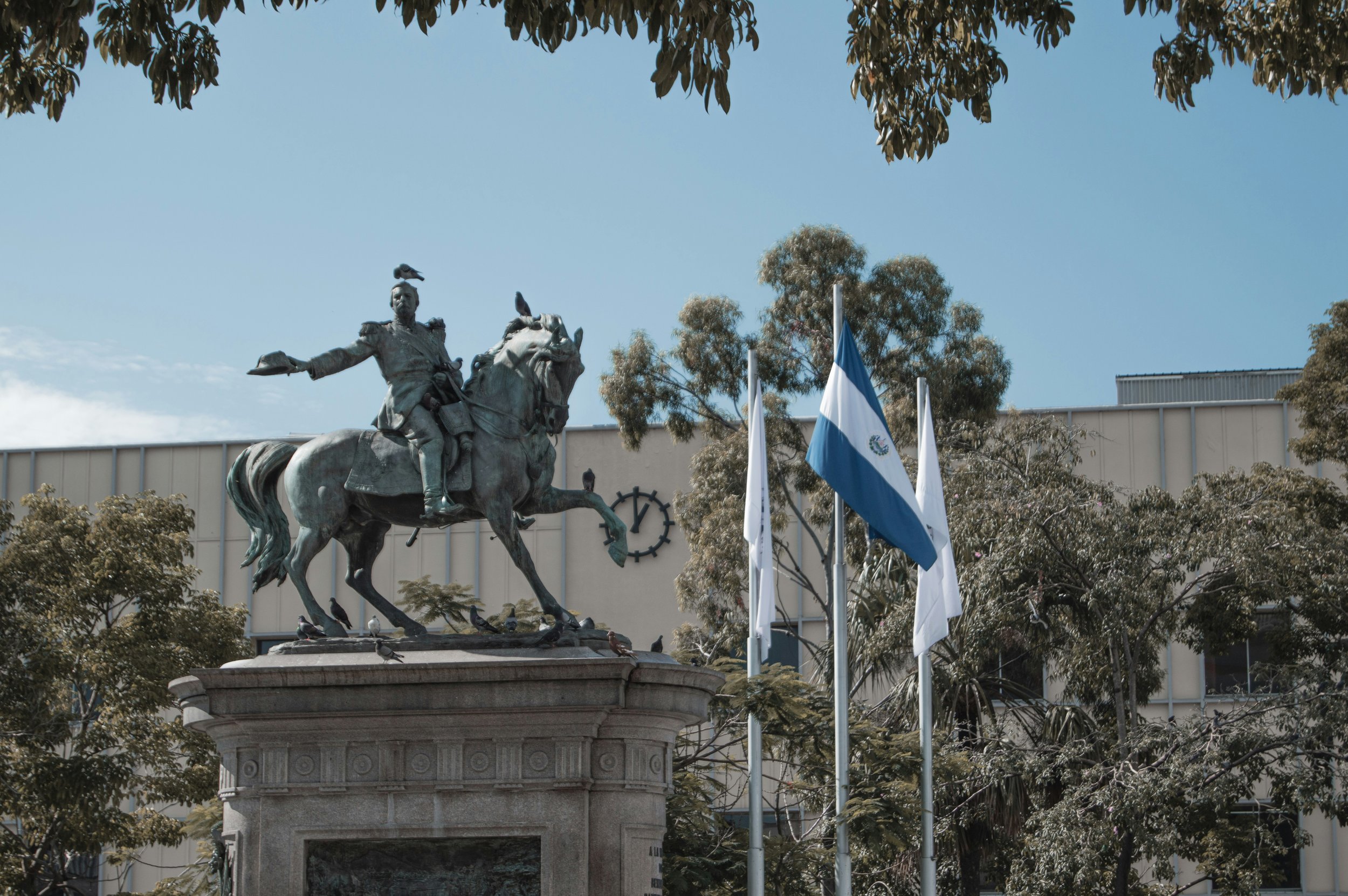
This article examines Nayib Bukele's leadership and his revolutionary government style in El Salvador, emphasising the convergence of stringent security policies, criminal populism, and digital political communication. Bukele's administration has realised a significant reduction in homicide and gang-related violence, chiefly through the enforcement of a prolonged State of Exception and the establishment of the Centro de Confinamiento del Terrorismo (CECOT), a vast prison epitomising total state authority. Utilising ideas of authoritarian populism, penal governance, and digital populism, the research examines how Bukele reinterprets legitimacy, transitioning it from democratic processes to performance-oriented results. By employing charismatic leadership and an advanced social media approach, Bukele has circumvented traditional institutions, centralised authority, and established a direct emotional bond with the populace. Although some Salvadorans rejoice in the restoration of safety and order, detractors caution against the deterioration of legal protections, judicial autonomy, and civil liberties. The report underscores a paradox: Bukele's popularity increases concurrently with the erosion of democratic standards. The study contends that although Bukele's model provides immediate stability and encourages regional imitation, it poses significant concerns regarding the sustainability of security attained through democratic erosion and institutional exceptionalism.
While public attention has recently focused on events in Venezuela and the ICE killing of Renee Good in Minneapolis, two court decisions issued shortly before Christmas (one by a federal district court and one by the Supreme Court) warrant closer scrutiny. In each case, the judiciary imposed at least temporary limits on the current administration’s assertion of extraordinary executive authority. Although neither arose from a formally declared state of emergency, both reflect an expansive conception of presidential power in which certain actions are treated as categorically insulated from judicial review.
In this respect, the cases illustrate how exceptional power may be exercised without explicit invocation of emergency authorities, not by suspending the law temporarily, but by asserting that entire domains of executive action lie beyond ordinary legal constraint. This mode of governance closely aligns with the most maximalist contours of unitary executive theory and functions as a de facto state of exception embedded within constitutional interpretation itself.
Recent legal disputes over the revocation of security clearances and the attempted federalization of National Guard units raise questions that extend beyond statutory interpretation or executive overreach. They point instead to a deeper theory of presidential power, one that treats certain executive actions as categorically insulated from judicial review. This explainer situates those claims within the framework of unitary executive theory and examines how its most expansive forms can function as a standing state of exception within constitutional law.
This article seeks to capture the transformative potential of emergency powers, as a legal–political practice pertaining to liberal legality that ultimately can determine constitutional change, rather than a return to ‘normality’. It does so by providing an analysis of the transition from formal and limited liberal legality in Romania to the series of dictatorships that followed the instauration of the regime of royal dictatorship of King Carol II in 1938. Anchored in a close reading of the archival documents of the trial of the leader of the main far right movement, Corneliu Zelea Codreanu, and the subsequent legal proceedings, the proposed article aims to produce revaluation of the jurisprudential and constitutional status of the regime of King Carol II with a view of understanding the emergency-based dimension of this rule and the particular shift it operated foundational legal categories in criminal and constitutional law. I proceed by examining the current theoretical limitations in addressing the historical role of emergency in relation to constitutional orders. I turn then to exploring the political and legal context of the prorogation of emergency measures in 1938 Romania. Last, I examine the limited status of modern legality in a situation oversaturated by emergency measures.
The theories of Carl Schmitt, who was a controversial German jurist who supported the Third Reich as a Nazi, have re-emerged in contemporary politics recently through UK Attorney General Lord Hermer's criticism of Conservatives allegedly echoing Schmitt's "realist" jurisprudence that favors raw power over international law. Schmitt's most dangerous contribution was his argument that liberalism and mass democracy are fundamentally incompatible, as he believed parliaments were outdated liberal institutions disconnected from the "will of the people," which can be expressed through public acclamation and even dictatorship. His legal theories helped dismantle the Weimar Republic, particularly through his defense of the 1932 Prussian coup that paved the way for Hitler's rise to power, exemplifying his doctrine that "the sovereign is he who decides on the exception." Today, Schmitt's ideas are influencing authoritarian movements globally, including US President Donald Trump's approach to presidential power, Russian President Vladimir Putin's ultranationalism through ideologue Alexander Dugin, and Germany's AfD party, which draws on Schmitt's theory of spheres of influence to justify policies like dismantling NATO. While Schmitt's influence remains limited at present, his toxic legacy continues to spread through illiberal movements that embrace emergency powers and reject constitutional constraints in favor of authoritarian rule.
Nine of 10 modern constitutions contain explicit emergency provisions describing who can declare a state of emergency (and under what conditions) and the additional powers the government enjoys under a state of emergency. As states of emergency typically allocate additional powers to the executive, they lend themselves easily to abuse and provide political incentives to declare emergencies. In this paper, we analyze the conditions under which government behavior under a state of emergency deviates from constitutional provisions and a gap between de jure provisions and de facto behavior thus results. In a novel data set comprising 853 emergency declarations, 115 are identified as unlawful. We find that autocratic governments are more likely than democratic governments to violate the constitution. The requirement that a second chamber approve the emergency declaration is associated with a higher likelihood of its being unconstitutional.
This article examines whether large-scale cyberattacks can be a legitimate reason for declaring a state of emergency. The central thesis is that while cyberattacks do not fit into the traditional categories of emergencies, their increasing capacity to seriously disrupt essential state functions calls for a reassessment of the legal thresholds for the use of emergency powers. The article argues that a cyberattack can justify the declaration of a state of emergency if it causes a systemic disruption to critical infrastructure, public order or national security and reaches a level of severity comparable to conventional emergencies. Real-world examples such as the cyberattacks on Estonia in 2007 and the ransomware crisis in Costa Rica in 2022 show different state responses and the evolving legal perception of cyber threats. At the same time, the article warns against the normalization of emergency regimes in response to persistent or unclear threats in cyberspace. The risk is that democratic governance is undermined by the prolonged or unjustified use of exceptional measures. While cyberattacks can in certain and extreme circumstances justify a state of emergency, such decisions must remain the exception and subject to the principles of necessity, proportionality and democratic control.
This paper argues that disaster management governance in Indonesia must align with emergency principles. In emergencies, special laws apply to prevent budget misuse and abuse of power. This study analyzes emergency authority in Indonesia's checks and balances system, focusing on legislative oversight. Using a legal-normative approach, it reviews Law No. 24/2007 on Disaster Management and the principles of necessity, proportionality, and temporality. The main findings are: (1) national and regional legislatures have little role in extending or ending emergency status, which allows unchecked use of emergency powers; (2) oversight of emergency actions is weak; and (3) there are no clear time limits for emergencies, enabling excessive extensions. The study recommends reforming laws to: (a) increase the legislature’s role in emergency status decisions; (b) clarify oversight and budgeting authority; and (c) set deadlines and rules for extending emergencies to improve accountability.
This workshop brought together scholars of law, political science, and related disciplines to interrogate how the European Union (EU) defines, governs, and is transformed by crises and emergencies. Against the backdrop of the Eurozone crisis, the migration crisis, the COVID-19 pandemic, and Russia’s war in Ukraine, the EU has increasingly been confronted with extraordinary events that test its constitutional foundations, governance mechanisms, and legitimacy. Yet despite the relevance of these events in the institutional and academic discourse, there remains no settled understanding of what qualifies as a ‘crisis’ or ‘emergency’, nor of how such labels shape institutional responses and longer-term integration trajectories.
The workshop opened with a keynote lecture by Professor Bruno de Witte (Maastricht University), who situated the debate in the broader legal context of EU emergency law. He underlined that, unlike many national systems, the EU Treaties provide no general emergency clause. Instead, the Union has relied on a scattered set of emergency competences and flexible interpretations of ordinary Treaty bases. In his view, emergency responses have demonstrated the EU’s capacity to adapt within the constraints of its legal order. This framing provided a point of reference for the four panels that followed, which explored how crises and emergencies are conceptualised, how they reshape governance structures, and how they are navigated in conditions of uncertainty.
The first explored the definitional boundaries of ‘crisis’ and ‘emergency’, revealing both disciplinary divergences and shared efforts to construct conceptual frameworks. The second examined how crises have reshaped the EU’s internal structures and external orientation, highlighting tensions between security, autonomy, and democratic legitimacy. The third turned to multilevel governance and emergency powers, tracing how regulation, financial autonomy, procurement mechanisms, and tacit states of exception transform the EU’s constitutional order. Finally, the fourth panel brought an epistemic perspective, foregrounding the role of institutions, individuals, and knowledge in navigating uncertainty.
On the first episode of this two part interview on the Common Sense Generation video podcast series, Dr. Maciej Wilmanowicz introduces himself, describing himself as an intellectual historian rather than a philosopher by training. He discusses the historical roots of emergency powers going as far back as the Roman Republic, he analyzes the paradox of legalizing emergency powers, and he introduces the possibility of existing within a “permanent state of exception.”
On the second episode of this two part interview on the Common Sense Generation video podcast series, Dr. Maciej Wilmanowicz discusses philosopher Giorgio Agamben's concept that modern societies exist in a "permanent state of exception" - where emergency measures and exceptional legal frameworks have become normalized rather than temporary.
He goes on to discuss citizens’ responses to emergencies utilizing several contemporary examples, the challenge of the continuous expansion of related laws and regulations that no one can fully comprehend or navigate, how competing definitions of the “common good“ introduce coherence challenges, and several specific examples are provided which illuminate that final point, running the risk of undermining the very freedoms these powers are meant to protect.
On January 29, 2026, U.S. President Donald J. Trump signed an Executive Order titled “Addressing Threats to the United States by the Government of Cuba,” declaring that the current geopolitical dynamics involving Cuba constitute an “unusual and extraordinary threat” to U.S. national security and foreign policy, and as such further constitute a formal national emergency under the National Emergencies Act (NEA) and the International Emergency Economic Powers Act (IEEPA).
This explainer situates the declaration within the broader framework of U.S. emergency powers, outlining the legal authorities invoked and the mechanisms through which the order is intended to be implemented. ISSE’s analysis focuses on clarifying how this emergency functions in practice, what it enables as a matter of law, and why its invocation matters in the context of the growing normalization of emergency authorities in U.S. governance. The piece is intended to provide readers with a clear, accessible account of the declaration itself and its immediate implications, rather than a normative assessment of U.S.-Cuba policy.
This book proposes a paradigm shift in the way that ‘the state of exception’–as it is usually named in legal and political theory–is to be understood. Building on the assumption that the exception is a heuristic idea that is still a relevant category for a critical deconstruction of law, this book argues that it needs to be rethought outside the boundaries of its traditional understanding. To this end, the book offers two strategies. First, it develops the ideas of ‘exceptionality’ and ‘exceptionalisation’ in order to grasp how measures, norms and mechanisms that clearly have an exceptional character are no longer confined within the boundaries of classic institutions such as the state of exception, martial law, the state of emergency and so on. As demonstrated recently during the COVID-19 pandemic, legal systems may dissimulate the exceptional as the normal, avoiding the use of formal states of exception and adopting measures that are of exceptional nature. This book maintains that it is necessary to think of ‘exceptionality’ outside of its usual legal footholds. Emergency laws are considered here as part of a more general sphere of exceptionality that must be understood as the product of a process of the accumulation of symbols, practices, notions and images that are only partially expressed through law, despite having long populated the legal imagination. Second, the book offers an analysis of the inner exceptional life of liberal constitutionalism: the subterranean authoritarian drives dissimulated by the rule of law.
This book will interest scholars and researchers in legal and political theory, as well as continental philosophy.
Summary: “Sovereign is he,” wrote the German political theorist Carl Schmitt in 1922, “who decides on the exception.” The opening line of Political Theology was meant to shock even a century ago. In a liberal democracy, after all, sovereignty rests in “the people,” not in a “he” who “decides” on an “exception.” But Schmitt is the great prophet of liberal breakdown. He understood liberalism as an Enlightenment project that would not survive the modern era of mass industry, mass media, and mass politics. The liberal state runs smoothly on its rails of law and norms until it encounters the “exception”—a strike, a beer-hall putsch. Then, and only then, when someone (some “he”) steps forward to fill the vacuum with action (the decision) do we discover where true power—that is, sovereignty—lies. At the moment of crisis, the flimsy structure of liberal normativity collapses and power reveals itself. Schmitt was the twentieth century’s own Thomas Hobbes. Perhaps we would regard him today as the preeminent rival of Jürgen Habermas or John Rawls—the great liberal thinkers of the twentieth century—had he not, at the decisive moment of his career, welcomed, celebrated, and justified the Leviathan of his own day: Adolf Hitler.
It is a safe bet that Donald Trump had not read Political Theology when he declared his own version of a state of exception on January 20. Trump did not need an actual crisis in order to issue a torrent of executive orders usurping the independence of federal agencies, preempting the role of Congress, threatening the press, mobilizing the armed forces against immigrants, etc. As Trump himself put it, “He who saves his country does not violate any law.” He had filled the vacuum with decisive acts. Whether Trump will turn out to be “America’s Hitler,” as Vice President J.D. Vance once suggested before changing his mind, he is a kind of fulfillment of Schmitt’s dire expectations.
Until very recently we would have said that history had proved Schmitt wrong. In the decades after the Second World War, Germany, Japan, Italy, Spain, Portugal, and other autocratic powers made a peaceful transition to liberal democracy. Europe became, as the pundit and historian Robert Kagan put it, “a Kantian paradise.” Now we have to wonder if Schmitt’s dark prophecies were merely premature, and it was not the industrial but the post-industrial era that put the quietus to liberalism.
This is Carl Schmitt’s moment. In the past year, two New York Times columnists have accused Trump and his followers of borrowing from Schmitt’s playbook. J.D. Vance has insisted that, on the contrary, it is liberals who share Schmitt’s fixation with raw power.
ISSE Comment: This article is included on the ISSE website because it examines the treatment of fundamental rights within the broader context of armed conflict and emergency governance. Although it does not focus on the formal exercise of emergency powers, it provides a detailed analysis of how freedom of political expression is regulated, limited, and justified during periods of heightened security concern, and in this instance, under martial law. The study contributes to ISSE’s research agenda by illuminating how international legal standards, domestic legal frameworks, and institutional practices interact under crisis conditions, offering valuable insight into the protection of democratic rights during and beyond emergencies.
Abstract: The article is devoted to a comprehensive study of the right to freedom of expression of political views during armed conflict. It examines the nature of this right as one of the fundamental elements of a democratic society, defines its content, functions, international legal guarantees, and national mechanisms for its realization and limitation. Given the ongoing armed aggression against Ukraine, the issue of the permissible limits of state interference in freedom of expression under the pretext of national security protection has become particularly relevant. The article analyzes the norms of international law, including the provisions of Article 19 of the International Covenant on Civil and Political Rights (ICCPR), Article 10 of the European Convention on Human Rights (ECHR), recommendations of the Council of Europe, and the positions of the OSCE, the United Nations, and leading international organizations such as ARTICLE 19 and CPJ. Special attention is given to the case law of the European Court of Human Rights, which establishes key approaches to the protection of political expression even under crisis conditions. The study presents a number of real-life examples from the Ukrainian context, such as the blocking of media outlets by decisions of the National Security and Defense Council, illegal surveillance of journalists, administrative pressure on editorial offices, and increased self-censorship under martial law. These phenomena are analyzed in terms of their compliance with the Constitution of Ukraine and international legal standards. It is determined that the existing legal protection mechanisms are insufficient or ineffective, which threatens the democratic balance of power during wartime. The author proposes a set of specific measures to maintain the balance between security needs and freedom of expression, including the harmonization of national legislation with international standards, the creation of independent institutions to monitor restrictions on freedom of speech, the enhancement of legal and physical protection for journalists, the development of digital and media literacy among the population, as well as cooperation with technology platforms to ensure transparent content blocking procedures. It is concluded that the right to freedom of expression of political views plays no less important a role during wartime than in peacetime: it serves as a safeguard against authoritarianism, an indicator of governmental legitimacy, and a foundation for the post-war democratic reconstruction of the state. Ignoring this dimension not only violates Ukraine’s international obligations but also poses a threat to internal political stability in the context of national recovery.
The aim of this article is to problematize one of the most audacious tenets of the new consensus, namely the revolutionary character of fascism, by linking together the experience of the state of siege and the emergence of the fascist movement in interwar Romania. It tries to do so by drawing on the philosophical underpinnings of the paradigm of the state of exception developed by Giorgio Agamben and Walter Benjamin’s critique of law and violence. In a first part my aim is to present the main arguments espoused in defending the view according to which fascist movements were professing an authentic revolutionary radical politics. Secondly, I will turn towards legal critique and to the work of Giorgio Agamben in order to build a topography of the relation between law and the force of state. In a third part I will focus on the uses and the historical meaning of the state of siege in post-First World War Romania. This article argues that the emergence of the fascist movement in Romania is an event strongly embedded in the political, legal and symbolic dynamics entailed by the state of exception rather than the expression of a revolutionary thrust.
Agamben has long argued, in a formulation best distilled in his book Homo Sacer: Sovereign Power and Bare Life, that the “camp”—be it concentration camp or refugee camp—is the paradigm of political modernity insofar as legal categories and the idea of sovereignty have served as a justification for abandoning ‘‘enemy bodies’’ to zones outside strict legality. In Homo Sacer, Agamben is steeped in the most dystopian and rights-skeptical thought of theorists such as Michel Foucault, Walter Benjamin, Hannah Arendt, and Carl Schmitt, yet he still emerges with a relatively redemptive ethical sensibility, one that would be appealing to those who seek to defend human dignity against cruelty. Certainly, his persistent invocation of the Holocaust to dramatize modern forms of exclusion and outlawry puts him in the company of twentieth-century ethicists ranging from Emmanuel Levinas to Judith Shklar, who drew upon the Holocaust as the ultimate experiential grounding for their theories. In my view, Agamben can be read as a philosopher of deep ethical concern and originality but, to read him charitably, one must become accustomed to his signature rhetorical devices of hyperbole, paradox, and “indistinction” (whereby Agamben frames conceptual opposites, such as security and insecurity, rights and repression, or public and private, as deeply intertwined). It is helpful to approach a number of these conceits as thought experiments. For example, the use of hyperbole is not very different from “slippery slope” arguments. As for paradox and indistinction ...it seems fair to say that states of exception—perhaps more so than any other subject matter of legal theory—constitute an area of inquiry where these discursive vices can actually be seen as virtues. The language of indistinction and undecidability is often descriptively appropriate, and this is evident in numerous scholarly accounts of the blurred distinctions between war and crime, sovereignty and territorial control, combatant and civilian, legal and political decisions, all of which have increased since September 11, 2001.
In Agamben’s new book, State of Exception, a sequel to Homo Sacer, he draws explicitly on lectures delivered in New York and elsewhere in the years since 9/11, repeating the central themes of his past work and transposing them to a different key. Here, rather than speaking of the “camp,” he argues that the “state of exception” is a primal form of modern government. While innumerable debates and insights may be drawn from this slim volume, I will limit this review to three areas: (a) Agamben’s historical account of the state of exception, including his most controversial claim, in which he finds a basis for the practice not in the Roman dictatorship but in an obscure public ritual known as iustitium; (b) recent constitutional theory that refutes Agamben’s statement that the state of exception (even as he redefines it) has been ignored as a “question of public law”; and, finally, (c) the curious absence of Agamben’s distinctive theories of “spaces of exception,” which had been productively developed in earlier works but are muted here in service of a larger ethical thesis.
The concept of “state of exception” has a rich historical background and has become increasingly prevalent in contemporary discourse. This term is commonly used to draw attention to the current political and legal conditions, emphasizing an extraordinary event or process. However, behind this expression lies a complex concept and a detailed historiography.
Throughout history, the state of exception has been utilized as a means to safeguard the threatened sovereignty of the State and its institutions, sometimes even leading to the suspension of certain rights and guarantees. This state exists at the intersection of a crisis and enduring governmental practices, with the potential to evolve into dictatorships in extreme cases.
In essence, the state of exception represents a delicate balance between maintaining order and protecting individual freedoms. It serves as a critical tool for governments to navigate through times of uncertainty and crisis, while also posing significant challenges to the principles of democracy and rule of law.
This book endeavors to provide a comprehensive examination of the term “states of exception” and its significance in various fields such as politics, law, history, philosophy, and sociology. By offering a conceptual analysis of the term, its historical application, and implications, as well as an international historiographical perspective, this book aims to shed light on the complexities surrounding this topic.
When living in a time of crisis, it becomes easy to forget that our institutions have been through crisis before. That our institutions are still here and operating today is a testament to the fact that they are, on some meaningful level, resilient to incredible strain. This is, in large part, because they were designed to operate under this strain. While the Framers of the Constitution were undoubtedly working to build a government that operated effectively on a day-to-day basis, they were also preoccupied with creating a structure that could withstand extreme pressure, respond to threats, correct its own errors, and survive to work for the general welfare of the American people in the long run. One element of the constitutional design central to this resiliency is the availability of vast emergency powers to use in response to exceptional threats. Of course, no system is perfect, and no matter the intentions of the Framers, as American civilization has developed and expanded, so too has the complexity of our society and governmental structure. If the SARS-Cov-2 pandemic has shown anything, it is that there is great disagreement as to what the theoretical and actual limits of federal emergency powers are and ought to be.
“Emergency” is, of course, a very difficult legal concept to define and analyze, not least because it implicates an endless range of topics, from the very broad to the very specific. Emergency, and especially extreme and existential emergency, interacts with fundamental principles as the basis of sovereignty itself and the very nature of government and the state—if a government cannot adequately protect its people from a crisis, that government is not likely to survive. Still, as with any legal principle, the principle must be made to function in the real world, whether it be through constitutions, both written and implied, or through more mundane and routine statutory law. Complicating any analysis of emergency and emergency powers even further, there is not only no agreement on what precisely an emergency is or ought to be, but there is also no theoretical end to the nature and type of possible emergencies that could arise, especially as society continues to develop and grow ever more complex.
It is essential to begin any analysis of federal emergency power in the United States by understanding the theoretical, constitutional, and statutory bases for such powers, the history of the use of such powers, and where the law stands today. In an attempt to aid in this understanding, this Note will explore the theoretical and constitutional basis for federal emergency power, arguing first that the conception of federal emergency powers in the United States Constitution is best understood as expansive and flexible, and second, that the primary, though not exclusive, functional limits to this power are the protections found within the structural portion of the Constitution, namely separation of powers and the political process. This Note will then turn to how the statutory law of emergency functions and has developed under the constitutional structure, arguing that, while the constitutional framework for handling emergencies lays out a strong and flexible structure for addressing emergency, the statutory law of emergency which has subsequently grown underneath the constitutional structure contain many concerning faults in implementation.