

All Content
Welcome to the Institute for the Study of States of Exception (ISSE) main content page, a single source for all posts from the Institute, including commentary on global events, book reviews, academic literature, links to our podcasts, and additional resources. Check back regularly for more content from us.
“Sovereign is he who decides the exception.”
— Carl Schmitt (Political Theology: Four Chapters on the Concept of Sovereignty, 1922)

A Vast Accumulation of Corpses: Necropolitics - Blood Work
This podcast by Blood Work provides an accessible and in-depth introduction to Achille Mbembe's theory of necropolitics, exploring how sovereignty, violence, and exceptional power shape the conditions under which some lives are protected while others become exposed to abandonment or death. By situating Mbembe's work within the broader traditions of Schmitt, Foucault, and Agamben, the discussion offers valuable context for understanding contemporary debates about states of exception, emergency governance, and the exercise of sovereign power.

Competing Perspectives on the Unitary Executive Theory - American Enterprise Institute
In this discussion hosted by the American Enterprise Institute, John Yoo, William Galston, and Ilya Somin examine competing constitutional theories of executive power, separation of powers, independent agencies, war powers, and the original understanding of Article II against the backdrop of major Supreme Court cases concerning the unitary executive. The panel explores enduring questions about the constitutional limits of presidential authority and how competing interpretations of executive power continue to shape American constitutional governance.
The Unitary Executive Theory with Mark Rozell - Bill of Rights Institute, Scholar Talks series
How has the use of presidential “czars” undermined Congress and the Constitution? Dr. Mark J. Rozell discusses his newest book “Unitary Executive Theory: A Danger to Constitutional Government.”
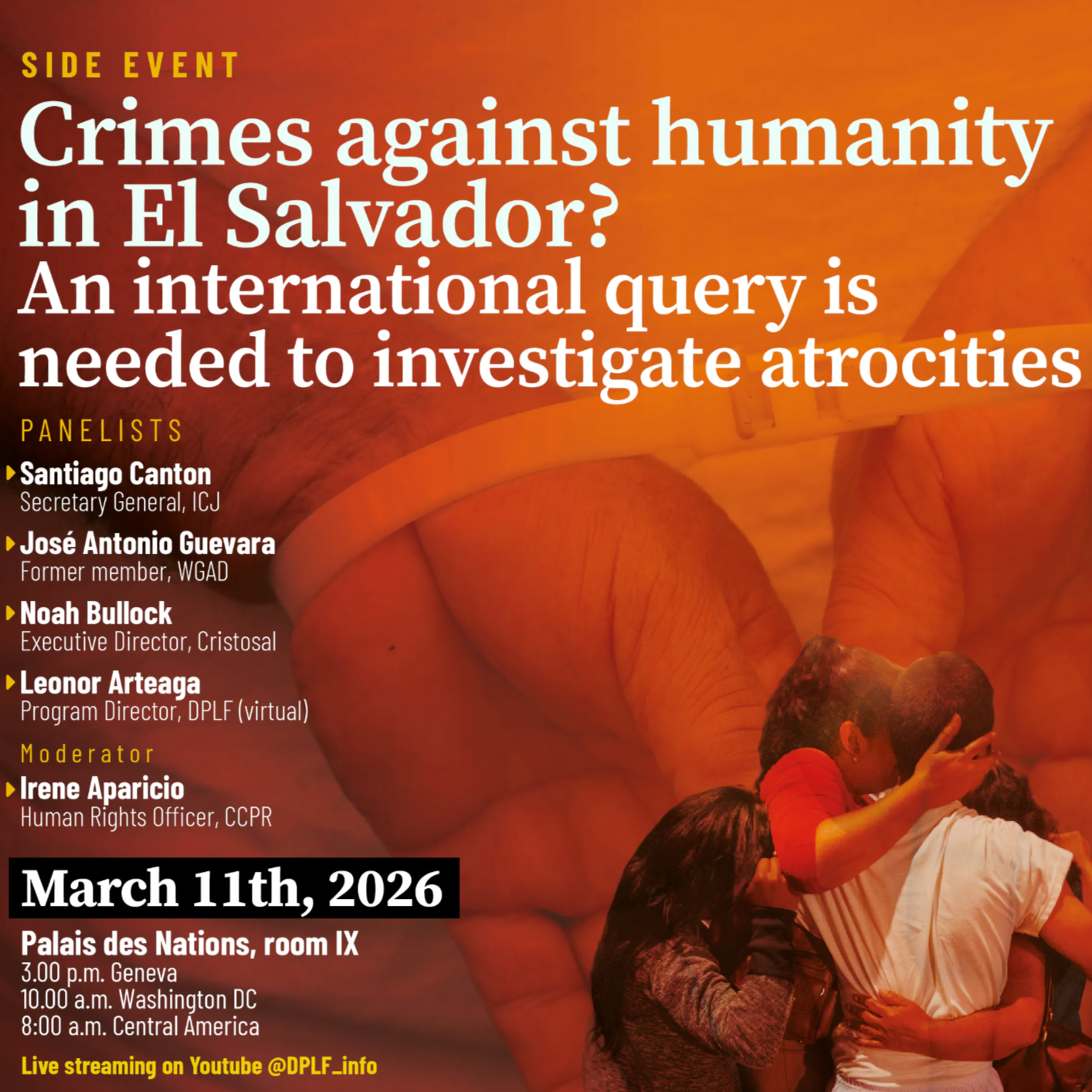
Crimes against humanity in El Salvador? An international query is needed to investigate atrocities - side event at March 11, 2026 UN Human Rights Council Session
Supported by civil society, a group of independent international law and human rights experts (The International Group of Experts for the Investigation of Human Rights Violations in the Context of the State of Emergency in El Salvador – GIPES [for its initials in Spanish]) was convened to investigate whether systematic abuses being carried out under the State of Exception public security policy in El Salvador –including torture, sexual violence, enforced disappearances, and extrajudicial executions– are indeed crimes against humanity.
On March 11, 2026, at a side event to the United Nations Human Rights Council session, members of the Group and civil society presented the Group of Experts initiative, their research findings and legal analysis, and other key information about the ongoing State of Exception and its impact in El Salvador.
The invited speakers were Leonor Arteaga, Program Director at DPLF; Santiago Canton, ICJ Director and GIPES member; José Antonio Guevara, former WGAD President and Group member; and Noah Bullock, the Executive Director of Cristosal. Irene Aparicio of CCPR moderated the panel discussion.
This side event was hosted by the Centre for Civil and Political Rights (CCPR), Cristosal, Due Process of Law Foundation (DPLF), InterJust, International Commission of Jurists (ICJ), International Federation for Human Rights (FIDH), Redress, Rights & Security International.

Emergency powers: Presidents unleashed? - The Miller Center
This Miller Center conference examines the history, expansion, and constitutional risks of presidential emergency powers in the United States. Convened after the Supreme Court’s February 2026 decision rejecting President Trump’s use of emergency authority to regulate tariffs, the discussion brings together leading scholars and practitioners to assess how presidents, Congress, and the courts have shaped the emergency-powers framework. Panelists trace the issue from the founding era through FDR, Watergate, 9/11, and the modern presidency. For ISSE, the event is important because it shows how exceptional powers can become routine tools of governance when Congress is weak, courts are cautious, and presidents face incentives to act unilaterally. The result is a constitutional system under strain, where emergency authority risks replacing democratic deliberation.
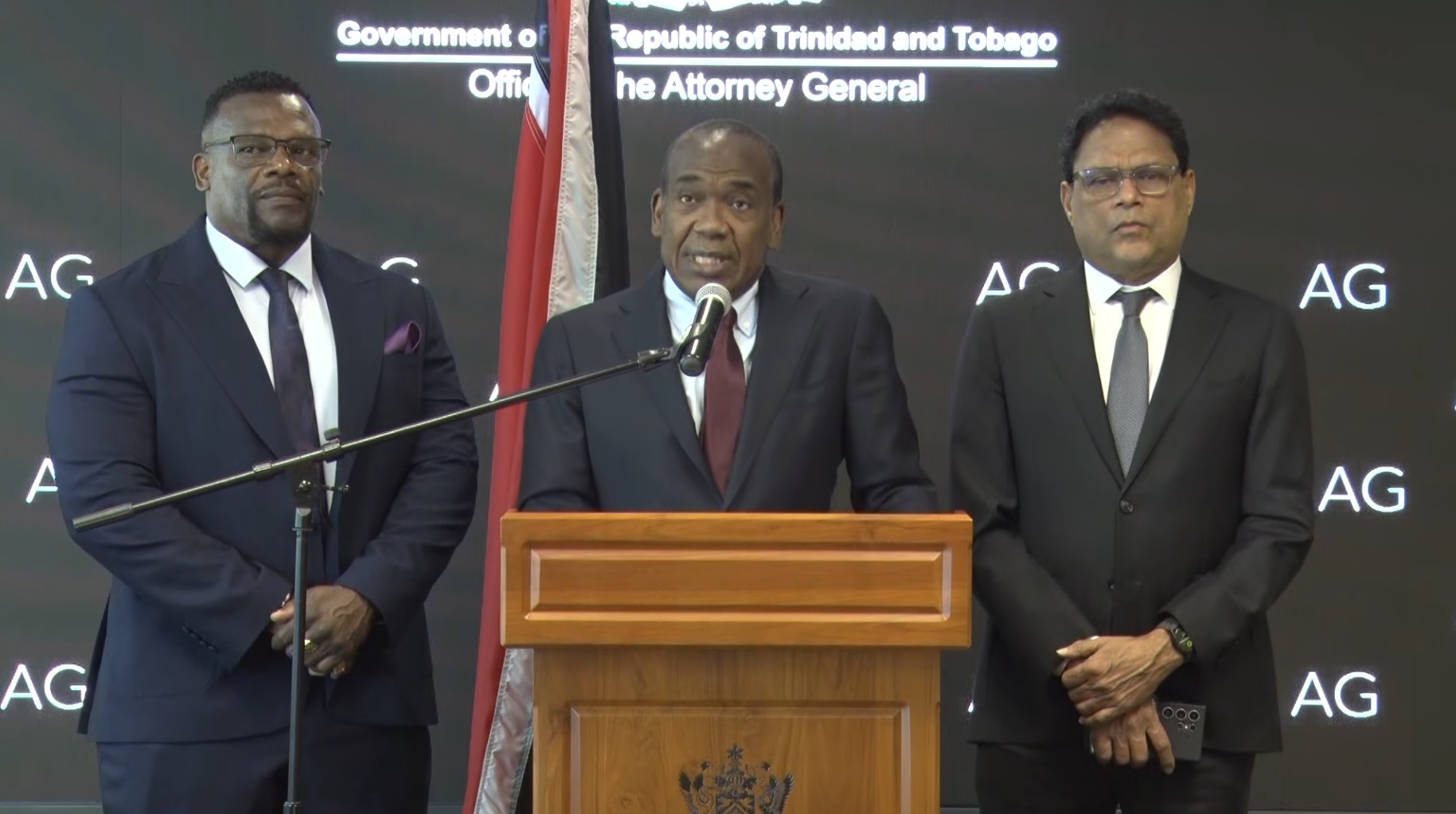
Statement From Trinidad and Tobago Attorney General John Jeremie SC on the State of Emergency
On March 3, 2026, the Government of Trinidad and Tobago reimposed a state of emergency following a resurgence of gang-related violence, including intelligence indicating imminent reprisal killings and coordinated attacks. Acting on the advice of the National Security Council, the Prime Minister invoked constitutional emergency provisions, with the President formally proclaiming the emergency effective immediately. The decision followed an earlier state of emergency (July 2025–January 2026), during which authorities reported significant reductions in crime through intelligence-led operations targeting organized criminal networks.
Officials framed the renewed declaration as a necessary response to escalating threats that exceeded the capacity of ordinary law enforcement tools, emphasizing a “zero tolerance” approach to gang activity and the protection of state institutions. At the same time, the government highlighted both the operational successes of prior emergency measures and the limits of legislative reforms intended to sustain those gains under normal legal conditions.

Podcast | Supreme Court Rules Trump’s Tariffs Unlawful Under IEEPA - National Constitution Center
On February 20, the Supreme Court ruled that the International Emergency Economic Powers Act, known as IEEPA, does not authorize President Trump’s sweeping tariffs. In Learning Resources, Inc. v. Trump, and the consolidated case, the Court held that the statute does not grant the President the power to impose tariffs under a declaration of economic emergency. In this podcast episode from the National Constitution Center, we explore what the Court held, why the Justices disagreed about the reasoning, and what this decision might tell us about the future of presidential emergency power. To help us explore these questions are two leading Court watchers and constitutional experts, Zachary Shemtob of SCOTUSblog and Ilya Somin of the George Mason University. Julie Silverbrook, vice president of civic education of the National Constitution Center, moderates.

ISSE discussed with Adam Kinzinger
In this February 18, 2026, podcast discussion with Adam Kinzinger entitled “Former CIA Ops Chief on Ukraine, Munich, and the U.S. Europe Shift,” ISSE’s Founder and Governing Board Chair Ed Bogan talks about a range of topics including what he saw and heard at the 2026 Munich Security Conference, the current trajectory for Ukraine in its fight against Russia, and of course, ISSE.
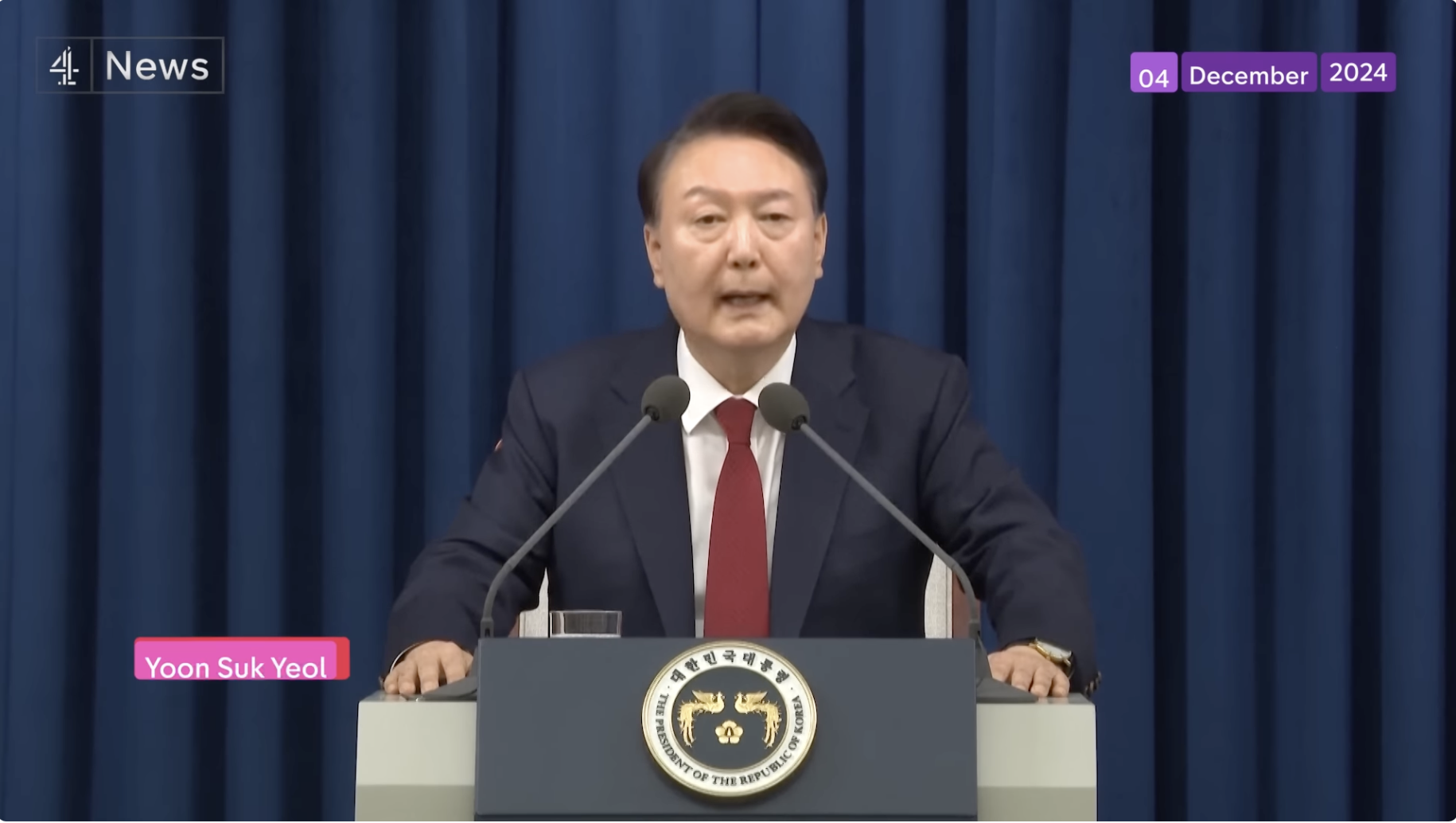
Former South Korean President Yoon Suk Yeol handed life sentence - but spared death penalty - Channel 4 News
South Korea’s former president, Yoon Suk Yeol, has been sentenced to life imprisonment after a failed six-hour declaration of martial law in December 2024 led to his conviction for insurrection. Although martial law is constitutionally permitted under certain emergency conditions, the move was widely seen as an extreme response to domestic political pressures and triggered deep national polarization. His arrest, prosecution, and sentencing nevertheless unfolded through established legal processes, demonstrating the resilience of South Korea’s democratic institutions. The episode offers a stark case study in how emergency powers can be invoked, contested, and ultimately constrained within a constitutional system.
State of Emergency, with Dr. Maciej Wilmanowicz - the first episode of a two part interview on the Common Sense Generation video podcast series
On the first episode of this two part interview on the Common Sense Generation video podcast series, Dr. Maciej Wilmanowicz introduces himself, describing himself as an intellectual historian rather than a philosopher by training. He discusses the historical roots of emergency powers going as far back as the Roman Republic, he analyzes the paradox of legalizing emergency powers, and he introduces the possibility of existing within a “permanent state of exception.”
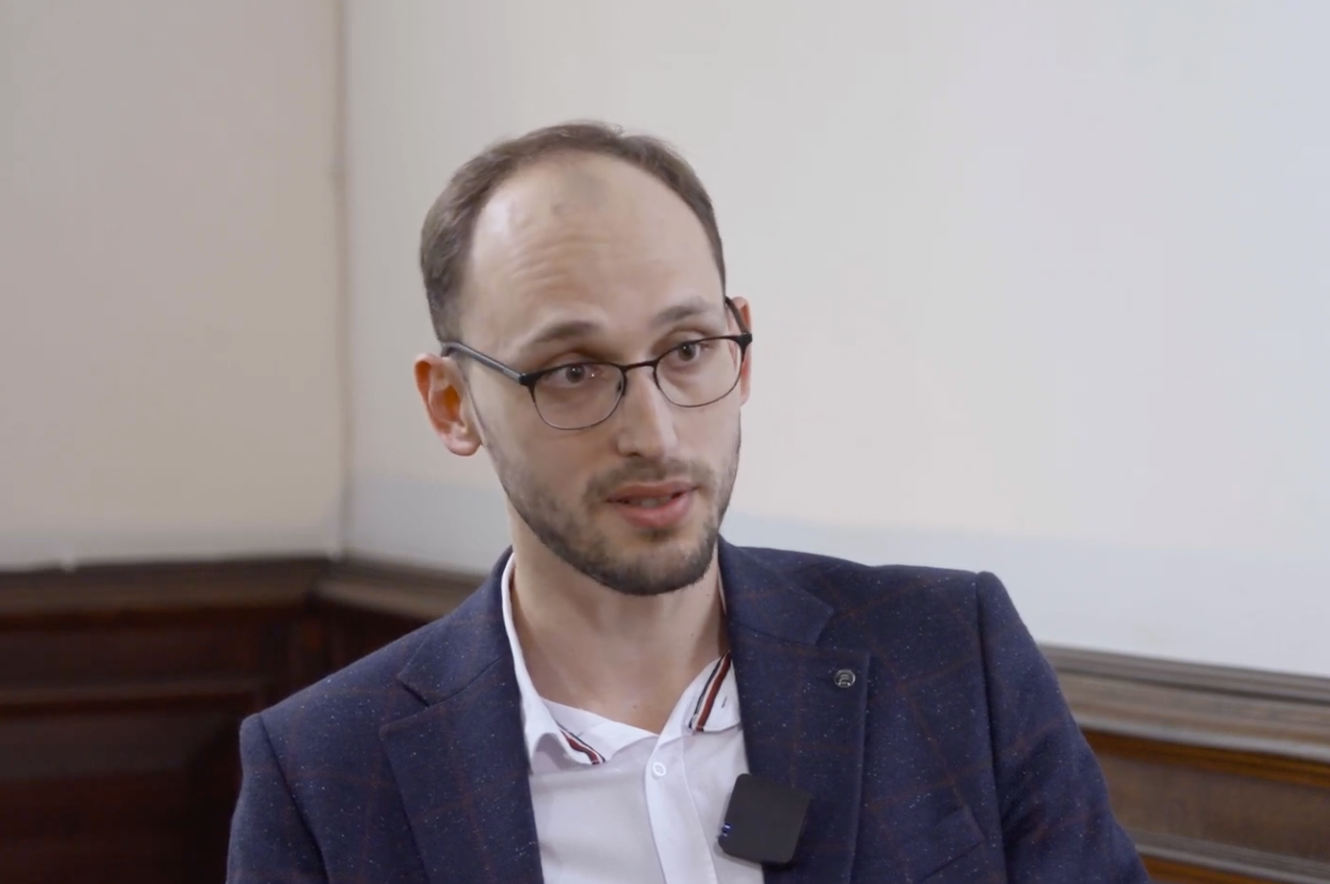
Permanent State of Exception, with Dr. Maciej Wilmanowicz - the second episode of a two part interview on the Common Sense Generation video podcast series
On the second episode of this two part interview on the Common Sense Generation video podcast series, Dr. Maciej Wilmanowicz discusses philosopher Giorgio Agamben's concept that modern societies exist in a "permanent state of exception" - where emergency measures and exceptional legal frameworks have become normalized rather than temporary.
He goes on to discuss citizens’ responses to emergencies utilizing several contemporary examples, the challenge of the continuous expansion of related laws and regulations that no one can fully comprehend or navigate, how competing definitions of the “common good“ introduce coherence challenges, and several specific examples are provided which illuminate that final point, running the risk of undermining the very freedoms these powers are meant to protect.

ECOWAS: State of emergency declared across West Africa - SABC News
Economic Community of West African States (ECOWAS) declared a state of emergency across West Africa following a series of recent coups and failed military mutinies across the region. The announcement was made by ECOWAS Commission President Omar Touray during ECOWAS’ 55th session of the Mediation and Security Council held in Abuja on December 9, 2025. On December 8, Nigerian fighter jets and ground troops moved to help restore order after a foiled coup attempt in Benin. Nigerian President Bola Tinubu sent fighter jets to assert control over Benin's airspace on Sunday as his close ally, Benin President Patrice Talon, tried to put down the coup attempt.
ECOWAS is a regional group of 12 West African nations currently, including Benin, Cabo Verde, Côte d’Ivoire, The Gambia, Ghana, Guinea, Guinea-Bissau, Liberia, Nigeria, Senegal, Sierra Leone, and Togo, focused on economic integration, free trade, and promoting peace. Mali, Burkina Faso, and Niger were all recent member states but announced their withdrawal in early 2024.
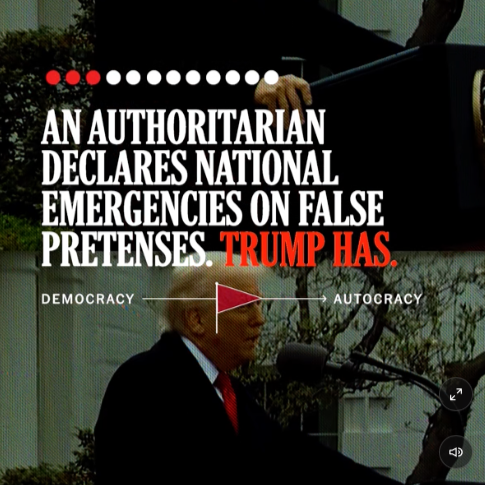
Are We Losing Our Democracy? - The New York Times
The views expressed in the excerpted New York Times Editorial Board opinion below are solely those of its authors. They do not reflect the views, positions, or policy recommendations of the Institute for the Study of States of Exception (ISSE), which does not take institutional positions on editorial commentary. The material is presented to illustrate a perspective relevant to ongoing debates concerning emergency powers and governance.
When you hear the word “autocracy,” the United States is rarely a country that comes to peoples’ minds. Right? Well according to these twelve red flags of democratic erosion, America has moved in the direction of autocracy, thanks to the efforts of President Donald Trump. The third red flag of democratic erosion, depicted in the linked video, is declaring national emergencies on false pretenses, which the New York Times Editorial Board indicates has already taken place since President Trump was inaugurated in early 2025.

Using and abusing statutory emergency powers: Elizabeth Goitein - Chautauqua Institution
First aired on July 11, 2024, following her remarks at the Chautauqua Institution, Elizabeth Goitein here explores the historical use and abuse of statutory emergency powers by U.S. presidents, emphasizing their infrequent invocation and the ethical implications, particularly highlighted by President Trump's controversial declaration during his first term for border wall funding. Goitein underscores bipartisan efforts for reform following these events, including proposed legislation to restrict the duration of emergency declarations. Goitein cautions against using emergency powers for long-standing issues like climate change, emphasizing their intended temporary and crisis-oriented nature in constitutional governance.

Blood Work podcast - “Crock of Schmitt”
Carl Schmitt was a German jurist, political theorist, and author known for his controversial association with the Nazi regime. He is influential in political thought for his concepts, particularly the idea that the sovereign is "one who decides on the exception" and that politics is defined by the “friend-enemy” distinction. His work was highly critical of liberal democracy and influential in the development of authoritarian political theory, and is for the most part unavoidable when discussing theory around states of exception.
The new Blood Work podcast series takes on Schmitt’s work in this November 19, 2025, episode entitled “Crock of Schmitt.”

ISSE discussed on Michael Weiss’s “Foreign Office” podcast
On October 31, 2025, ISSE’s Governing Board Chair Ed Bogan appeared on Michael Weiss’s “Foreign Office” podcast series, in an episode entitled “Former CIA Officer Ed Bogan on War, Ukraine, and the Limits of American Values - States of Exception.” During that episode, Ed talked extensively about the ongoing war in Ukraine, but also talked about ISSE’s purpose and plans now that the nonprofit is up and running.

Can Emergency Powers Be Leveraged to Create Change Beyond a Crisis?
This episode features UC Berkeley Law Professors Katerina Linos and Elena Chachko discussing their paper in the William & Mary Law Review, “Emergency Powers for Good.” In the article and a blog post on “Lawfare,” they argue that emergency powers — often associated with overreach and authoritarianism — can be used in legitimate and transformative ways.

Lawfare Daily: Bob Bauer and Liza Goitein on Emergency Powers Reform
Bob Bauer, Professor of Practice and Distinguished Scholar in Residence at New York University School of Law, and Liza Goitein, Senior Director of Liberty & National Security at the Brennan Center, join Kevin Frazier, Assistant Professor at St. Thomas University College of Law and a Tarbell Fellow at Lawfare, to review the emergency powers afforded to the president under the National Emergency Act, International Emergency Economic Powers Act, and the Insurrection Act. The trio also inspect ongoing bipartisan efforts to reform emergency powers.
Can the president declare a national emergency without limits
In this episode of “It’s the Law,” UC Berkeley School of Law Dean Erwin Chemerinsky breaks down the answer and explains that the Constitution is meant to limit what the government can do, and those limits apply to emergencies as well…
Emergency Powers of the President - Civics 101: A Podcast, New Hampshire Public Radio
If you want to learn about economic sanctions, which are the most common of the president’s emergency powers, and one non-conflict way to exert pressure on a foreign power, check out New Hampshire Public Radio’s Civics 101 podcast episode on emergency powers. You’ll also learn about certain military powers the president has under an emergency declaration. Emergency powers are designed for when plans need to change, and fast, by allowing the president to override certain Constitutional provisions in a time of crisis. But in the last century, national emergencies have gone from a rarity to a tool that presidents use dozens of times while in office. We talk about what a president can (and cannot) do during a state of emergency, and how Congress has tried to put checks on that power, with help from Kim Lane Scheppele, author of Law in a Time of Emergency…