
Institutional Perspectives
Welcome to the Institute for the Study of State of Exception (ISSE) Institutional Perspectives page, highlighting external content that deepens the understanding of how states of exception are used—and misused or abused—around the world. Whether you’re a researcher, practitioner, or engaged reader, this section offers tools to support further inquiry and action on these events.
“Emergency measures, initially presented as temporary necessities, often become permanent features of social and political life.”
— Slavoj Žižek (Welcome to the Desert of the Real, 2002)

Five years after President Kais Saied invoked emergency powers and suspended Tunisia’s parliament, this article examines the country’s subsequent shift toward concentrated executive rule, political repression, international isolation, and economic vulnerability. It also considers how the United States and Europe might reengage Tunisia and support reform while confronting the lasting institutional consequences of a state of exception that evolved into a broader transformation of constitutional governance.

The Brennan Center’s Joseph Nunn examines the prolonged deployment of National Guard forces in Washington, D.C., arguing that the more significant constitutional issue is not the initial invocation of emergency authority but the normalization of a sustained military role in civilian governance. The article explores broader questions about the temporal limits of emergency powers, the domestic use of military forces, and the constitutional risks that arise when exceptional measures become part of ordinary government practice.

Janos Mark Szakolczai examines how information generated during seemingly ordinary or peaceful conditions can become a latent instrument of coercion, surveillance, and warfare when political circumstances change. Drawing on the concept of capta, Agamben’s state of exception, and examples ranging from the Prague Spring to contemporary AI-enabled security systems, the article explores how exceptional powers can become embedded in enduring data infrastructures long after the circumstances that produced them have changed.

Drawing on Poland's own experience recovering from democratic backsliding, investigative journalist Wojciech Cieśla examines the institutional challenges Hungary faces following the end of Viktor Orbán's sixteen years in power. The article explores the difficult process of rebuilding courts, media, and constitutional institutions after prolonged executive consolidation, offering important insights into how democracies recover from periods of exceptional governance.

This article by ISSE Research Fellow Yuvraj Tuli, published in Just Security, examines how courts should distinguish between legitimate national security judgments and the use of national security authorities as a pretext for unrelated political or administrative objectives. It explores when judicial deference to executive claims of national security is warranted, and when constitutional accountability requires more searching judicial review.

The Roman statesman Cincinnatus has long symbolized the constitutional principle that extraordinary powers should be exercised only when genuinely necessary and relinquished once the crisis has passed. His enduring legacy illustrates one of the oldest and most important safeguards of constitutional government: that emergency authority derives its legitimacy not only from necessity, but from its temporary character.

The EMERGE Project at Ghent University examines how emergency powers have shaped European constitutional orders, legal institutions, and political cultures over the past century, challenging the assumption that emergencies leave no lasting constitutional legacy. The project demonstrates how exceptional governance can become embedded within ordinary legal systems, offering important historical context for understanding the evolution and normalization of emergency powers today.

In this discussion hosted by the American Enterprise Institute, John Yoo, William Galston, and Ilya Somin examine competing constitutional theories of executive power, separation of powers, independent agencies, war powers, and the original understanding of Article II against the backdrop of major Supreme Court cases concerning the unitary executive. The panel explores enduring questions about the constitutional limits of presidential authority and how competing interpretations of executive power continue to shape American constitutional governance.
This analysis by Ashleigh Maciolek at the Brennan Center for Justice examines the Supreme Court's increasing reliance on its emergency, or "shadow," docket, noting that for the first time the Court resolved more substantive matters through expedited emergency procedures than through its traditional merits docket. Particularly relevant to ISSE's work, the article raises broader questions about how institutional procedures originally designed for exceptional circumstances can gradually become normalized within ordinary constitutional governance.

In this Lawfare essay, George Croner examines recent court decisions addressing presidential authority to federalize the National Guard and considers what those rulings may mean for future invocations of the Insurrection Act, arguing that courts retain a critical role in reviewing whether presidents have satisfied the statutory conditions necessary to exercise extraordinary domestic emergency powers. The article explores how judicial oversight can serve as an important safeguard against the expansion and normalization of exceptional executive authority within ordinary constitutional governance.
Following nearly thirty-eight years of martial law, Taiwan undertook a decades-long process of reforming its security institutions while continuing to confront significant external security threats. This study demonstrates how constitutional systems can restore democratic oversight, civilian control, and institutional accountability after prolonged periods of exceptional governance, offering an important perspective on the long-term process of democratic recovery from emergency rule.

Drawing on more than three decades of comparative evidence, this report argues that democratic governance strengthens national security by reinforcing institutional resilience, public trust, accountability, and effective crisis response, challenging the assumption that security requires weaker democratic constraints. The report provides an evidence-based framework for understanding how constitutional guardrails and democratic oversight contribute to long-term security while helping prevent the normalization of extraordinary executive authority.

Kate Gilbert examines how the Department of Justice’s report uses the language of ordinary bureaucracy to frame extraordinary political claims. The article raises questions central to ISSE’s work: how exceptional political logics become embedded within routine democratic governance and how expansive interpretations of Unitary Executive Theory may reshape democratic governance.

How can the most expansive forms of the unitary executive theory function as a standing state of exception within constitutional law? ISSE puts the recent legal disputes over the revocation of security clearances and the attempted federalization of National Guard within a deeper theory of presidential power.
How has the use of presidential “czars” undermined Congress and the Constitution? Dr. Mark J. Rozell discusses his newest book “Unitary Executive Theory: A Danger to Constitutional Government.”

Examining the Supreme Court’s consideration of the Trump v. Slaughter case, Peter J. Wallison argues that permitting presidents to remove officials from independent regulatory agencies without a cause would fundamentally alter the balance between Congress and the executive branch. Relevant to ISSE’s work, Wallison warns that subtle judicial reinterpretations of constitutional structure over time accumulate excessive concentrations of executive power.

Contrary to the “Decision of 1789” myth, history shows that the first Congress rejected the exclusive unitary model of the presidency—and thus the presidential removal power should be subject to more congressional control than recent Supreme Court decisions have held.

Human Rights Watch’s analysis of Hungary highlights how emergency powers have become embedded in the country’s political system. Under Viktor Orbán, who was voted out of office in April 2026, crisis-driven authorities have evolved into durable tools for governing, shaping media, institutions, and electoral competition. Rather than temporary measures, emergency frameworks have been renewed and repurposed across migration, pandemic, and security contexts. Weak domestic and external constraints have allowed these powers to persist with limited oversight. For ISSE, Hungary illustrates the normalization of exceptionality, where extraordinary powers become a routine feature of democratic governance.
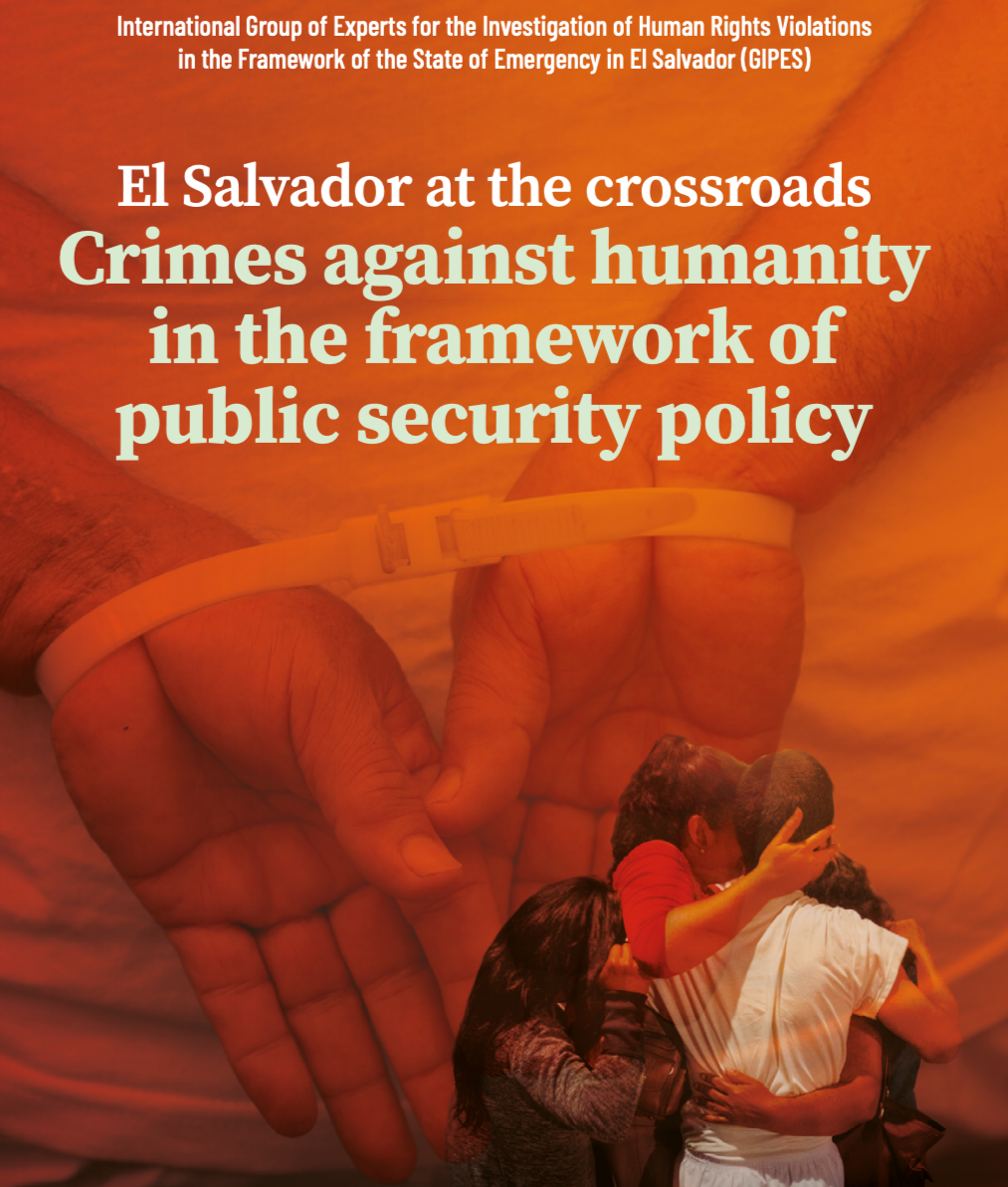
An international panel of legal experts has concluded that serious human rights violations committed under El Salvador’s ongoing state of emergency may constitute crimes against humanity. The report examines allegations including arbitrary detention, torture, enforced disappearances, sexual violence, and persecution carried out as part of the government’s security policy since March 2022. Beyond documenting abuses, the study argues that the prolonged state of exception has weakened democratic safeguards, eroded separation of powers, and concentrated authority within the executive branch. The report also calls for independent case review mechanisms and greater international accountability efforts. For ISSE, the findings highlight the long-term institutional risks posed by entrenched emergency governance.

A surge in executive “emergency” actions is reshaping the balance of power in the United States. This analysis finds that the scale, pace, and scope of recent emergency orders, particularly outside traditional frameworks like International Emergency Economic Powers Act (IEEPA), are historically unprecedented and increasingly directed toward domestic policy goals. The use of declarations such as the “National Energy Emergency” illustrates how emergency authorities can be leveraged to bypass Congress and statutory constraints. With legislative checks weakened since INS v. Chadha and judicial review often limited, meaningful oversight is increasingly difficult. The piece from Lawfare argues that courts may need to adopt more searching review to prevent the normalization, and weaponization, of emergency powers.

This Miller Center conference examines the history, expansion, and constitutional risks of presidential emergency powers in the United States. Convened after the Supreme Court’s February 2026 decision rejecting President Trump’s use of emergency authority to regulate tariffs, the discussion brings together leading scholars and practitioners to assess how presidents, Congress, and the courts have shaped the emergency-powers framework. Panelists trace the issue from the founding era through FDR, Watergate, 9/11, and the modern presidency. For ISSE, the event is important because it shows how exceptional powers can become routine tools of governance when Congress is weak, courts are cautious, and presidents face incentives to act unilaterally. The result is a constitutional system under strain, where emergency authority risks replacing democratic deliberation.

A Human Rights Watch report finds that some Salvadorans deported from the United States within the last year have been detained in El Salvador without access to lawyers, families, or courts, raising concerns about enforced disappearance. The report links these cases to El Salvador’s ongoing state of emergency, which has suspended key due process protections. Many families report being unable to determine the whereabouts or legal status of detained relatives. Authorities in both countries have provided limited transparency, while judicial and oversight mechanisms have offered little recourse. The findings highlight the risks that arise when deportation policies intersect with emergency governance frameworks.
This Carnegie Endowment report analyzes democratic backsliding in the United States under President Donald Trump in comparative perspective. It finds that recent developments align with patterns of executive aggrandizement seen in countries such as Hungary, India, and Türkiye, particularly through efforts to consolidate power within the executive, weaken institutional checks, and constrain civil society. At the same time, the U.S. case is distinguished by the speed and breadth of these efforts, as well as a focus on intra-executive control and indirect pressure on institutions. While U.S. democratic institutions remain more resilient than many global counterparts, the report concludes that the pace and scope of recent changes present a significant test for American democracy.

This Lawfare U.S.-based analysis compiles a nationwide dataset of more than 300 immigration habeas cases in which federal authorities failed to comply with court orders. While courts generally succeed in securing eventual compliance, the cases reveal recurring patterns, such as delayed releases, unauthorized transfers, and failures to justify detention, that require repeated judicial intervention to enforce legal limits. Situated within a broader framework of sustained emergency authorities and expanded enforcement activity, these dynamics point to structural strain within the system of legal oversight.
Viewed in aggregate, the dataset suggests not a breakdown of legality, but a shift in how it operates in practice. Individuals remain formally protected by law, yet the realization of those protections often depends on administrative action and continued judicial enforcement. This pattern also raises questions about the limits of judicial enforcement itself, and whether repeated, low-consequence noncompliance risks becoming normalized over time. For ISSE, these dynamics highlight how prolonged reliance on emergency frameworks may contribute to the emergence of exception-like practices within routine governance.

The U.S. Helsinki Commission issued a formal statement on March 18, 2026, entitled “Bipartisan Helsinki Commission Leadership issue Statement on OSCE Report on Human Rights Abuses in Georgia,” condemning Georgia’s systemic abuse of emergency‑like legislative powers and urging U.S. sanctions to compel compliance with international recommendations. This marks an explicit, bipartisan U.S. government acknowledgment that Georgia is leveraging emergency‑style laws to consolidate political control and suppress democratic opposition. The call for sanctions signals rising international pressure and potential policy movement if Georgia fails to reverse course.

Key Report Takeaways:
Transnational trafficking of drugs and weapons, combined with the fragmentation of the gang landscape, fueled an escalation in violence that peaked in 2023 in both Jamaica and Trinidad and Tobago.
In response, governments adopted states of emergency (SoEs) to curb gang violence. While violence declined in 2025, evidence does not support a direct or sustained link to SoEs.
SoEs produce uneven and localized reductions in violence. They can temporarily suppress violence, but often they displace gang activity to other areas.
The resilience and adaptability of gangs — through leadership succession, splintering, and mobility — have blunted the long-term impact of SoEs, with violence and rivalries frequently resuming after short-lived lulls.
Militarized security operations under SoEs have fueled police brutality and rights abuses, with effects that extend beyond emergency periods and erode public trust in law enforcement.

In a recent Lawfare piece, Jeffery Tobin argued that the Americas are fast becoming a “Hemisphere of Exceptions.” From Ecuador, to Honduras, to the United States, executives across the region are increasingly deploying emergency measures—once conceived as temporary constitutional relief valves—as central instruments of governance to bypass legislative paralysis and manage chronic instability. As Tobin observes, this drift signals a dangerous transformation in which “legality [yields] to expediency” and crisis becomes a standing justification for rule by fiat.
However, one nation has emerged as a notable exception to this trend. In January, Canada’s Federal Court of Appeal (FCA) delivered a landmark unanimous decision in Canada (Attorney General) v. Canadian Civil Liberties Association. The decision affirmed that the federal government’s 2022 invocation of the Emergencies Act in response to the anti-lockdown “Freedom Convoy” was both unreasonable and ultra vires. In doing so, it upheld an earlier Federal Court ruling in Canadian Frontline Nurses v. Canada, which had found that the Cabinet lacked objectively reasonable grounds to believe a national emergency existed.
While counsel for the government still needs to review the decision and weigh a final appeal to the Supreme Court of Canada, the FCA’s ruling currently stands as the definitive interpretation of the act’s various thresholds. Consequently, Canada is emerging as a notable exception to the regional drift toward emergency powers, owing to decisive judicial interventions that have reasserted statutory limits on executive power.

Russia’s systematic deportation and transfer of Ukrainian children from occupied territories since 2014 is a central instrument of Russian governance. This article conceptualises the abduction of children as politicised captivity – the state-directed, long-term custodial control of a vulnerable population segment for explicitly political ends. The removal of children serves the strategic goals of exerting coercive pressure on local families, disrupting Ukrainian identity transmission, and facilitating demographic restructuring. Drawing on Foucault’s ‘biopolitics’ and Agamben’s ‘state of exception’, we analyse how institutional and legal mechanisms, from ‘recreation’ camps to streamlined adoption decrees, are employed to seize control over the identity formation and future political subjectivity of minors. Empirical findings, derived from witness testimonies and interviews, detail the operational pathways of transfer (e.g., filtration, holiday schemes) and the resulting experiences of psychological trauma, educational disruption, and ideological indoctrination. We argue that by targeting children, Russian authorities employ a sophisticated form of biopolitical control that is fundamental to maintaining and legitimising their long-term authority in contested spaces.
ISSE Comment: This article aligns closely with ISSE’s underlying inquiry into how exceptional forms of power are converted into durable techniques of rule. At one level, it documents grave abuses against Ukrainian children; at a deeper level, it shows how those abuses are embedded within an administrative, legal, and ideological apparatus designed to consolidate authority in occupied territory. That is precisely the kind of transformation ISSE seeks to examine: the movement from emergency or wartime justification to routinized governance. The article is especially valuable in showing that the relevant question is not only whether a violation occurred, but how coercive practices are institutionalized through decrees, custody systems, educational policy, demographic engineering, and narratives of “protection” or “rescue.” In ISSE’s framework, this is a revealing case of the exception becoming normalized, where extraordinary interventions into family life, identity, and legal status are made to appear administratively ordinary.
The piece also speaks directly to ISSE’s broader concern with the relationship between sovereignty, legality, and political subject formation. Its use of biopolitics, the state of exception, and necropolitics helps illuminate how modern systems of control operate not only through overt repression, but through the management of populations, the reordering of legal protections, and the attempted remaking of future citizens. By focusing on children, the article identifies one of the most consequential sites of long-term political struggle: the shaping of memory, belonging, and national continuity across generations. For ISSE, this makes the article important not simply as an account of wartime abuse, but as an analysis of how state power seeks to reconstitute social and political reality itself, through the capture of vulnerable populations, the suspension or distortion of legal constraint, and the strategic use of administrative systems to transform exceptional domination into an enduring order.