

All Content
Welcome to the Institute for the Study of States of Exception (ISSE) main content page, a single source for all posts from the Institute, including commentary on global events, book reviews, academic literature, links to our podcasts, and additional resources. Check back regularly for more content from us.
“Sovereign is he who decides the exception.”
— Carl Schmitt (Political Theology: Four Chapters on the Concept of Sovereignty, 1922)
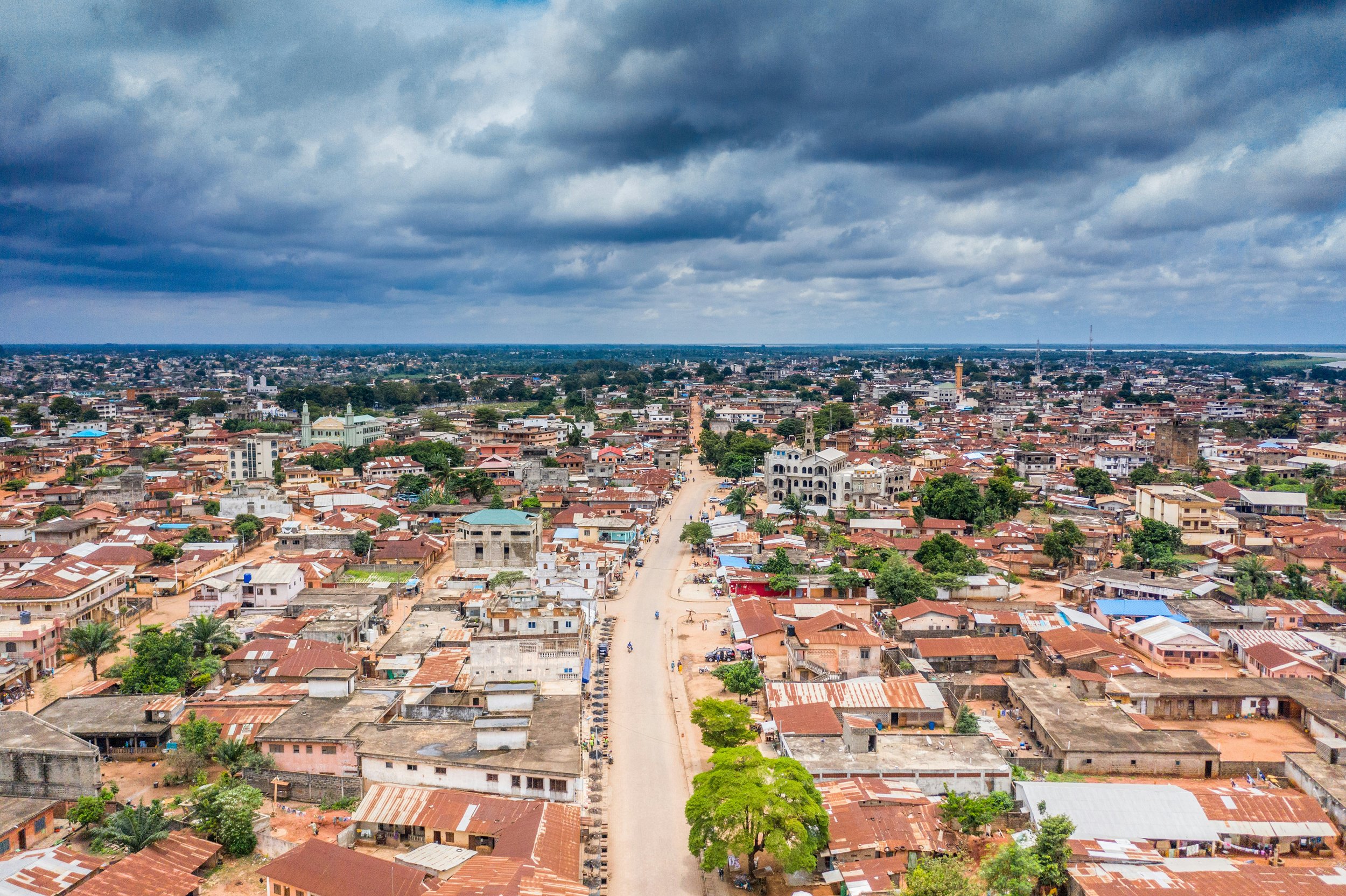
ECOWAS: State of emergency declared across West Africa - SABC News
Economic Community of West African States (ECOWAS) declared a state of emergency across West Africa following a series of recent coups and failed military mutinies across the region. The announcement was made by ECOWAS Commission President Omar Touray during ECOWAS’ 55th session of the Mediation and Security Council held in Abuja on December 9, 2025. On December 8, Nigerian fighter jets and ground troops moved to help restore order after a foiled coup attempt in Benin. Nigerian President Bola Tinubu sent fighter jets to assert control over Benin's airspace on Sunday as his close ally, Benin President Patrice Talon, tried to put down the coup attempt.
ECOWAS is a regional group of 12 West African nations currently, including Benin, Cabo Verde, Côte d’Ivoire, The Gambia, Ghana, Guinea, Guinea-Bissau, Liberia, Nigeria, Senegal, Sierra Leone, and Togo, focused on economic integration, free trade, and promoting peace. Mali, Burkina Faso, and Niger were all recent member states but announced their withdrawal in early 2024.

Lithuania’s Parliament Declares a State of Emergency Amid Hybrid Threat Concerns
In December 2025, Lithuania declared a state of emergency following repeated airspace incursions by unmanned balloons launched from neighboring Belarus, which authorities described as part of a broader hybrid threat affecting public safety and border security. Notably, the emergency was declared not by executive decree but by Lithuania’s parliament, the Seimas, acting under clear constitutional authority. The declaration is strictly time-limited, subject to legislative oversight, and embedded within ordinary constitutional procedures rather than suspended from them. As democracies increasingly invoke emergency powers in response to unconventional security challenges, Lithuania’s approach offers a contemporary example of how states can confront perceived threats while preserving parliamentary control and guarding against the normalization of exceptional measures.
The War on “Drug Boats”: How Lethal Maritime Strikes Push the Boundaries of International Law - Global Policy Journal
Neither the declaration of war nor the use of emergency powers suspends fundamental human rights and humanitarian norms. Even in war, the principle of distinction under international humanitarian law, notably the Geneva Conventions, protects civilians. A drug boat, however illicit its cargo, is not a military target. Those on board remain civilians especially if there is no clear way of identifying them as combatants – or in this case, suspected gang members. From a human rights perspective, the International Covenant on Civil and Political Rights is equally clear. The right to life, protected under international law, cannot be suspended even under a declared national security emergency. Emergencies do not justify taking a life on the mere assumption of criminality. This is both arbitrary and unlawful. The same applies to due process. Every individual has the right to a fair trial before being deprived of his liberty, and even more so, his life. Drug trafficking is not a capital crime that would warrant a death sentence, and even if it were, punishment still requires trial and conviction. The bombings, therefore, would be extrajudicial punishment.

Creating Zones of Lawlessness: Trump, Venezuela, and the Piecemeal Construction of an Authoritarian State - Western States Legal Foundation
The United States Government has deployed a large military task force to the waters in the Caribbean Sea, while making a variety of threats against the government of Venezuela and against drug traffickers it alleges are operating in that country and elsewhere. It is also conducting a campaign of killings against alleged drug traffickers, using drones and aircraft to attack and destroy small boats without warning far from U.S. shores, in almost every instance leaving no survivors.
The first part of this essay describes the Trump administration’s threats of military force against Venezuela and its killings of alleged drug traffickers in small boats in the Caribbean, providing an analysis of relevant law. The concluding section, “States of Emergency: The Wars Abroad and the Wars at Home,” examines how the administration has combined narratives about the drug trade, terrorism, and immigration to assemble a legal and ideological toolbox for the construction of an authoritarian state.
What’s at Stake in the Supreme Court Tariffs Case - Brennan Center for Justice
On November 5, the Supreme Court heard oral argument in a case testing the limits of presidential emergency powers. At issue is whether a president may use the International Emergency Economic Powers Act (IEEPA) to impose sweeping tariffs on imports from countries around the world.
The stakes of this case reach far beyond trade policy. The Court’s decision could shape whether the use of emergency powers to bypass Congress becomes a tool of routine governance, with profound implications for the constitutional separation of powers and limits on presidential authority.
The case arose after President Trump declared three national emergencies to impose tariffs on Canada, Mexico, and China, followed by a fourth national emergency to impose a 10 percent global tariff plus “reciprocal” tariffs of up to 50 percent on selected countries and corporations. He justified each of these measures as a response to an “unusual and extraordinary threat” to U.S. national security, foreign policy, and/or the economy.
A number of corporations and states responded by filing suit in federal court. The Brennan Center has filed friend-of-the-court briefs in several of these cases, arguing that longstanding trade imbalances do not constitute an emergency or an “unusual and extraordinary threat” and that IEEPA does not authorize the president to impose tariffs. The Court will now determine whether the statute gives presidents a “tariff pen” that can bypass Congress entirely.

Using and abusing statutory emergency powers: Elizabeth Goitein - Chautauqua Institution
First aired on July 11, 2024, following her remarks at the Chautauqua Institution, Elizabeth Goitein here explores the historical use and abuse of statutory emergency powers by U.S. presidents, emphasizing their infrequent invocation and the ethical implications, particularly highlighted by President Trump's controversial declaration during his first term for border wall funding. Goitein underscores bipartisan efforts for reform following these events, including proposed legislation to restrict the duration of emergency declarations. Goitein cautions against using emergency powers for long-standing issues like climate change, emphasizing their intended temporary and crisis-oriented nature in constitutional governance.

Declaration of a crime emergency in the District of Columbia
On December 4, 2025, the three judge U.S. Court of Appeals for the District of Columbia Circuit granted the Trump Administrations’s request to halt a lower court judge’s November 20, 2025, order concluding that President Trump’s deployment of 2000 National Guard troops to Washington, D.C., was illegal. The November 20 order had been postponed by the lower court’s judge from coming into effect until December 11, 2025, in order to give the Trump Administration time to appeal the decision. Initially, the D.C. attorney general had filed suit in September over the deployment, following President Trump’s August announcement that he would take over the city’s police department in conjunction with the National Guard deployments. As a result of the December 4, 2025, ruling, this suit filed by the D.C. attorney general will now continue.
ISSE comments on Former JAGs Working Group statement on September 2, 2025 lethal strikes
On November 29, 2025, the Former JAGs Working Group issued a statement concerning the lethal strikes taken by the US Military on September 2, 2025, against a civilian boat allegedly carrying narcotics. The statement, which is linked here, is unequivocal in its conclusion that if the second strike, which targeted two survivors of the initial strike, occurred as was reported by both the Washington Post and CNN, then the giving and execution of the order to kill the survivors constituted a war crime, murder, or both.
From the point of view of ISSE, the September 2 strike that reportedly killed eleven civilians, and subsequent strikes against civilian boats that are reported to have killed over seventy additional civilians, are connected to, and logically flow from, the administration's use of emergency powers.

A Farewell to Homo Sacer? Sovereign Power and Bare Life in Agamben’s Coronavirus Commentary
The article addresses Giorgio Agamben's critical commentary on the global governance of the COVID-19 pandemic as a paradigm of his political thought. While Agamben's comments have been criticized as exaggerated and conspiratorial, they arise from the conceptual constellation that he has developed starting from the first volume of his Homo Sacer series. At the centre of this constellation is the relation between the concepts of sovereign power and bare life, whose articulation in the figure of homo sacer Agamben traces from Antiquity to the present. We shall demonstrate that any such articulation is impossible due to the belonging of these concepts to different planes, respectively empirical and transcendental, which Agamben brings together in a problematic fashion. His account of the sovereign state of exception collapses a plurality of empirical states of exception into a zone of indistinction between different exceptional states and the normal state and then elevates this very indistinction to the transcendental condition of intelligibility of politics as such. Conversely, the notion of bare life, originally posited as the transcendental condition of possibility of positive forms of life, is recast as an empirical figure, whose sole form is the absence of form. We conclude that this problematic articulation should be abandoned for a theory that rather highlights the non-relation between sovereign power and bare life, which conditions the possibility of resistance and transformation that remains obscure in Agamben's thought.
Normalizing Emergencies - Yale Journal of Regulation
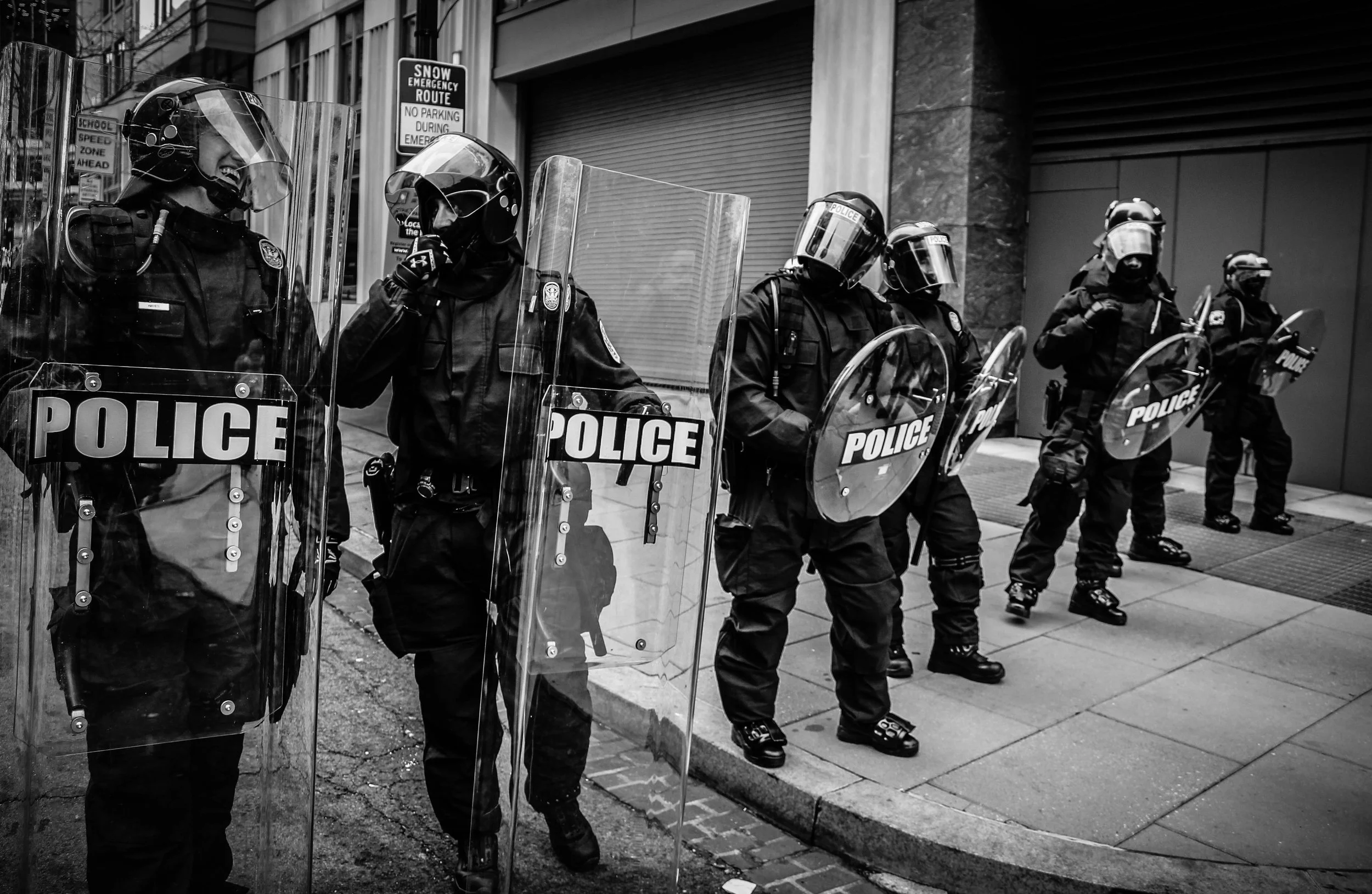
In the aftermath of Donald Trump’s return to the White House, a flurry of executive orders and memoranda has once again brought the concept of “national emergency” to the forefront of American governance. Within hours of taking office, the administration declared a “national emergency at the southern border,” villainized immigration, and raised the specter of a “border emergency” vaguely connected with a threat of “foreign terrorist organizations.” At first glance, these actions might resemble a continuation of tactics from Trump’s previous term, especially his 2019 declaration of a national emergency at the border. On closer inspection, however, the administration’s actions stretch well beyond traditional emergency contexts of national security or foreign policy, seeping into what were once ordinary spheres of domestic governance. Two separate executive orders, for example, both announce the existence of a “national energy emergency” and instruct relevant agencies to address the “emergency.” A separately presidential memorandum directed federal agencies to “deliver emergency price relief” by taking actions to reduce costs of housing, food, and fuel.

Unpacking al-Sisi’s Threefold Populism through Giorgio Agamben’s State of Exception Following 3 July 2013
How has Giorgio Agamben’s state of exception enabled the repressive concretization of al-Sisi’s populism following the 3 July 2013? Drawing on the state of exception, this study argues that al-Sisi’s populism developed a complex mechanism of repression building on his predecessors’ points of strength. Inspired by his predecessors’ repressive techniques, al-Sisi’s populism manifested a three-pronged strategy encompassing Nasser’s heroic image as a nation savior, al-Sadat’s technocrats-military-businessmen alliance, and Mubarak’s extended structural and legal repression. This study builds on a critical discourse analysis of al-Sisi’s speeches, legal documentations, and reports addressing Egyptian politics from 2013 until present in identifying a threefold populism based on the projection of a heroic image, a business-military-technocrats alliance, and structural-legal repression.
What Trump can and can’t do with the Insurrection Act - Demystifying the most ominous law in America
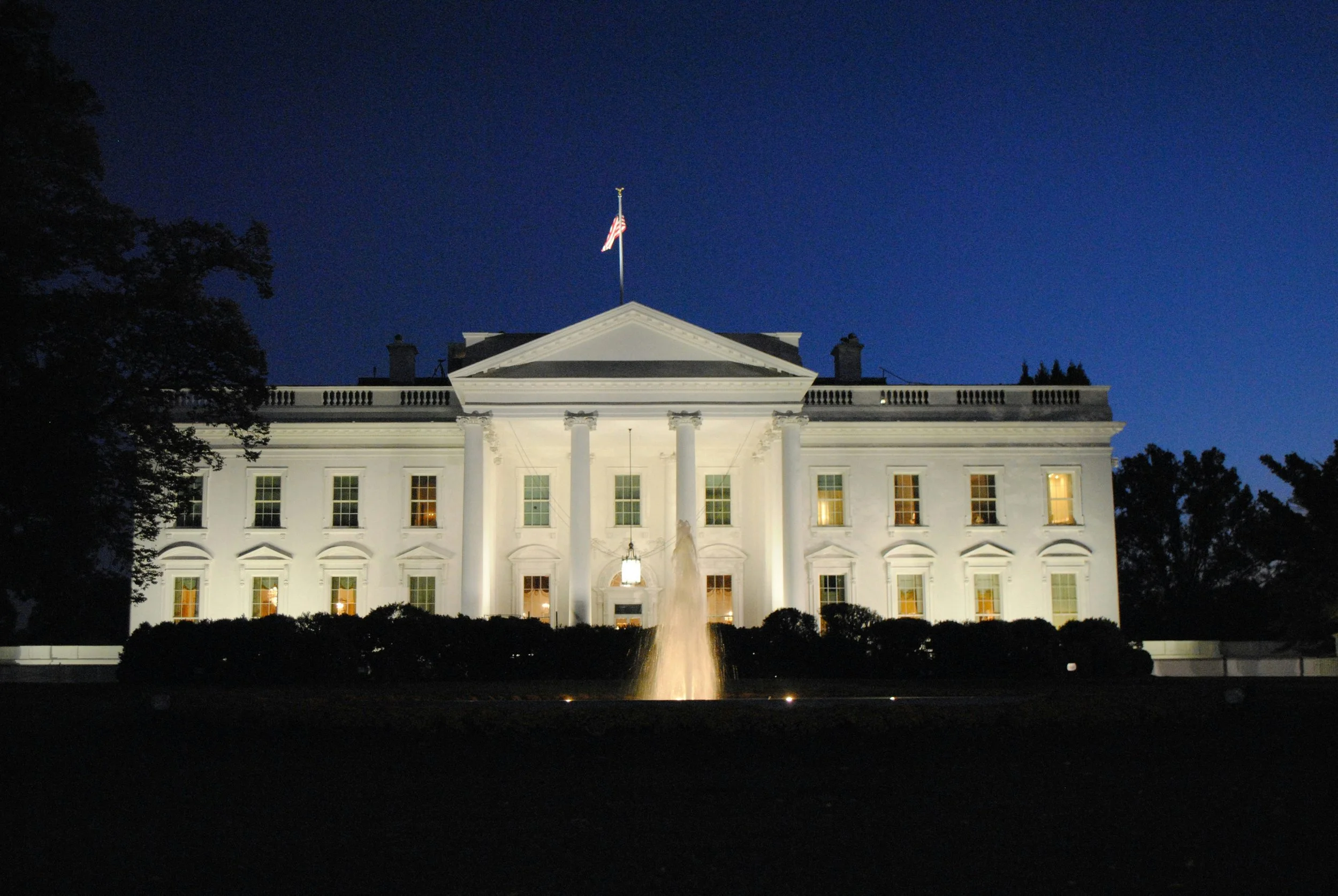
In the United States, the military is not used for domestic law enforcement. That’s a bedrock civic principle, one that separates our democracy from dictatorships around the world. Our troops serve to protect the American people from harm coming from abroad, not to police people at home.
Legally speaking, though, there is one glaring exception: The Insurrection Act.

What to look for in the November 5, 2025, oral arguments before the U.S. Supreme Court in the IEEPA tariffs case
Oral arguments are scheduled for November 5, 2025, in V.O.S. Selections, Inc. v. United States, also known as the Tariffs Case or the International Emergency Economic Powers Act (IEEPA) case. The fundamental issue at stake is whether the President has authority under IEEPA’s grant of emergency powers to rewrite the United States tariff schedule. While IEEPA grants the President broad authority to “regulate . . . importation or exportation” of property as necessary to address “unusual and external threat(s)”, IEEPA does not specifically grant the authority to impose tariffs. The ability to impose tariffs has traditionally been viewed as a core aspect of Congress’s Article 1 authority to collect taxes, duties, imposts and excises, and to raise revenue.
The IEEPA Tariffs Are Based on Pretext
On April 2, President Trump declared that the U.S. trade deficit in goods was a national emergency and raised tariffs to the highest level in 100 years to address it. Three courts have now ruled that those tariffs are illegal, and an appeal by the government will soon be heard by the Supreme Court. As I write elsewhere, the decisions striking down the tariffs are persuasive and should be upheld. But each also ignores a key question: whether the U.S. trade deficit constitutes an “unusual and extraordinary threat” that justifies emergency measures in the first place.

Emergency Powers for Good
Emergency powers are widely, and justly, criticized as threats to the rule of law. In the United States, forty-three declared emergencies give the executive vast authority to exercise power unencumbered by standard legal and procedural requirements. A long tradition of executive use of emergency powers to erode civil liberties amplifies fears of executive overreach.
Yet this, we argue, is only part of the picture. We examine how emergency powers can be used for good. We argue that under certain limited conditions, political actors can legitimately invoke emergency powers to transform public policy. In addition to widely accepted requirements of crisis severity, transparency, and time limits, we argue that broad consensus and a reformulated non-discrimination requirement are essential to the proper use of emergency powers for societal transformation.

Can Emergency Powers Be Leveraged to Create Change Beyond a Crisis?
This episode features UC Berkeley Law Professors Katerina Linos and Elena Chachko discussing their paper in the William & Mary Law Review, “Emergency Powers for Good.” In the article and a blog post on “Lawfare,” they argue that emergency powers — often associated with overreach and authoritarianism — can be used in legitimate and transformative ways.

The United Nations and States of Exception
The political and legal problem of a state of exception, whereby a state deviates from its normal constitutional and legal order in response to a real or perceived emergency, has generated much debate. Critics contend that the use of a state of exception really is an exception that swallows the rule, with the potential to corrode the entire legal order. The first part of this article explores international law’s attempt to put limits upon countries' use of state of exception, as enforced by the Human Rights Committee of the United Nations. Secondly, the author looks at the broader question of whether or not the U.N., as a super-state, itself uses states of exception, and what, if any, limits are placed upon it.

Lawfare Daily: Bob Bauer and Liza Goitein on Emergency Powers Reform
Bob Bauer, Professor of Practice and Distinguished Scholar in Residence at New York University School of Law, and Liza Goitein, Senior Director of Liberty & National Security at the Brennan Center, join Kevin Frazier, Assistant Professor at St. Thomas University College of Law and a Tarbell Fellow at Lawfare, to review the emergency powers afforded to the president under the National Emergency Act, International Emergency Economic Powers Act, and the Insurrection Act. The trio also inspect ongoing bipartisan efforts to reform emergency powers.

Locke and the State of Exception: Towards a Modern Understanding of Emergency Government
Modern states have almost without exception developed constitutional arrangements to protect themselves from threats to their continued existence. The most common of these arrangements is the state of exception. The state of exception is proclaimed when the constitutional order as such is at stake, for example, at the threat of foreign invasion, civil strife, or a large-scale terrorist attack. The proclamation of the state of exception leads to a suspension of rights and a concentration of power in the executive, enabling it to respond quickly and effectively to the threat. Although the state of exception may sometimes be necessary, a problem is that those invested with emergency powers may themselves become a threat to the constitutional order meant to be defended. In fact, modern history shows numerous examples of governments using the state of exception as a pretext for violating rights or even for establishing a more authoritarian regime.
States of Exception: Law, History, Theory
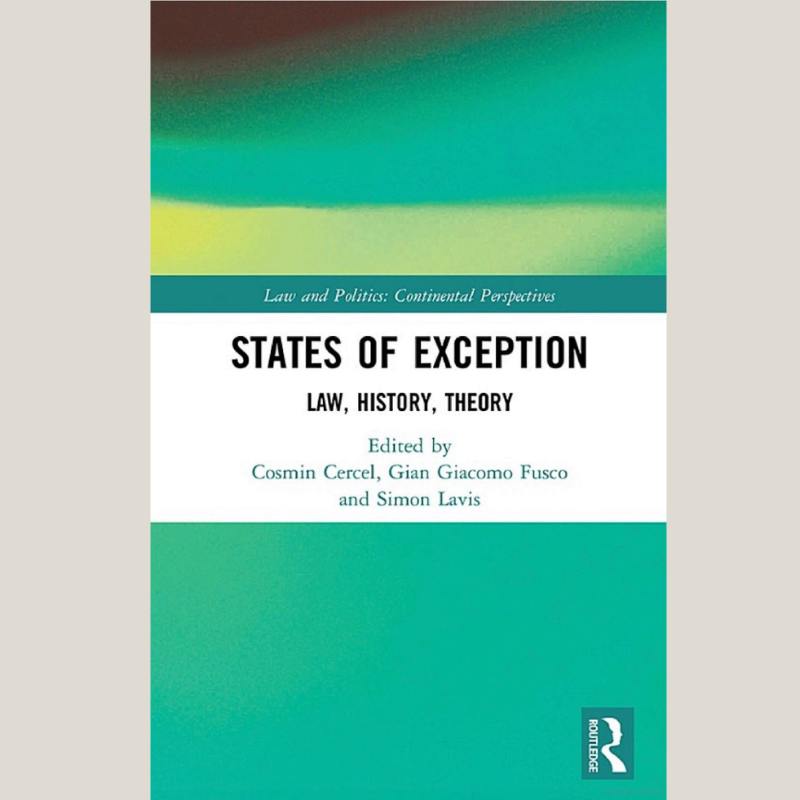
This book addresses the relevance of the state of exception for the analysis of law, while reflecting on the deeper symbolic and jurisprudential significance of the coalescence between law and force.
The concept of the state of exception has become a central topos in political and legal philosophy as well as in critical theory. The theoretical apparatus of the state of exception sharply captures the uneasy relationship between law, life and politics in the contemporary global setting, while also challenging the comforting narratives that uncritically connect democracy with the tradition of the rule of law. Drawing on critical legal theory, continental jurisprudence, political philosophy and history, this book explores the genealogy of the concept of the state of exception and reflects on its legal embodiment in past and present contexts – including Weimar and Nazi Germany, contemporary Europe and Turkey. In doing so, it explores the disruptive force of the exception for legal and political thought, as it recuperates its contemporary critical potential…