

All Content
Welcome to the Institute for the Study of States of Exception (ISSE) main content page, a single source for all posts from the Institute, including commentary on global events, book reviews, academic literature, links to our podcasts, and additional resources. Check back regularly for more content from us.
“Sovereign is he who decides the exception.”
— Carl Schmitt (Political Theology: Four Chapters on the Concept of Sovereignty, 1922)

The Bound Executive: Emergency Powers During the Pandemic
Drawing on a comparative study of countries' responses to the COVID-19 pandemic, Tom Ginsburg and Mila Versteeg argue that courts, legislatures, and subnational governments remained important constraints on executive power during emergencies. The article develops a typology of crises to show that different emergencies require different modes of governance and concludes that many emergencies are better governed through Madisonian checks and balances than Schmittian executive dominance.

The Imaginary Unitary Executive - Lawfare
Contrary to the “Decision of 1789” myth, history shows that the first Congress rejected the exclusive unitary model of the presidency—and thus the presidential removal power should be subject to more congressional control than recent Supreme Court decisions have held.
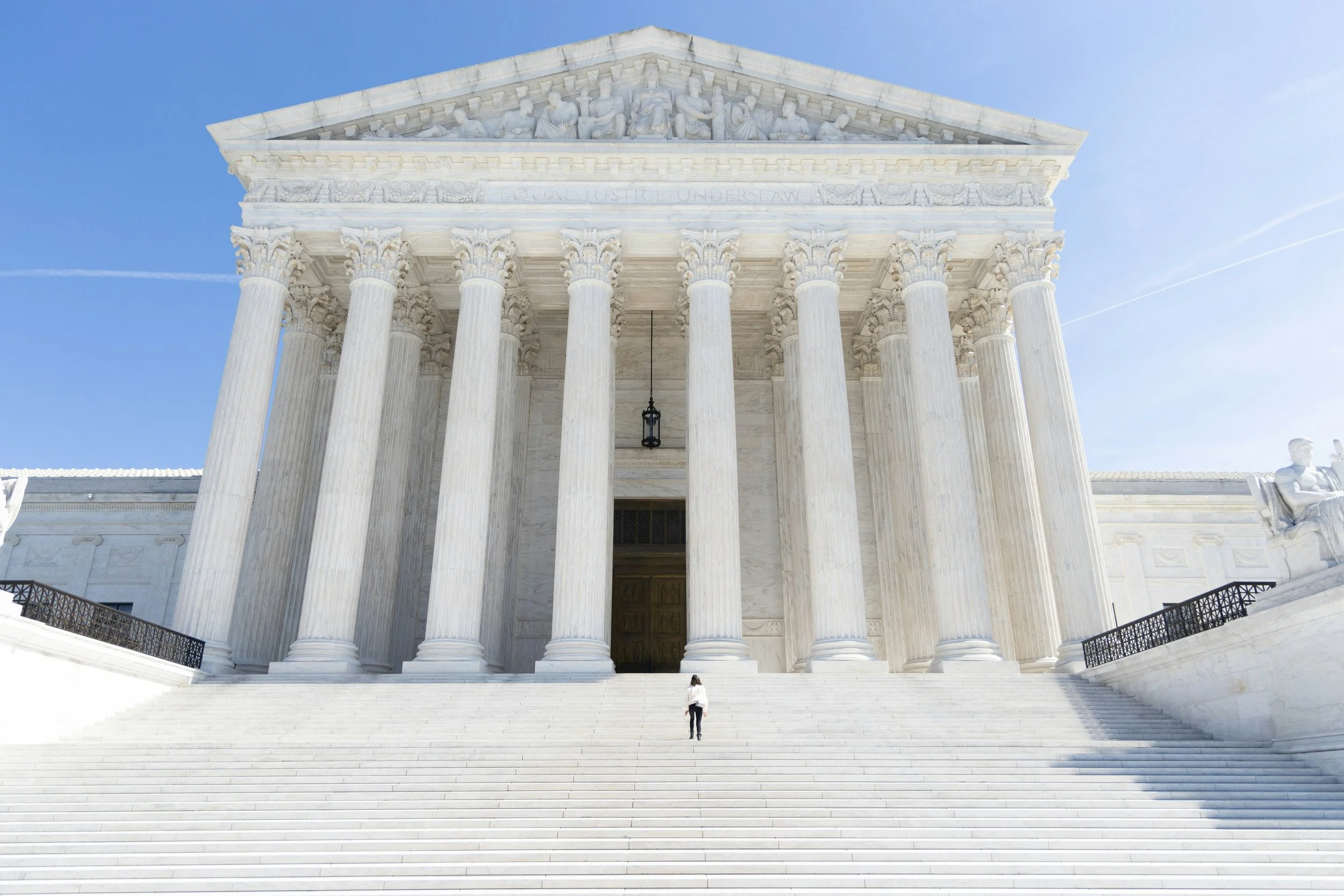
The Unitary Executive: Past, Present, Future
Cass R. Sunstein and Adrian Vermeule examine the past, present, and future of the unitary executive theory, exploring competing constitutional interpretations of presidential control over the executive branch. The article analyzes the Supreme Court's treatment of the doctrine, particularly in Seila Law, and assesses its implications for presidential authority, independent agencies, and the separation of powers.

James Madison and the Emergency Powers of the Legislature
Prerogative, the power to take extra-legal measures in extraordinary circumstances, is generally considered to be the exclusive domain of the executive. This article shows that James Madison, who is widely regarded as hostile to discretionary power in the executive, not only endorsed exercises of prerogative by the executive but also took steps toward developing a model of prerogative that gives primacy to the legislature in times of emergency. Madison’s views on “legislative prerogative” emerged in the context of congressional debates over avowedly unconstitutional proposals including a grant of military authority to seize private property during the revolutionary war, the creation of the Bank of North America under the Articles of Confederation, and the provision of financial assistance to refugees from St. Domingo. These cases reveal a strict constructionist resorting to extra-legal measures to pursue objectives not expressly authorized by the constitution then in place as a safer alternative to more permanent expansions of government power established through law.
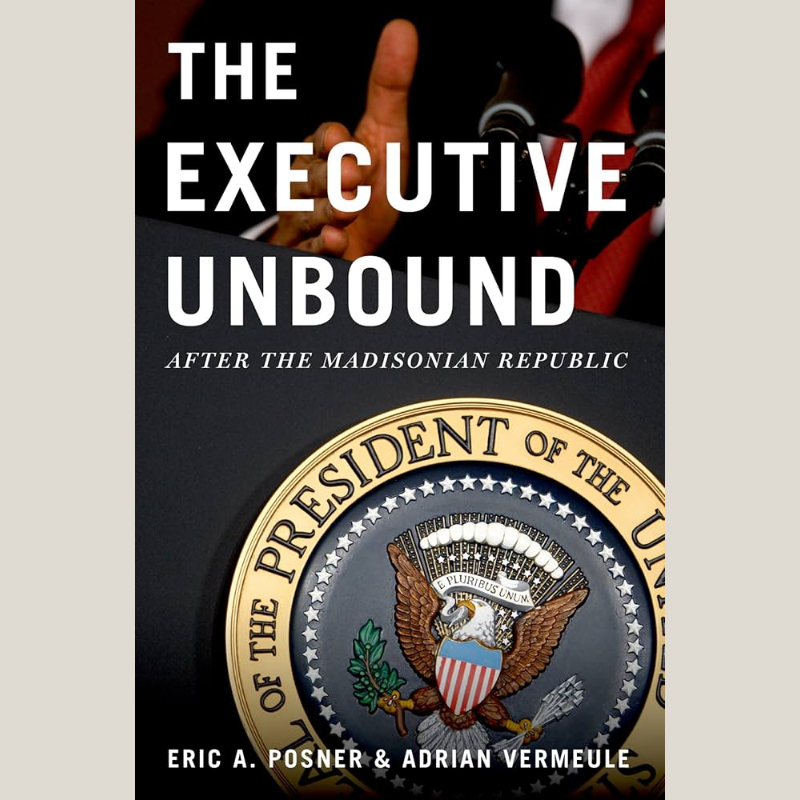
The Executive Unbound: After the Madisonian Republic
In this influential and controversial book, Eric Posner and Adrian Vermeule argue that the traditional Madisonian system of checks and balances has been largely superseded by an executive-centered form of governance in which political and public-opinion-based constraints matter more than formal legal limits. The authors contend that the complexity of modern government inevitably concentrates authority in the executive branch and that fears of excessive presidential power are often overstated. Particularly relevant to ISSE’s work, the book raises fundamental questions about executive authority, emergency governance, constitutional constraint, and whether the growth of executive power reflects a constitutional danger, a practical necessity, or an enduring feature of the modern state.
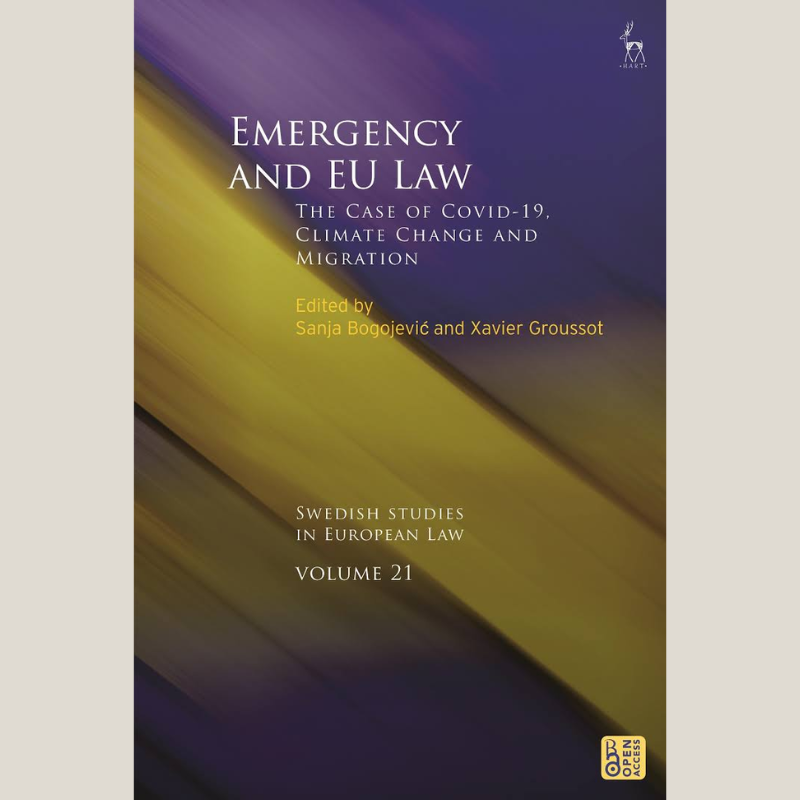
Emergency and EU Law: The Case of Covid-19, Climate Change and Migration
From the Book Preface: The concept for this edited volume emerged during a time when the world was gradually moving away from the emergency measures implemented in response to the Covid-19 pandemic. One of us spent much of the pandemic in the UK, while the other was in Sweden, each of us witnessing very different governmental responses. Having worked together in Lund during the 2015 European migration crisis that saw more than one million people seek asylum in Europe, this had not been our first encounter with emergency measures. During this period, Sweden imposed border controls and ID checks on the Öresund Bridge that connects Lund to Denmark and the rest of the European continent. Sweden was not alone in enacting emergency measures in the form of restrictions on movement within the Schengen Area – Denmark enforced similar measures at its border with Germany, and Germany did the same on its border with Austria. As EU law scholars, we were curious about the impact that emergencies have on the EU: a jurisdiction built on solidarity, free movement and the rule of law.
More precisely, we got to debating the question in which circumstances, if any, fundamental rights could legitimately be suspended in the face of an emergency. And if there were to be such a suspension, who should take responsibility for safeguarding that this exercise of power did not erode procedural and substantive fundamental rights: the EU or national courts, the EU or national parliaments, the public or a different body altogether? What role might proportionality play in balancing different rights in cases of emergency? Sitting in Sweden, which lacks formal constitutional provisions for declaring a state of emergency (except in the case of war), it quickly became apparent that a definition of what counts as an emergency is crucial: could it be that what is to be labelled an ‘emergency’ in one country is approached as a ‘crisis’ in another? What might be the legal implications of such divergencies? Even if we could rally around a common definition of what constitutes an emergency, should we approach the migration crises, the Covid-19 pandemic, and climate change the same way?

U.S. Judicial Power and the Normalization of Exceptionality - Louisiana v. Callais
The Supreme Court’s decision in Louisiana v. Callais has intensified debate over judicial power, electoral representation, and democratic legitimacy in the United States. While supporters view the ruling as a constitutional limit on race-conscious districting, critics argue it may weaken Black political representation in several Southern states. From an ISSE perspective, the case is significant not only for its voting-rights implications, but for how accelerated procedures and emergency-style mechanisms derived from the ruling are already shaping ordinary democratic governance. Rapid redistricting efforts and compressed legislative timelines illustrate how exceptional practices can become enabled and embedded within formally constitutional processes. The case raises broader questions about democratic resilience, institutional restraint, and the gradual normalization of exceptionality within contemporary governance.

United States – Temporary Protected Status Termination Cases Test the Limits of Executive Power and Due Process
The Supreme Court of the United States will soon hear challenges to the termination of Temporary Protected Status (TPS) for Syria and Haiti, cases that sit squarely within ISSE’s core concern: the use of exceptional or emergency-adjacent authority without meaningful procedural constraint. At issue is whether the Department of Homeland Security can rely on broad assertions of “national interest,” or must conduct a genuine, evidence-based assessment of country conditions as required by statute. Lower courts have already identified procedural failures and, in some instances, evidence of predetermined outcomes. With more than one million TPS holders affected, the stakes extend far beyond immigration policy. The Court’s decision will help determine whether executive power, when operating in the space between routine governance and exception, remains subject to enforceable legal limits.

One Emergency After Another - Lawfare
A surge in executive “emergency” actions is reshaping the balance of power in the United States. This analysis finds that the scale, pace, and scope of recent emergency orders, particularly outside traditional frameworks like International Emergency Economic Powers Act (IEEPA), are historically unprecedented and increasingly directed toward domestic policy goals. The use of declarations such as the “National Energy Emergency” illustrates how emergency authorities can be leveraged to bypass Congress and statutory constraints. With legislative checks weakened since INS v. Chadha and judicial review often limited, meaningful oversight is increasingly difficult. The piece from Lawfare argues that courts may need to adopt more searching review to prevent the normalization, and weaponization, of emergency powers.

Emergency powers: Presidents unleashed? - The Miller Center
This Miller Center conference examines the history, expansion, and constitutional risks of presidential emergency powers in the United States. Convened after the Supreme Court’s February 2026 decision rejecting President Trump’s use of emergency authority to regulate tariffs, the discussion brings together leading scholars and practitioners to assess how presidents, Congress, and the courts have shaped the emergency-powers framework. Panelists trace the issue from the founding era through FDR, Watergate, 9/11, and the modern presidency. For ISSE, the event is important because it shows how exceptional powers can become routine tools of governance when Congress is weak, courts are cautious, and presidents face incentives to act unilaterally. The result is a constitutional system under strain, where emergency authority risks replacing democratic deliberation.
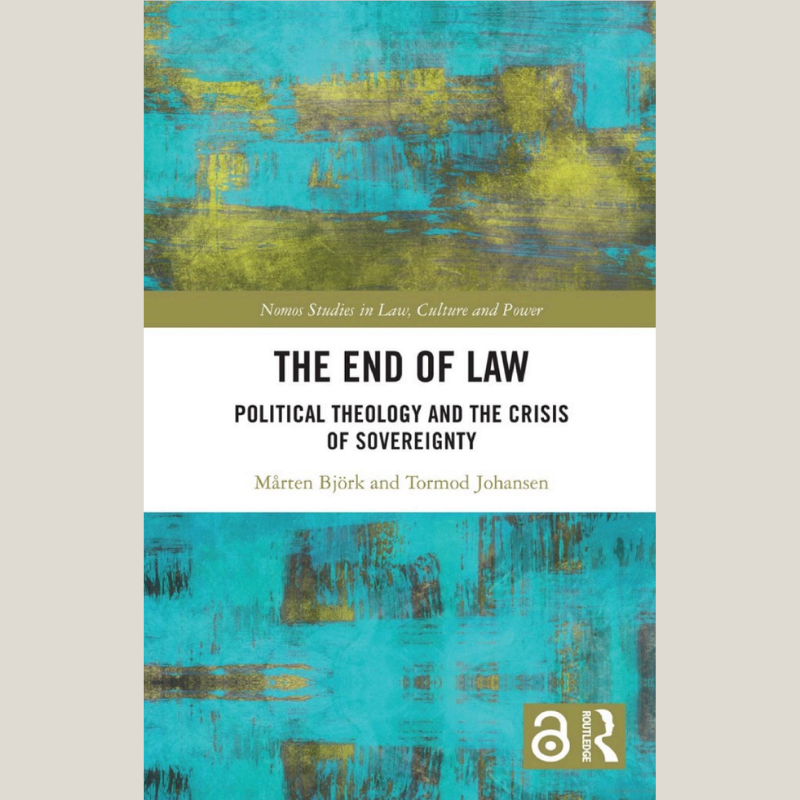
The End of Law - Political Theology and the Crisis of Sovereignty
This book examines how Gustav Radbruch, H. L. A. Hart, and Ernst-Wolfgang Böckenförde each addressed the question of the end of law, its function, and its normative foundation within the context of the modern legal and political order. Through a politico-theological reading, it highlights the tension between legal validity and moral legitimacy, as well as the extent to which law can maintain public order without compromising its own claim to justice.
The analysis of Radbruch, Hart, and Böckenförde sheds light on how valid law can become unjust, demanding actions that may conflict with individual judgment or morality. It raises questions about natural law, the relationship between morality and law, and law’s ultimate purpose, suggesting that law and politics represent, at best, a relative good. It addresses the broader crisis of legal authority and state sovereignty, the expanding reach of state power, and whether law should instruct, command, or ultimately point beyond itself.
The End of Law is of interest to scholars in legal theory, political theology, and the philosophy of law.
U.S. Democratic Backsliding in Comparative Perspective - Carnegie Endowment for International Peace
This Carnegie Endowment report analyzes democratic backsliding in the United States under President Donald Trump in comparative perspective. It finds that recent developments align with patterns of executive aggrandizement seen in countries such as Hungary, India, and Türkiye, particularly through efforts to consolidate power within the executive, weaken institutional checks, and constrain civil society. At the same time, the U.S. case is distinguished by the speed and breadth of these efforts, as well as a focus on intra-executive control and indirect pressure on institutions. While U.S. democratic institutions remain more resilient than many global counterparts, the report concludes that the pace and scope of recent changes present a significant test for American democracy.

Three Hundred Habeas Cases in Which the (U.S.) Government Has Defied Court Orders - Lawfare
This Lawfare U.S.-based analysis compiles a nationwide dataset of more than 300 immigration habeas cases in which federal authorities failed to comply with court orders. While courts generally succeed in securing eventual compliance, the cases reveal recurring patterns, such as delayed releases, unauthorized transfers, and failures to justify detention, that require repeated judicial intervention to enforce legal limits. Situated within a broader framework of sustained emergency authorities and expanded enforcement activity, these dynamics point to structural strain within the system of legal oversight.
Viewed in aggregate, the dataset suggests not a breakdown of legality, but a shift in how it operates in practice. Individuals remain formally protected by law, yet the realization of those protections often depends on administrative action and continued judicial enforcement. This pattern also raises questions about the limits of judicial enforcement itself, and whether repeated, low-consequence noncompliance risks becoming normalized over time. For ISSE, these dynamics highlight how prolonged reliance on emergency frameworks may contribute to the emergence of exception-like practices within routine governance.
U.S. Impeachment Filing Highlights Emergency Powers as a Core Constitutional Concern in the United States
A new impeachment filing in the United States places emergency powers at the center of a constitutional dispute over executive authority. Introduced by Congressman John B. Larson, the resolution includes allegations that emergency authorities have been used by the U.S. President to bypass congressional processes and expand executive reach. Section 12 focuses specifically on how these powers are invoked and applied in practice. This article analyzes those claims within the broader framework of U.S. emergency powers law. It considers what sustained reliance on such authorities may mean for institutional balance.

Constitutionalism and war: from martial law to “peace” through a transitional period
Background: Contemporary constitutionalism, shaped largely in the post-World War II era, was designed primarily for peacetime. As a result, neither constitutional theory nor practice provides clear answers to questions arising when societies and states face extraordinary situations such as armed conflict, hybrid threats, or terrorism — circumstances that pit state survival against the foundational principles of limited government and guaranteed rights.
Purpose: This article aims to examine how constitutionalism transforms under extraordinary circumstances, particularly martial law, and to identify a viable legal pathway for Ukraine's return to ordinary constitutional order following the termination or lifting of the martial law regime.
Methodology: The study employs an axiological approach, treating constitutionalism not as a static construct but as a dynamic system of values, principles, institutions, and procedures. This framework enables analysis of the relative weight of constitutional principles across varying socio-political circumstances, including crisis conditions.
Results: Under extraordinary circumstances, constitutionalism does not give rise to a distinct or parallel constitutional order — its core identity remains intact. What occurs instead is a temporary shift in the relative significance of key principles: public safety, stability, and statehood come to the foreground, while certain human rights are subject to proportionate restrictions and the rule of law is applied with due regard for the exceptional situation. After overcoming the crisis, the need arises to reassess the relative significance of these principles. The article proposes a dedicated transitional legal regime — positioned between martial law and ordinary peacetime regulation, and conceptualized as a specific instance of a state of emergency — to ensure a gradual and effective return to constitutional normalcy.
Conclusion: Constitutionalism retains its identity even under the most extreme conditions, provided that power remains bound by law. The concept of a transitional legal regime offers a practically grounded mechanism for post-war constitutional recovery, with particular relevance for Ukraine's legal and institutional reconstruction after the lifting of martial law.

Emergency by Presidential Memorandum: Appropriations Flexibility Under Shutdown Conditions - ISSE Explainer
Two recent White House memoranda responding to the DHS shutdown rely on existing appropriations law to justify paying federal employees despite a lapse in funding. While the directives do not invoke formal emergency powers, they explicitly frame the situation as a national security emergency and use that rationale to support a flexible reading of statutory limits, raising questions under the Antideficiency Act and the core rule that funds must be used only as appropriated. Legally, presidential memoranda can carry the same force as executive orders, placing the focus on interpretation rather than form. The result is a form of constrained executive improvisation that remains within the language of the law while testing its boundaries. From an ISSE perspective, this reflects a broader shift: emergency reasoning migrating into routine administrative practice. Repeated over time, such approaches risk normalizing flexible statutory interpretation as a substitute for legislative resolution.

United States: NYC Bar Report Raises Alarm Over Expanding Executive Power and Eroding Constraints
The New York City Bar Association’s March 2026 report entitled “The Crisis Deepens: Congress Must Act Now to Address Escalating Abuses of Executive Power“ marks a shift from identifying executive overreach to documenting a more systemic pattern of governance beyond meaningful legal constraint. Building on its December 2025 report entitled “The Abuse of Presidential Power and Breach of the Public Trust,” which warned of boundary-testing, this follow-up argues those boundaries are now being operationally redefined. The report highlights the use of coercive, emergency-style practices without formal invocation of emergency powers, reflecting a broader ISSE concern with embedded exceptionalism. At the same time, weakening judicial enforcement and limited congressional response risk enabling further expansion. The cumulative effect represents a transformation in how law functions in practice. What emerges is a pattern of normalized exceptionalization, where the line between ordinary governance and emergency rule becomes increasingly indistinct.

A Case Against Mass Deportation: The Japanese American Internment Camps and Recent Treatment of Korematsu
The large-scale deportation of non-citizens has become a preeminent policy issue. Unfortunately, executive curtailment of immigrant communities’ liberty is not without historical parallels. During World War II, federal officials sent individuals of Japanese descent to internment camps through a series of executive orders and military proclamations. Although attorneys in the Department of Justice believed aspects of these actions were unconstitutional at the time, the administration prevailed at the nation’s highest court. Can recognition of this past wrong aid challenges to contemporary immigration enforcement regimes? How do our courts formally account for the most egregious jurisprudential errors of the past, and endeavor to avoid repeating them? This Article examines the ways in which courts have discussed Korematsu v. United States in the context of immigration arrests and detention. It also provides a comprehensive review of substantive citations to Korematsu since it was overturned in Trump v. Hawaii. The abrogation of Korematsu buttresses the decision’s utility as a negative precedent, and I endeavor to ground the relevance of overturned precedent within normative theories of constitutional interpretation. Through this analysis, I highlight significant similarities between the internment of Japanese Americans and the rhetoric surrounding immigration policy today. In this context, judicial condemnation of Korematsu underscores certain due process requirements for individualized hearings and suggests the need for greater scrutiny of the executive’s emergency powers.

The Impact of Exceptional Governance Measures on Democracy and Legal System
The exercise of exceptional power has long been at the centre of debate, as the process involves essentially breaking away from normality and giving political leader(s), especially the executive, almost unlimited power. Particularly in periods of constitutionalism and under liberal democracies based on checks and balances, when the principle of the separation of powers is temporarily ‘switched off’ for the time needed to avert an exceptional event, this leads to significant problems. This paper, after clarifying the theoretical starting points, will discuss in a historical context the authoritarian tendencies inherent in executive power that emerged within the history of ideas and politics in the 20th century in relation to the problem of constitutional dictatorship and which have today taken shape in the transformation of philosophies of government – namely, into a kind of permanent crisis-management philosophy of government. Furthermore, in the context of the COVID-19 pandemic, the literature is reviewed to address the democratic problems associated with exceptional governance. The main question underlying this analysis is whether exceptional governance affects democracy and legal systems and what tools and methods can be used to check the authoritarian nature of the executive in a state of exception.

Capturing the minds: The role of child deportation in maintaining Russian authority over Ukraine’s occupied territories
Russia’s systematic deportation and transfer of Ukrainian children from occupied territories since 2014 is a central instrument of Russian governance. This article conceptualises the abduction of children as politicised captivity – the state-directed, long-term custodial control of a vulnerable population segment for explicitly political ends. The removal of children serves the strategic goals of exerting coercive pressure on local families, disrupting Ukrainian identity transmission, and facilitating demographic restructuring. Drawing on Foucault’s ‘biopolitics’ and Agamben’s ‘state of exception’, we analyse how institutional and legal mechanisms, from ‘recreation’ camps to streamlined adoption decrees, are employed to seize control over the identity formation and future political subjectivity of minors. Empirical findings, derived from witness testimonies and interviews, detail the operational pathways of transfer (e.g., filtration, holiday schemes) and the resulting experiences of psychological trauma, educational disruption, and ideological indoctrination. We argue that by targeting children, Russian authorities employ a sophisticated form of biopolitical control that is fundamental to maintaining and legitimising their long-term authority in contested spaces.
ISSE Comment: This article aligns closely with ISSE’s underlying inquiry into how exceptional forms of power are converted into durable techniques of rule. At one level, it documents grave abuses against Ukrainian children; at a deeper level, it shows how those abuses are embedded within an administrative, legal, and ideological apparatus designed to consolidate authority in occupied territory. That is precisely the kind of transformation ISSE seeks to examine: the movement from emergency or wartime justification to routinized governance. The article is especially valuable in showing that the relevant question is not only whether a violation occurred, but how coercive practices are institutionalized through decrees, custody systems, educational policy, demographic engineering, and narratives of “protection” or “rescue.” In ISSE’s framework, this is a revealing case of the exception becoming normalized, where extraordinary interventions into family life, identity, and legal status are made to appear administratively ordinary.
The piece also speaks directly to ISSE’s broader concern with the relationship between sovereignty, legality, and political subject formation. Its use of biopolitics, the state of exception, and necropolitics helps illuminate how modern systems of control operate not only through overt repression, but through the management of populations, the reordering of legal protections, and the attempted remaking of future citizens. By focusing on children, the article identifies one of the most consequential sites of long-term political struggle: the shaping of memory, belonging, and national continuity across generations. For ISSE, this makes the article important not simply as an account of wartime abuse, but as an analysis of how state power seeks to reconstitute social and political reality itself, through the capture of vulnerable populations, the suspension or distortion of legal constraint, and the strategic use of administrative systems to transform exceptional domination into an enduring order.