

All Content
Welcome to the Institute for the Study of States of Exception (ISSE) main content page, a single source for all posts from the Institute, including commentary on global events, book reviews, academic literature, links to our podcasts, and additional resources. Check back regularly for more content from us.
“Sovereign is he who decides the exception.”
— Carl Schmitt (Political Theology: Four Chapters on the Concept of Sovereignty, 1922)
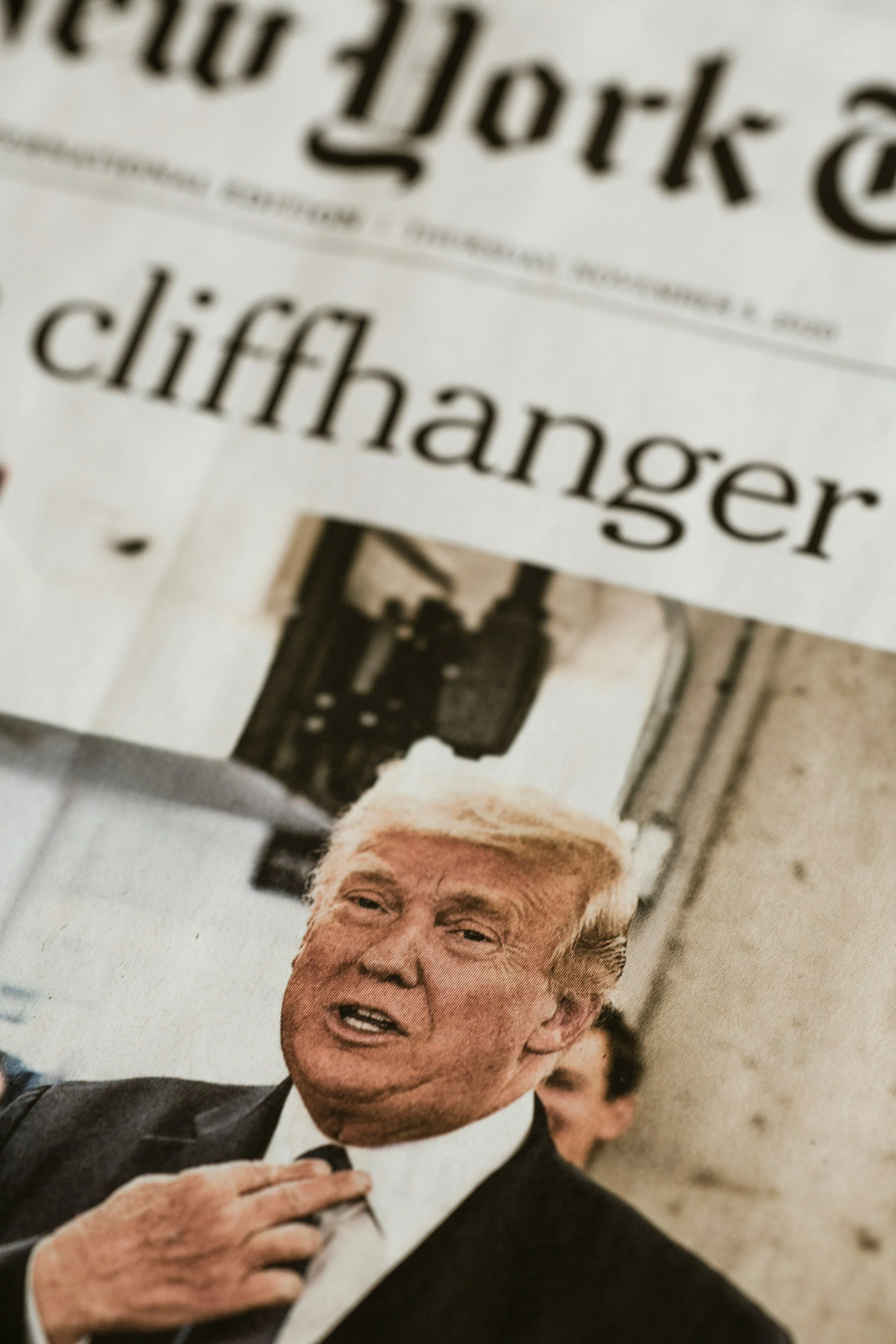
2025: Trump’s year of ’emergency’, ‘invasion’ and ‘narcoterrorism’ - Al Jazeera
For United States President Donald Trump, 2025 was a year of crisis.
Roaring into office on January 20 on the heels of a raucous political comeback, the president’s own telling describes a series of actions that have been swift and stark.
To name a few, he has envisioned rooting out a migrant “invasion” that includes staunching legal immigrants, and, potentially, targeting US citizens; he has touted a hard reset of uneven trade deals that pose “an unusual and extraordinary threat to the national security”; and, in the final months of the year, he has gone on the military offensive against “narcoterrorists” that he claims seek to topple the US through illicit drugs, possibly used as “weapons of mass destruction”.
For legal observers, Trump’s approach has been a yet-undecided stress test on presidential power, cranked by the gears of broadly interpreted emergency statutes and untrammeled executive authority.
Decisions by the court, lawmakers and voters in the 2026 midterm elections could determine how that strategy resonates or is restrained.
“The use or abuse of emergency powers is only one corner of a larger picture,” Frank Bowman, professor emeritus of law at the University of Missouri, told Al Jazeera.
“In many cases, the administration is simply doing stuff that certainly any pre-existing understandings of executive authority would have said you cannot do,” he said.
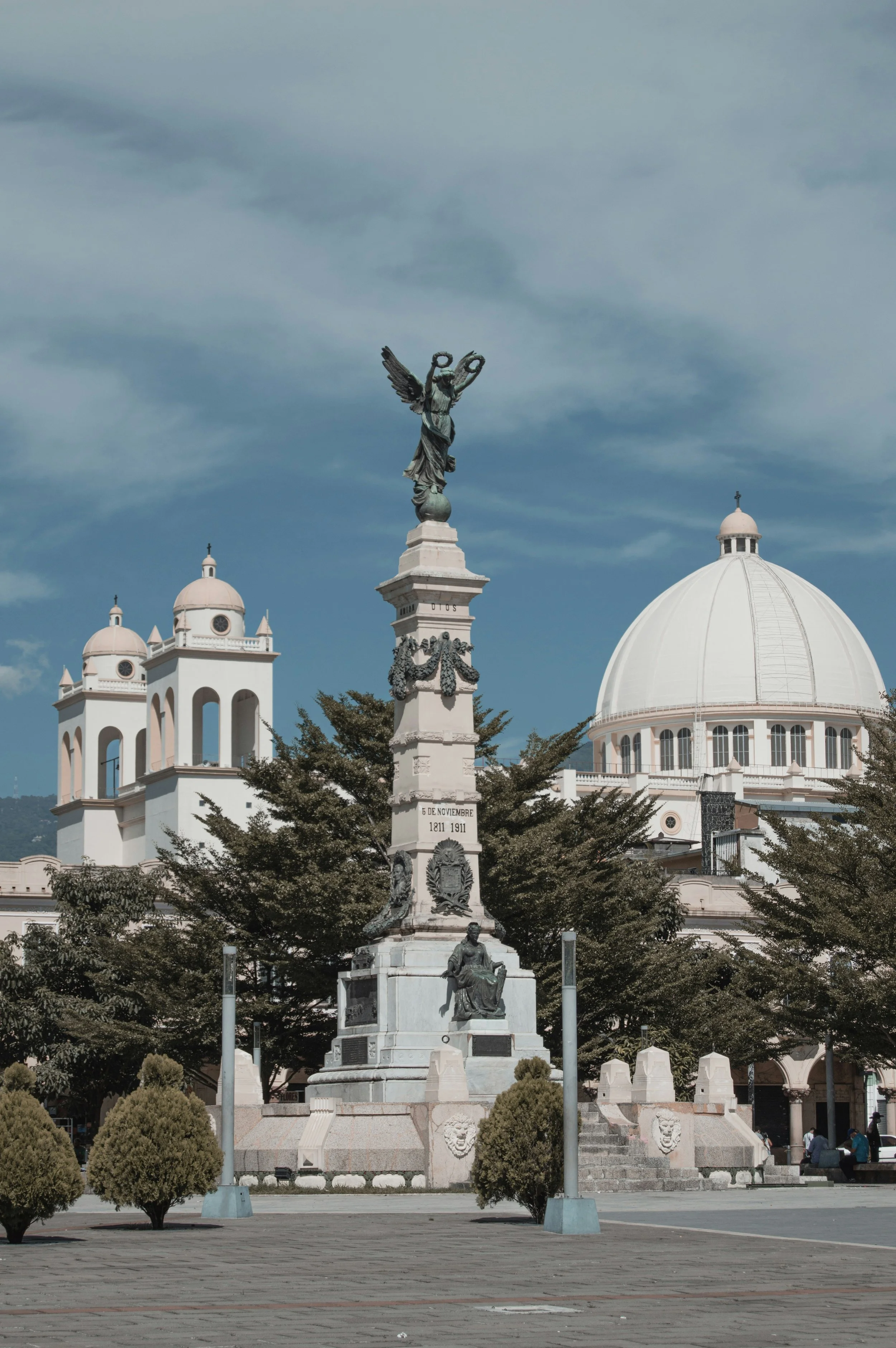
Bukele's Leadership: Transforming El Salvador Through Iron Fist Policies and Social Media Power
This article examines Nayib Bukele's leadership and his revolutionary government style in El Salvador, emphasising the convergence of stringent security policies, criminal populism, and digital political communication. Bukele's administration has realised a significant reduction in homicide and gang-related violence, chiefly through the enforcement of a prolonged State of Exception and the establishment of the Centro de Confinamiento del Terrorismo (CECOT), a vast prison epitomising total state authority. Utilising ideas of authoritarian populism, penal governance, and digital populism, the research examines how Bukele reinterprets legitimacy, transitioning it from democratic processes to performance-oriented results. By employing charismatic leadership and an advanced social media approach, Bukele has circumvented traditional institutions, centralised authority, and established a direct emotional bond with the populace. Although some Salvadorans rejoice in the restoration of safety and order, detractors caution against the deterioration of legal protections, judicial autonomy, and civil liberties. The report underscores a paradox: Bukele's popularity increases concurrently with the erosion of democratic standards. The study contends that although Bukele's model provides immediate stability and encourages regional imitation, it poses significant concerns regarding the sustainability of security attained through democratic erosion and institutional exceptionalism.

Judicial Limits on Exceptional Executive Power: Two Recent U.S. Court Decisions
While public attention has recently focused on events in Venezuela and the ICE killing of Renee Good in Minneapolis, two court decisions issued shortly before Christmas (one by a federal district court and one by the Supreme Court) warrant closer scrutiny. In each case, the judiciary imposed at least temporary limits on the current administration’s assertion of extraordinary executive authority. Although neither arose from a formally declared state of emergency, both reflect an expansive conception of presidential power in which certain actions are treated as categorically insulated from judicial review.
In this respect, the cases illustrate how exceptional power may be exercised without explicit invocation of emergency authorities, not by suspending the law temporarily, but by asserting that entire domains of executive action lie beyond ordinary legal constraint. This mode of governance closely aligns with the most maximalist contours of unitary executive theory and functions as a de facto state of exception embedded within constitutional interpretation itself.
ISSE Explainer: When Executive Power Becomes Exceptional — Unitary Executive Theory as a State of Exception
Recent legal disputes over the revocation of security clearances and the attempted federalization of National Guard units raise questions that extend beyond statutory interpretation or executive overreach. They point instead to a deeper theory of presidential power, one that treats certain executive actions as categorically insulated from judicial review. This explainer situates those claims within the framework of unitary executive theory and examines how its most expansive forms can function as a standing state of exception within constitutional law.

The threshold of emergency: sovereign power, constitutional change and the spectre of Civil War in 1938 Romania
This article seeks to capture the transformative potential of emergency powers, as a legal–political practice pertaining to liberal legality that ultimately can determine constitutional change, rather than a return to ‘normality’. It does so by providing an analysis of the transition from formal and limited liberal legality in Romania to the series of dictatorships that followed the instauration of the regime of royal dictatorship of King Carol II in 1938. Anchored in a close reading of the archival documents of the trial of the leader of the main far right movement, Corneliu Zelea Codreanu, and the subsequent legal proceedings, the proposed article aims to produce revaluation of the jurisprudential and constitutional status of the regime of King Carol II with a view of understanding the emergency-based dimension of this rule and the particular shift it operated foundational legal categories in criminal and constitutional law. I proceed by examining the current theoretical limitations in addressing the historical role of emergency in relation to constitutional orders. I turn then to exploring the political and legal context of the prorogation of emergency measures in 1938 Romania. Last, I examine the limited status of modern legality in a situation oversaturated by emergency measures.
The Schmittian inheritance
The theories of Carl Schmitt, who was a controversial German jurist who supported the Third Reich as a Nazi, have re-emerged in contemporary politics recently through UK Attorney General Lord Hermer's criticism of Conservatives allegedly echoing Schmitt's "realist" jurisprudence that favors raw power over international law. Schmitt's most dangerous contribution was his argument that liberalism and mass democracy are fundamentally incompatible, as he believed parliaments were outdated liberal institutions disconnected from the "will of the people," which can be expressed through public acclamation and even dictatorship. His legal theories helped dismantle the Weimar Republic, particularly through his defense of the 1932 Prussian coup that paved the way for Hitler's rise to power, exemplifying his doctrine that "the sovereign is he who decides on the exception." Today, Schmitt's ideas are influencing authoritarian movements globally, including US President Donald Trump's approach to presidential power, Russian President Vladimir Putin's ultranationalism through ideologue Alexander Dugin, and Germany's AfD party, which draws on Schmitt's theory of spheres of influence to justify policies like dismantling NATO. While Schmitt's influence remains limited at present, his toxic legacy continues to spread through illiberal movements that embrace emergency powers and reject constitutional constraints in favor of authoritarian rule.
Unconstitutional States of Emergency
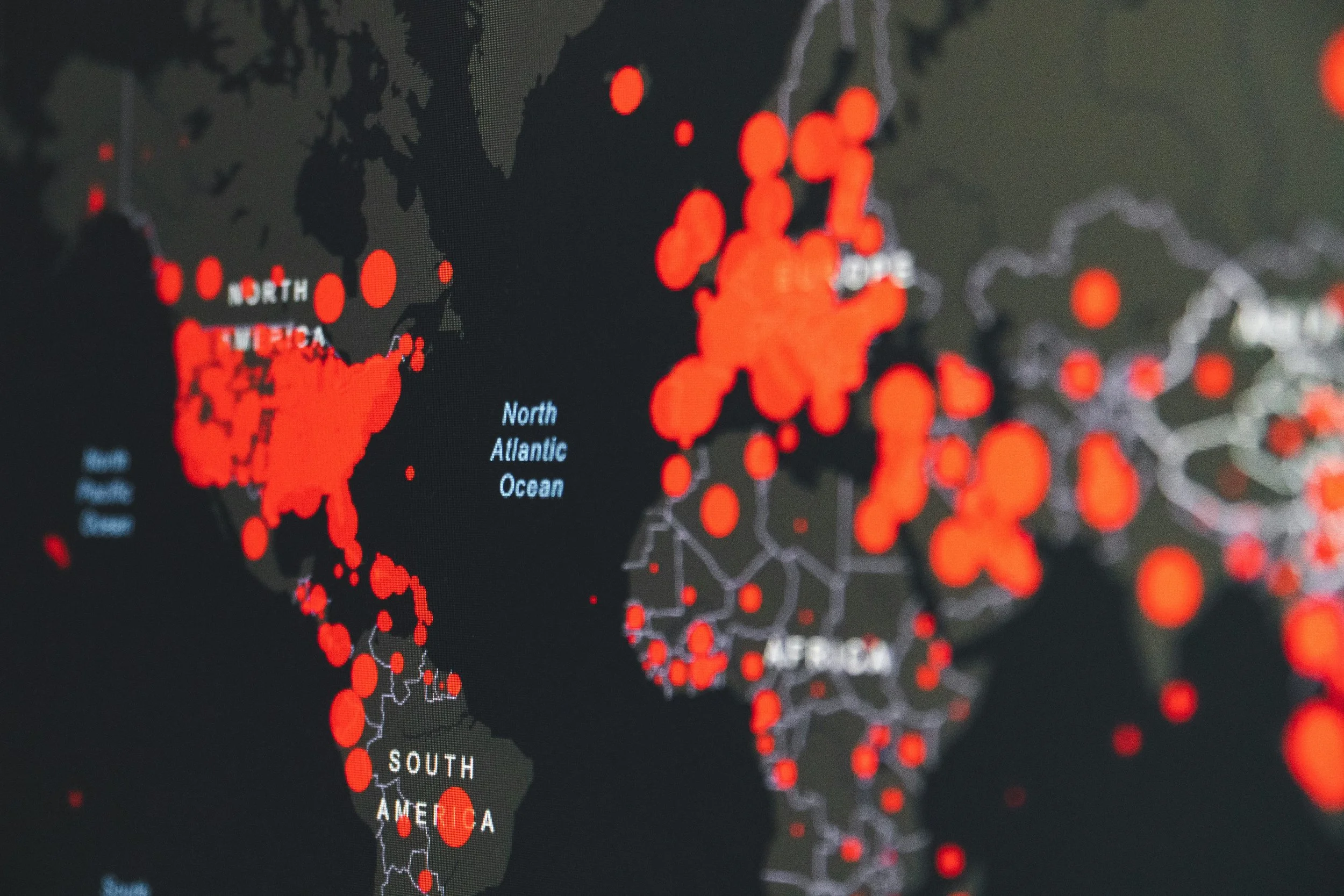
Nine of 10 modern constitutions contain explicit emergency provisions describing who can declare a state of emergency (and under what conditions) and the additional powers the government enjoys under a state of emergency. As states of emergency typically allocate additional powers to the executive, they lend themselves easily to abuse and provide political incentives to declare emergencies. In this paper, we analyze the conditions under which government behavior under a state of emergency deviates from constitutional provisions and a gap between de jure provisions and de facto behavior thus results. In a novel data set comprising 853 emergency declarations, 115 are identified as unlawful. We find that autocratic governments are more likely than democratic governments to violate the constitution. The requirement that a second chamber approve the emergency declaration is associated with a higher likelihood of its being unconstitutional.

Cyberattacks as Grounds for the Declaration of a State of Emergency
This article examines whether large-scale cyberattacks can be a legitimate reason for declaring a state of emergency. The central thesis is that while cyberattacks do not fit into the traditional categories of emergencies, their increasing capacity to seriously disrupt essential state functions calls for a reassessment of the legal thresholds for the use of emergency powers. The article argues that a cyberattack can justify the declaration of a state of emergency if it causes a systemic disruption to critical infrastructure, public order or national security and reaches a level of severity comparable to conventional emergencies. Real-world examples such as the cyberattacks on Estonia in 2007 and the ransomware crisis in Costa Rica in 2022 show different state responses and the evolving legal perception of cyber threats. At the same time, the article warns against the normalization of emergency regimes in response to persistent or unclear threats in cyberspace. The risk is that democratic governance is undermined by the prolonged or unjustified use of exceptional measures. While cyberattacks can in certain and extreme circumstances justify a state of emergency, such decisions must remain the exception and subject to the principles of necessity, proportionality and democratic control.

Governance of emergency powers and accountability in Indonesian disaster management
This paper argues that disaster management governance in Indonesia must align with emergency principles. In emergencies, special laws apply to prevent budget misuse and abuse of power. This study analyzes emergency authority in Indonesia's checks and balances system, focusing on legislative oversight. Using a legal-normative approach, it reviews Law No. 24/2007 on Disaster Management and the principles of necessity, proportionality, and temporality. The main findings are: (1) national and regional legislatures have little role in extending or ending emergency status, which allows unchecked use of emergency powers; (2) oversight of emergency actions is weak; and (3) there are no clear time limits for emergencies, enabling excessive extensions. The study recommends reforming laws to: (a) increase the legislature’s role in emergency status decisions; (b) clarify oversight and budgeting authority; and (c) set deadlines and rules for extending emergencies to improve accountability.
EU Crises and Emergencies: What’s in a Name? - EmergEU Working Paper Series 1/2025
This workshop brought together scholars of law, political science, and related disciplines to interrogate how the European Union (EU) defines, governs, and is transformed by crises and emergencies. Against the backdrop of the Eurozone crisis, the migration crisis, the COVID-19 pandemic, and Russia’s war in Ukraine, the EU has increasingly been confronted with extraordinary events that test its constitutional foundations, governance mechanisms, and legitimacy. Yet despite the relevance of these events in the institutional and academic discourse, there remains no settled understanding of what qualifies as a ‘crisis’ or ‘emergency’, nor of how such labels shape institutional responses and longer-term integration trajectories.
The workshop opened with a keynote lecture by Professor Bruno de Witte (Maastricht University), who situated the debate in the broader legal context of EU emergency law. He underlined that, unlike many national systems, the EU Treaties provide no general emergency clause. Instead, the Union has relied on a scattered set of emergency competences and flexible interpretations of ordinary Treaty bases. In his view, emergency responses have demonstrated the EU’s capacity to adapt within the constraints of its legal order. This framing provided a point of reference for the four panels that followed, which explored how crises and emergencies are conceptualised, how they reshape governance structures, and how they are navigated in conditions of uncertainty.
The first explored the definitional boundaries of ‘crisis’ and ‘emergency’, revealing both disciplinary divergences and shared efforts to construct conceptual frameworks. The second examined how crises have reshaped the EU’s internal structures and external orientation, highlighting tensions between security, autonomy, and democratic legitimacy. The third turned to multilevel governance and emergency powers, tracing how regulation, financial autonomy, procurement mechanisms, and tacit states of exception transform the EU’s constitutional order. Finally, the fourth panel brought an epistemic perspective, foregrounding the role of institutions, individuals, and knowledge in navigating uncertainty.
State of Emergency, with Dr. Maciej Wilmanowicz - the first episode of a two part interview on the Common Sense Generation video podcast series
On the first episode of this two part interview on the Common Sense Generation video podcast series, Dr. Maciej Wilmanowicz introduces himself, describing himself as an intellectual historian rather than a philosopher by training. He discusses the historical roots of emergency powers going as far back as the Roman Republic, he analyzes the paradox of legalizing emergency powers, and he introduces the possibility of existing within a “permanent state of exception.”

Permanent State of Exception, with Dr. Maciej Wilmanowicz - the second episode of a two part interview on the Common Sense Generation video podcast series
On the second episode of this two part interview on the Common Sense Generation video podcast series, Dr. Maciej Wilmanowicz discusses philosopher Giorgio Agamben's concept that modern societies exist in a "permanent state of exception" - where emergency measures and exceptional legal frameworks have become normalized rather than temporary.
He goes on to discuss citizens’ responses to emergencies utilizing several contemporary examples, the challenge of the continuous expansion of related laws and regulations that no one can fully comprehend or navigate, how competing definitions of the “common good“ introduce coherence challenges, and several specific examples are provided which illuminate that final point, running the risk of undermining the very freedoms these powers are meant to protect.
The colonial origins of the ‘permanent state of exception’
During times of crisis, states have historically drawn upon ‘exceptional’ or emergency powers in order to govern. These typically involve the assumption of new kinds of dictatorial authority, the curtailment of basic civil rights, and a blurring of the ordinary distinctions between executive, legislative, and judicial forms of power.
Once the crisis has passed, states are meant to surrender these extraordinary powers, and return to a state of normalcy. But what if this state of affairs ceases to be temporary, and instead becomes a permanent feature of how governments operate?
Giorgio Agamben traces the origins of this permanent state of exception to the First World War, which saw an unprecedented number of countries around the world declare states of emergency or siege in order to manage the crises presented by a modern, industrial total war. For Agamben, the First World War opened up the possibility for a radically new form of state power that was fundamentally anti-democratic, authoritarian, and which operated through the mechanisms of a permanent state of emergency.
Agamben’s work is inherently Eurocentric, but if we turn our gaze beyond Europe to the imperial world a very different picture emerges. The unequal nature of European colonial power, premised on racial difference, rendered colonialism an inherently authoritarian and anti-democratic enterprise from the outset. Emergency was thus not something merely episodic or interruptive, but was a ‘technique of governance’ embedded into the everyday functioning of colonial regimes.

ISSE Statement on the U.S. Capture of Nicolás Maduro
The U.S. capture of Venezuelan President Nicolás Maduro represents a striking assertion of state power beyond established international norms. Seizing a foreign leader by military force, whether that leader’s legitimacy is disputed or not, without international authorization or lawful justification undermines the basic rules designed to restrain conflict and protect sovereignty, including those set out in the United Nations Charter. Such actions do not occur in isolation; they reflect a broader pattern in which governments increasingly treat legal constraints as optional when exercising power. ISSE examines this episode as an example of how the normalization of exceptional measures erodes accountability and weakens the legal guardrails that underpin both international order and democratic governance.
El Salvador’s State of Exception - “Inside CECOT”
In late December 2025, renewed media attention turned to Centro de Confinamiento del Terrorism (CECOT), El Salvador’s flagship mega-prison, after CBS news executives postponed a 60 Minutes broadcast of an investigative report about the facility, called “Inside CECOT.” While the media controversy itself is newsworthy, the importance of the investigative report highlights another important reality: CECOT is not an anomaly or a temporary security measure, but a central institution of a state of exception that has now governed El Salvador for nearly four uninterrupted years. On December 22, 2025, American journalist Yashar Ali claimed to have obtained a video portion of the postponed investigative report, and published it on his Substack “The Reset.” Ali’s Substack, and the included video portion alleged to be part of the postponed 60 Minutes segment, is included here by ISSE for research and informational purposes only.

The ‘Ratchet Effect’: Presidents, Emergency Powers, and the Crisis of Institutional Faith - The Miller Center
An accelerating trend toward unilateral executive action has characterized the post-Cold War American presidency. Confronted with intense partisan polarization and the resulting legislative stalemate, presidents have increasingly resorted to the tools of direct authority—executive orders, memoranda, and proclamations—to bypass a gridlocked Congress and enact their policy agendas.
The most potent tool is the declaration of a national emergency. This action unlocks a litany of latent statutory powers, allowing a president to redirect funds, deploy military personnel, and regulate sectors of the economy with minimal immediate oversight. This practice represents a fundamental shift in the locus of policymaking, moving it from the deliberative, legislative sphere to the decisive, executive one.
The expanding use of presidential emergency powers is an effect of the secular decline of public faith in the nation’s core democratic institutions. Decades of data indicate that citizens are losing confidence in our constitutional system of checks and balances to address pressing problems. This loss of confidence suggests that citizens become more amenable to leaders who promise to cut through procedural constraints, thereby rewarding unilateralism and further eroding the norms of deliberative democracy. It creates a self-perpetuating cycle of distrust and overreach, in which each unilateral act delegitimizes the bypassed institutions, reinforcing public cynicism and increasing the political demand for executive action.

ECOWAS: State of emergency declared across West Africa - SABC News
Economic Community of West African States (ECOWAS) declared a state of emergency across West Africa following a series of recent coups and failed military mutinies across the region. The announcement was made by ECOWAS Commission President Omar Touray during ECOWAS’ 55th session of the Mediation and Security Council held in Abuja on December 9, 2025. On December 8, Nigerian fighter jets and ground troops moved to help restore order after a foiled coup attempt in Benin. Nigerian President Bola Tinubu sent fighter jets to assert control over Benin's airspace on Sunday as his close ally, Benin President Patrice Talon, tried to put down the coup attempt.
ECOWAS is a regional group of 12 West African nations currently, including Benin, Cabo Verde, Côte d’Ivoire, The Gambia, Ghana, Guinea, Guinea-Bissau, Liberia, Nigeria, Senegal, Sierra Leone, and Togo, focused on economic integration, free trade, and promoting peace. Mali, Burkina Faso, and Niger were all recent member states but announced their withdrawal in early 2024.

Lithuania’s Parliament Declares a State of Emergency Amid Hybrid Threat Concerns
In December 2025, Lithuania declared a state of emergency following repeated airspace incursions by unmanned balloons launched from neighboring Belarus, which authorities described as part of a broader hybrid threat affecting public safety and border security. Notably, the emergency was declared not by executive decree but by Lithuania’s parliament, the Seimas, acting under clear constitutional authority. The declaration is strictly time-limited, subject to legislative oversight, and embedded within ordinary constitutional procedures rather than suspended from them. As democracies increasingly invoke emergency powers in response to unconventional security challenges, Lithuania’s approach offers a contemporary example of how states can confront perceived threats while preserving parliamentary control and guarding against the normalization of exceptional measures.

The War on “Drug Boats”: How Lethal Maritime Strikes Push the Boundaries of International Law - Global Policy Journal
Neither the declaration of war nor the use of emergency powers suspends fundamental human rights and humanitarian norms. Even in war, the principle of distinction under international humanitarian law, notably the Geneva Conventions, protects civilians. A drug boat, however illicit its cargo, is not a military target. Those on board remain civilians especially if there is no clear way of identifying them as combatants – or in this case, suspected gang members. From a human rights perspective, the International Covenant on Civil and Political Rights is equally clear. The right to life, protected under international law, cannot be suspended even under a declared national security emergency. Emergencies do not justify taking a life on the mere assumption of criminality. This is both arbitrary and unlawful. The same applies to due process. Every individual has the right to a fair trial before being deprived of his liberty, and even more so, his life. Drug trafficking is not a capital crime that would warrant a death sentence, and even if it were, punishment still requires trial and conviction. The bombings, therefore, would be extrajudicial punishment.

Creating Zones of Lawlessness: Trump, Venezuela, and the Piecemeal Construction of an Authoritarian State - Western States Legal Foundation
The United States Government has deployed a large military task force to the waters in the Caribbean Sea, while making a variety of threats against the government of Venezuela and against drug traffickers it alleges are operating in that country and elsewhere. It is also conducting a campaign of killings against alleged drug traffickers, using drones and aircraft to attack and destroy small boats without warning far from U.S. shores, in almost every instance leaving no survivors.
The first part of this essay describes the Trump administration’s threats of military force against Venezuela and its killings of alleged drug traffickers in small boats in the Caribbean, providing an analysis of relevant law. The concluding section, “States of Emergency: The Wars Abroad and the Wars at Home,” examines how the administration has combined narratives about the drug trade, terrorism, and immigration to assemble a legal and ideological toolbox for the construction of an authoritarian state.