

All Content
Welcome to the Institute for the Study of States of Exception (ISSE) main content page, a single source for all posts from the Institute, including commentary on global events, book reviews, academic literature, links to our podcasts, and additional resources. Check back regularly for more content from us.
“Sovereign is he who decides the exception.”
— Carl Schmitt (Political Theology: Four Chapters on the Concept of Sovereignty, 1922)

Human Rights in The Context of the State of Emergency: The Balance Between National Security and Fundamental Freedoms
The proclamation of a state of emergency, whether triggered by armed conflict, terrorist threats, natural disasters, or global pandemics, constitutes a critical test for the resilience of democratic institutions and the protection of fundamental human rights. This paper explores the complex interplay between national security imperatives and the safeguarding of civil liberties during states of exception. Building on a multidisciplinary framework that integrates international human rights law, constitutional theory, and security studies, the analysis examines both normative constraints and empirical practices associated with the temporary suspension or limitation of rights.
The study focuses on the legal mechanisms and justifications invoked by states to derogate from certain obligations under international treaties, such as the European Convention on Human Rights and the International Covenant on Civil and Political Rights. It also addresses the principle of proportionality, the requirement of legality, and the obligation of non-discrimination in the implementation of emergency measures. Special attention is paid to the role of constitutional courts and supranational bodies in reviewing the legitimacy and necessity of such restrictions.
Through a comparative analysis of recent case studies—including the COVID-19 pandemic response—this research highlights the risk of normalization of emergency powers and the erosion of democratic oversight. The paper argues for a strengthened normative framework that ensures a fair balance between protecting national security and preserving individual freedoms, emphasizing the importance of legal predictability, transparency, and accountability in emergency governance.

Medical populism and local governments during the COVID-19 pandemic
Aim
This paper examines the interplay between political actors in different levels of government (i.e. from local to national) during the COVID-19 pandemic, using the framework of medical populism.
Subjects and methods
Three case studies illustrate how subnational political actors in the Philippines deployed medical-populist tactics to assert their leadership and challenge national policies: (1) Cebu Governor Gwendolyn Garcia’s promotion of “tuob” or steam inhalation during the early months of the pandemic; (2) two congressmen’s endorsement of ivermectin in Metro Manila during the country’s worst COVID surge; and (3) Former Manila Mayor Isko Moreno’s opposition to the national face shield mandate in the period leading up to the 2022 presidential elections.
Results
By spectacularizing the crisis, forwarding knowledge claims, and forging divisions between ordinary people and the so-called elite establishments of government and health authorities, these actors were able to either speak over scientific evidence or help contradict policies that were not backed by solid evidence to begin with.
Conclusion
This paper highlights the plural manifestations of medical populism in a given country, beyond just national leaders, as well as the evolving dynamics between national and local governments (and political actors) amidst health crises.

State Power and the Spectacle of Death: Violence, Impunity and Martyrdom in Fatima Bhutto’s Memoir “The Hour of the Wolf”
This article examines the problem of state violence and institutional impunity in Pakistan through a close textual analysis of Fatima Bhutto’s memoir “The Hour of the Wolf.” It argues that political violence in Pakistan is not an institutional failure but a recurring mode of governance in which law is selectively suspended, accountability is indefinitely deferred, and death is symbolically managed through public narratives of martyrdom. To conceptualize this process, the article develops an original theoretical framework, the Exception-Martyrdom Apparatus, by integrating Giorgio Agamben’s notion of the state of exception with Judith Butler’s theory of grievability. Drawing on sustained close readings of the memoir, the study demonstrates how violence is administratively coordinated, how impunity is produced through delay and silence, and how martyrdom functions as a form of political eyewash that substitutes moral reverence for justice. Rather than offering narrative closure, “The Hour of the Wolf” exposes the structural conditions that allow political killing to persist without accountability. The article positions the memoir as a critical counter-archive of state power and contributes to South Asian Studies by reframing impunity as governance rather than breakdown.
Rethinking crisis management: Technocracy, globalism, and the rise of emergenciocracy
By examining the intersection of technocracy, globalism, and the increasing weight of emergencies in decision-making processes, the paper presents and discusses the concept of emergenciocracy, a governance framework that normalizes the use of emergencies as a structural and rhetorical tool to manage crises. The analysis situates emergenciocracy within the broader context of the ongoing polycrisis—the convergence of ecological, health, economic, and geopolitical crises—arguing that this framework generates a departure from traditional democratic norms. Emergencies, initially framed as temporary deviations, have evolved (and will evolve) into sustained modes of governance, consolidating authority while bypassing deliberative processes: this is not only referred to biopolitics as postulated by Agamben but especially to political opportunity structures, implying the risk to increase socio-economic inequality. Moving in particular from energy and climate issues, I highlight the role of technocratic expertise and centralized transnational governance in shaping responses to crises, criticizing the depoliticization of public discourse through the fetishization of technical solutions, which often marginalize alternative epistemologies and community-driven initiatives.
An important aspect being explored is also the complex role of grassroots movements in legitimizing emergenciocratic practices. While such movements advocate for urgent action on critical issues related to social and environmental justice, their reliance on emergency rhetoric may inadvertently reinforce top-down governance structures.

The Political Economy of Emergency: Postcolonialism, Crisis Governance and Decolonial Alternatives
The political rhetoric surrounding the Horn of Africa is perpetually framed through narratives of crisis, tragedy and emergency. These labels, rather than simply being used to describe instability, function as tools of governance to normalise dysfunction and entrench cycles of dependency. Drawing on postcolonial frameworks, the discourse interrogates how such crisis narratives obscure and ignore structural issues. Further, this sustains and promotes external authority, often rooted in colonial narratives of the region. The exploration of case studies, Somalia and South Sudan, highlighting how international interventions, often framed as peacebuilding or humanitarian efforts, reinforce the very ‘crisis’ it aims to address. The solution to decolonise this paradigm created by western interventionist economies lies in alternatives grounded in African epistemologies of governance that centre local sovereignty. In doing so, reimagining governance beyond ‘emergency’, towards sustainable political autonomy, rooted in localised political power, emerges as the primary, if not only, viable solution.

The ‘Right’ Side of the Law. State of Siege and the Rise of Fascism in Interwar Romania
The aim of this article is to problematize one of the most audacious tenets of the new consensus, namely the revolutionary character of fascism, by linking together the experience of the state of siege and the emergence of the fascist movement in interwar Romania. It tries to do so by drawing on the philosophical underpinnings of the paradigm of the state of exception developed by Giorgio Agamben and Walter Benjamin’s critique of law and violence. In a first part my aim is to present the main arguments espoused in defending the view according to which fascist movements were professing an authentic revolutionary radical politics. Secondly, I will turn towards legal critique and to the work of Giorgio Agamben in order to build a topography of the relation between law and the force of state. In a third part I will focus on the uses and the historical meaning of the state of siege in post-First World War Romania. This article argues that the emergence of the fascist movement in Romania is an event strongly embedded in the political, legal and symbolic dynamics entailed by the state of exception rather than the expression of a revolutionary thrust.
Bukele's Leadership: Transforming El Salvador Through Iron Fist Policies and Social Media Power
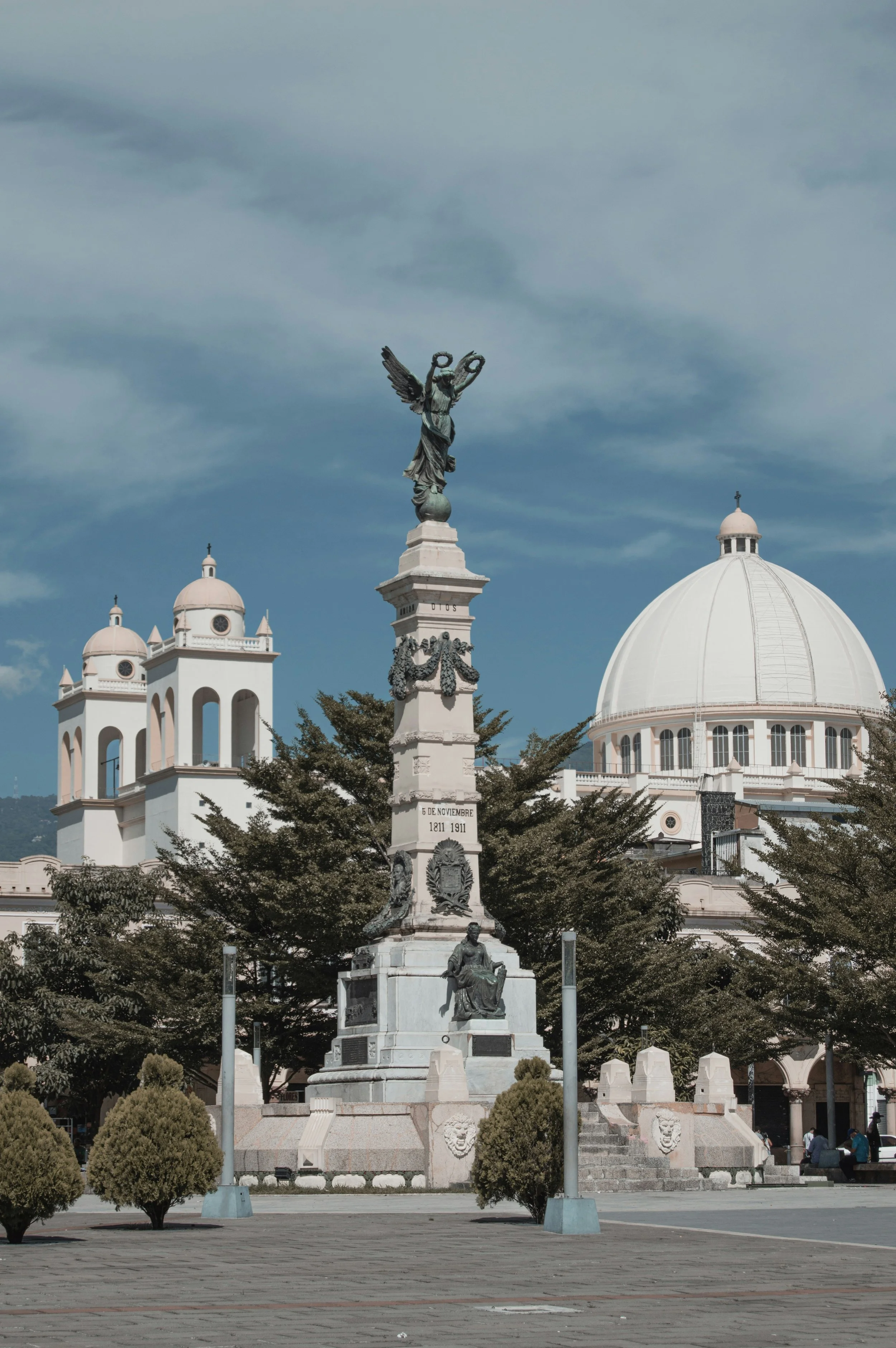
This article examines Nayib Bukele's leadership and his revolutionary government style in El Salvador, emphasising the convergence of stringent security policies, criminal populism, and digital political communication. Bukele's administration has realised a significant reduction in homicide and gang-related violence, chiefly through the enforcement of a prolonged State of Exception and the establishment of the Centro de Confinamiento del Terrorismo (CECOT), a vast prison epitomising total state authority. Utilising ideas of authoritarian populism, penal governance, and digital populism, the research examines how Bukele reinterprets legitimacy, transitioning it from democratic processes to performance-oriented results. By employing charismatic leadership and an advanced social media approach, Bukele has circumvented traditional institutions, centralised authority, and established a direct emotional bond with the populace. Although some Salvadorans rejoice in the restoration of safety and order, detractors caution against the deterioration of legal protections, judicial autonomy, and civil liberties. The report underscores a paradox: Bukele's popularity increases concurrently with the erosion of democratic standards. The study contends that although Bukele's model provides immediate stability and encourages regional imitation, it poses significant concerns regarding the sustainability of security attained through democratic erosion and institutional exceptionalism.

The threshold of emergency: sovereign power, constitutional change and the spectre of Civil War in 1938 Romania
This article seeks to capture the transformative potential of emergency powers, as a legal–political practice pertaining to liberal legality that ultimately can determine constitutional change, rather than a return to ‘normality’. It does so by providing an analysis of the transition from formal and limited liberal legality in Romania to the series of dictatorships that followed the instauration of the regime of royal dictatorship of King Carol II in 1938. Anchored in a close reading of the archival documents of the trial of the leader of the main far right movement, Corneliu Zelea Codreanu, and the subsequent legal proceedings, the proposed article aims to produce revaluation of the jurisprudential and constitutional status of the regime of King Carol II with a view of understanding the emergency-based dimension of this rule and the particular shift it operated foundational legal categories in criminal and constitutional law. I proceed by examining the current theoretical limitations in addressing the historical role of emergency in relation to constitutional orders. I turn then to exploring the political and legal context of the prorogation of emergency measures in 1938 Romania. Last, I examine the limited status of modern legality in a situation oversaturated by emergency measures.
Unconstitutional States of Emergency
Nine of 10 modern constitutions contain explicit emergency provisions describing who can declare a state of emergency (and under what conditions) and the additional powers the government enjoys under a state of emergency. As states of emergency typically allocate additional powers to the executive, they lend themselves easily to abuse and provide political incentives to declare emergencies. In this paper, we analyze the conditions under which government behavior under a state of emergency deviates from constitutional provisions and a gap between de jure provisions and de facto behavior thus results. In a novel data set comprising 853 emergency declarations, 115 are identified as unlawful. We find that autocratic governments are more likely than democratic governments to violate the constitution. The requirement that a second chamber approve the emergency declaration is associated with a higher likelihood of its being unconstitutional.

Governance of emergency powers and accountability in Indonesian disaster management
This paper argues that disaster management governance in Indonesia must align with emergency principles. In emergencies, special laws apply to prevent budget misuse and abuse of power. This study analyzes emergency authority in Indonesia's checks and balances system, focusing on legislative oversight. Using a legal-normative approach, it reviews Law No. 24/2007 on Disaster Management and the principles of necessity, proportionality, and temporality. The main findings are: (1) national and regional legislatures have little role in extending or ending emergency status, which allows unchecked use of emergency powers; (2) oversight of emergency actions is weak; and (3) there are no clear time limits for emergencies, enabling excessive extensions. The study recommends reforming laws to: (a) increase the legislature’s role in emergency status decisions; (b) clarify oversight and budgeting authority; and (c) set deadlines and rules for extending emergencies to improve accountability.

Biopolitics and public health in times of crisis
The COVID-19 pandemic has renewed attention to the entanglement of politics, health, and the governance of life. Measures such as lockdowns, vaccination campaigns, digital contact tracing, and quarantine protocols reveal that public health policy operates not merely as a technical or medical response, but as a form of political power acting directly upon bodies and populations. By examining how states enacted exceptional measures under conditions of crisis, this paper highlights both the potency and the fragility of sovereign control. Comparative case studies demonstrate how legal frameworks, political cultures, and ideological assumptions shape not only policy responses but also the differential valuation of life during health emergencies. Ultimately, the article argues that public health crises are not solely biomedical events, but deeply political phenomena.

A Farewell to Homo Sacer? Sovereign Power and Bare Life in Agamben’s Coronavirus Commentary
The article addresses Giorgio Agamben's critical commentary on the global governance of the COVID-19 pandemic as a paradigm of his political thought. While Agamben's comments have been criticized as exaggerated and conspiratorial, they arise from the conceptual constellation that he has developed starting from the first volume of his Homo Sacer series. At the centre of this constellation is the relation between the concepts of sovereign power and bare life, whose articulation in the figure of homo sacer Agamben traces from Antiquity to the present. We shall demonstrate that any such articulation is impossible due to the belonging of these concepts to different planes, respectively empirical and transcendental, which Agamben brings together in a problematic fashion. His account of the sovereign state of exception collapses a plurality of empirical states of exception into a zone of indistinction between different exceptional states and the normal state and then elevates this very indistinction to the transcendental condition of intelligibility of politics as such. Conversely, the notion of bare life, originally posited as the transcendental condition of possibility of positive forms of life, is recast as an empirical figure, whose sole form is the absence of form. We conclude that this problematic articulation should be abandoned for a theory that rather highlights the non-relation between sovereign power and bare life, which conditions the possibility of resistance and transformation that remains obscure in Agamben's thought.

Unpacking al-Sisi’s Threefold Populism through Giorgio Agamben’s State of Exception Following 3 July 2013
How has Giorgio Agamben’s state of exception enabled the repressive concretization of al-Sisi’s populism following the 3 July 2013? Drawing on the state of exception, this study argues that al-Sisi’s populism developed a complex mechanism of repression building on his predecessors’ points of strength. Inspired by his predecessors’ repressive techniques, al-Sisi’s populism manifested a three-pronged strategy encompassing Nasser’s heroic image as a nation savior, al-Sadat’s technocrats-military-businessmen alliance, and Mubarak’s extended structural and legal repression. This study builds on a critical discourse analysis of al-Sisi’s speeches, legal documentations, and reports addressing Egyptian politics from 2013 until present in identifying a threefold populism based on the projection of a heroic image, a business-military-technocrats alliance, and structural-legal repression.

Analysis of Executive Decree PCM-29-22 (The State of Exception)
Report by the Honduran Human Rights Commission (CONADEH) on the first period of the country's "State of Emergency" decree. The data analyzed here show a serious discrepancy between the information that was being officially communicated by the National Police to the public and the data that CONADEH has been able to verify. This includes evidence that 95% of detentions during this period were for minor offenses, and only 1% of detentions were related to the crime of extortion (which was, officially, the rationale for the suspension of rights that came with the Decree). In addition, the identities of some people detained were not recorded, and detentions occurred far beyond the zone designated as part of the Decree. It is highly worrying for CONADEH that in view of these data, the State of Emergency has been extended. This extension necessarily implies two scenarios: either 1) these data were not analyzed, meaning the State's duty to build a broad and sufficient justification capable of arguing the suitability, necessity, and proportionality of the extension of the measure was not taken seriously; or 2) the information presented here was ignored, constituting an excessively discretionary decision on the part of the corresponding authorities.

The United Nations and States of Exception
The political and legal problem of a state of exception, whereby a state deviates from its normal constitutional and legal order in response to a real or perceived emergency, has generated much debate. Critics contend that the use of a state of exception really is an exception that swallows the rule, with the potential to corrode the entire legal order. The first part of this article explores international law’s attempt to put limits upon countries' use of state of exception, as enforced by the Human Rights Committee of the United Nations. Secondly, the author looks at the broader question of whether or not the U.N., as a super-state, itself uses states of exception, and what, if any, limits are placed upon it.

States of Exception and Their Targets: Racialized Groups, Activists, and the Civilian Population
The article deals with the history of state exception in France since the Algerian War. From this point of view, what is happening in France falls into two overlapping genealogies of exception: a colonial genealogy of exceptionalist logics, in which Algeria plays a central part; and a more metropolitan genealogy of political repression that could be traced back to the monarchy. The author thus divides her remarks into three sections. First, she addresses the double genealogy of exception in France; second, the discriminatory character of the exception; and last, the normalization of exception.

Converging Histories: South Korea’s Martial Law Crisis in a Global Conjunctural Frame
This article advocates the use of a “global conjunctural frame” to explore the martial law crisis provoked by the actions of South Korean President Yoon Seok-yeol in December 2024. It does so by tracking ongoing discussions among progressive intellectuals in South Korea and the contributors to this thematic section about the nature of Yoon’s attempted self-coup and the structures that enabled it with a focus on how the event and its aftermath resonates with notions of late or untimely forms of fascism. The article shows how far-right reactions involve a disturbing reworking of an enduring Cold War politics across global, national, and everyday scales to amplify resentments and antagonisms brought apart partly through structural changes associated with neoliberalism. It then reviews some of the ideas about the creation of a Seventh Republic that have emerged during Yoon’s impeachment and that advocate constitutional reforms to address this troubling conjuncture and recognize the new solidarities formed in defending democracy in South Korea…

Short-term Security or Long-term Democratic Stability? Evidence from Ecuador’s war on gangs
Are citizens willing to trade long-term democratic stability for short-term security? We explore this question in Ecuador, where the powers of the executive and military have recently expanded in response to a dramatic rise in violent organized crime. Ahead of a national referendum proposing the expansion of these powers, we conducted a nationwide survey experiment. We find that informing citizens about the democratic risks of militarization — such as erosion of the rule of law or a heightened risk of an executive coup — significantly reduces support for a militarized approach to public security. This effect holds even when respondents are told that militarization may reduce violence. Our findings suggest that awareness of the potential democratic costs of widely used enforcement strategies, such as the militarization of security, could help prevent democratic backsliding in the face of heightened crime and violence…

Right to Seek Asylum in Emergency Contexts: The Regression of Hungarian Legislation (Diritto di asilo nei contesti di emergenza: l’involuzione della normativa ungherese)
This article analyzes the effectiveness of the right to seek asylum in the Hungarian legal system in the most recent emergency contexts. First, the legislative changes adopted following the so-called “migration crisis of 2015” are outlined, whereby the aim was to prevent access to the right to asylum. The measures introduced during the Covid-19 pandemic followed such a restrictive path. The article also assesses the conformity of the new measures with European and international law. To conclude, the armed conflict in Ukraine led to the coexistence of multiple emergency regimes, in which there is little room left to the effective exercise of the right to seek asylum…

The genesis of the ‘Exceptional’ Republic: the permanency of the political crisis and the constitution of legal emergency power in Turkey
Almost half of the political life has been experienced under the state of emergency and state of siege policies in the Turkish Republic. In spite of such a striking number and continuity in the deployment of legal emergency powers, there are just a few legal and political studies examining the reasons for such permanency in governing practices. To fill this gap, this paper aims to discuss one of the most important sources of the ‘permanent’ political crisis in the country: the historical evolution of legal emergency power. In order to highlight how these policies have intensified the highly fragile citizenship regime by weakening the separation of power, repressing the use of political rights and increasing the discretionary power of both the executive and judiciary authorities, the paper sheds light on the emergence and production of a specific form of legality based on the idea of emergency and the principle of executive prerogative…