
Necessity and exception: rethinking the Belgian state of siege in World War I
Necessity and exception: rethinking the Belgian state of siege in World War I
Journal: International Journal of Law in Context. The International Journal of Law in Context provides a forum for interdisciplinary legal studies and offers intellectual space for ground-breaking critical research. It is not committed to any particular theory, ideology or methodology and invites papers from a variety of standpoints, ideologies, perspectives, and methods. It publishes contextual work about law and its relationship with other disciplines including but not limited to science, literature, humanities, philosophy, sociology, psychology, ethics, history and geography. The journal aims to explore and expand the boundaries of law and legal studies.. More on the Journal can be found here.
Date of Publication: September 14, 2026.
Authors: Elias Roberto Dessantis. Dessantis holds a Master’s degree in Criminological Sciences (Ghent University). During his studies, he specialised in (organised) crime in conflict zones, (military) police and historical criminology.
As part of EMERGE, he is researching the development of exceptional emergency regimes in Belgian history. He is covering topics such as the two world wars, the interwar period, the Belgian royal crisis, the terror of the 1980s, and more. He uses methodologies from the fields of law, history and social sciences.
In addition to Belgian case studies, he is interested in the use of exceptional emergency regimes in Hispanic countries..
The article can be found here, and a PDF of the article can be found here.
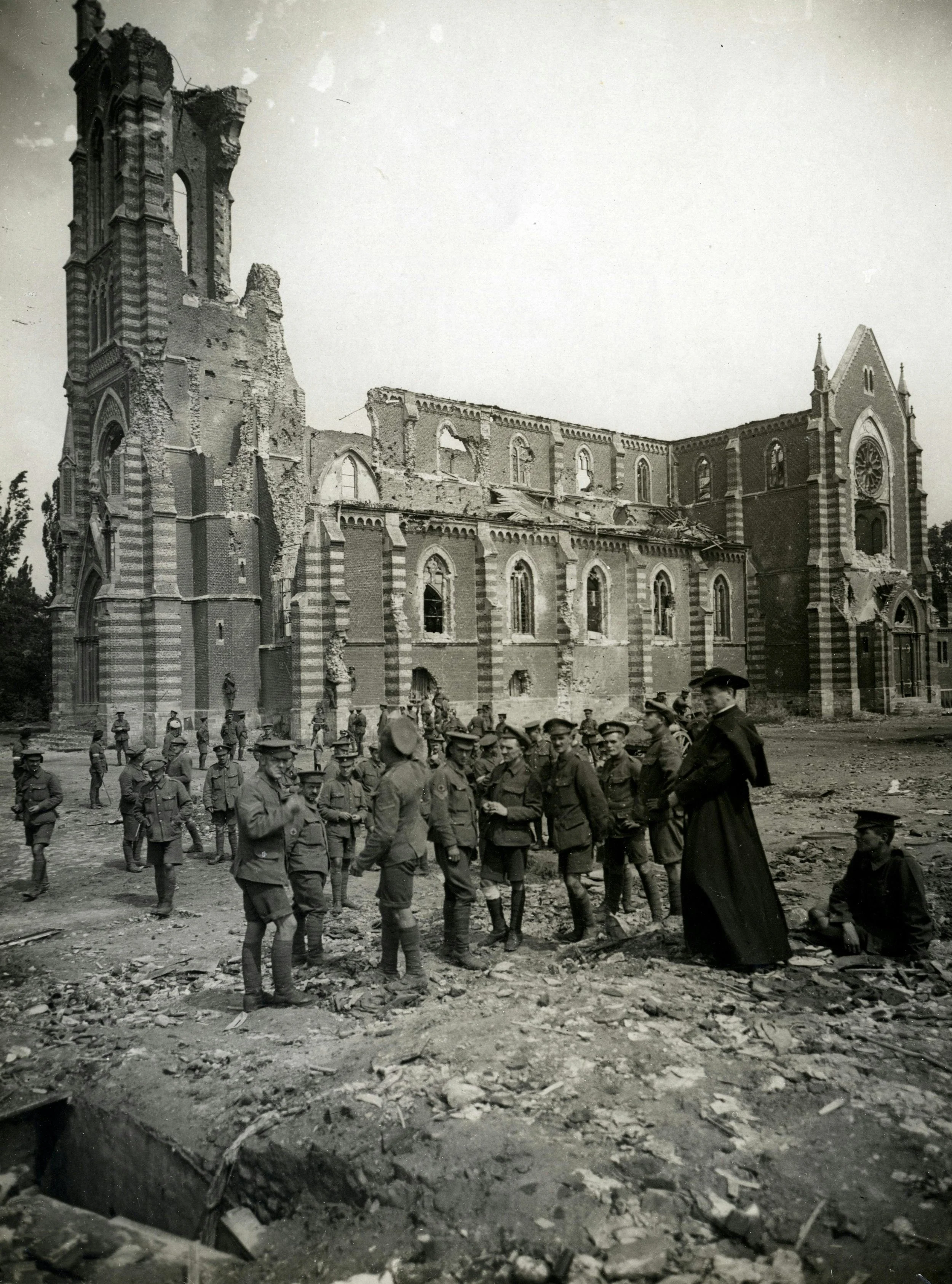
Photo by British Library on Unsplash.
Abstract: This article takes a closer look at the creation of the Royal Decree of 11 October 1916, which regulated the state of war and the state of siege during World War I. It gave the government the power to restrict certain fundamental rights to such an extent that it effectively amounted to a suspension of those rights. It is notable that the Belgian Constitution prohibits this through Article 187 (formerly Article 130), which states that the Constitution can never, as a whole or partially, be suspended. Nevertheless, was the decree-law justified under the notion of necessity, without giving a proper explanation of what necessity actually meant? Using a socio-legal-historical approach, this article finds that necessity should be understood not only as a factual situation requiring certain measures to survive the war, but also in relation to specific (postwar) political objectives.
Why ISSE Is Recommending This Article: This article provides an important historical case study of how constitutional democracies have justified the expansion of emergency powers during periods of existential crisis. Examining Belgium's 1916 Royal Decree on the state of war and state of siege, the author demonstrates that the legal justification for exceptional authority extended beyond immediate military necessity to include broader political objectives such as preserving public order, maintaining governmental authority, and shaping the postwar state. The article illustrates a recurring theme in the study of states of exception: emergency powers often emerge through a combination of genuine security concerns and political calculations about the future constitutional order. By tracing the relationship between necessity, sovereignty, executive authority, and constitutional continuity, it offers valuable historical perspective on questions that remain central to contemporary debates over emergency governance.
