
When the Exception Becomes Normal: Executive Power, Prolonged Martial Law, and Constitutional Resilience in Ukraine
When the Exception Becomes Normal: Executive Power, Prolonged Martial Law, and Constitutional Resilience in Ukraine
By Artur Voytseshchuk
KEY ARGUMENT
Ukraine’s prolonged martial law demonstrates that the central democratic risk of emergency power is not necessarily illegality at the moment of adoption, but normalization through duration. The appropriate test is whether extraordinary powers remain lawful, necessary, proportionate, time-bound, accountable - and reversible.
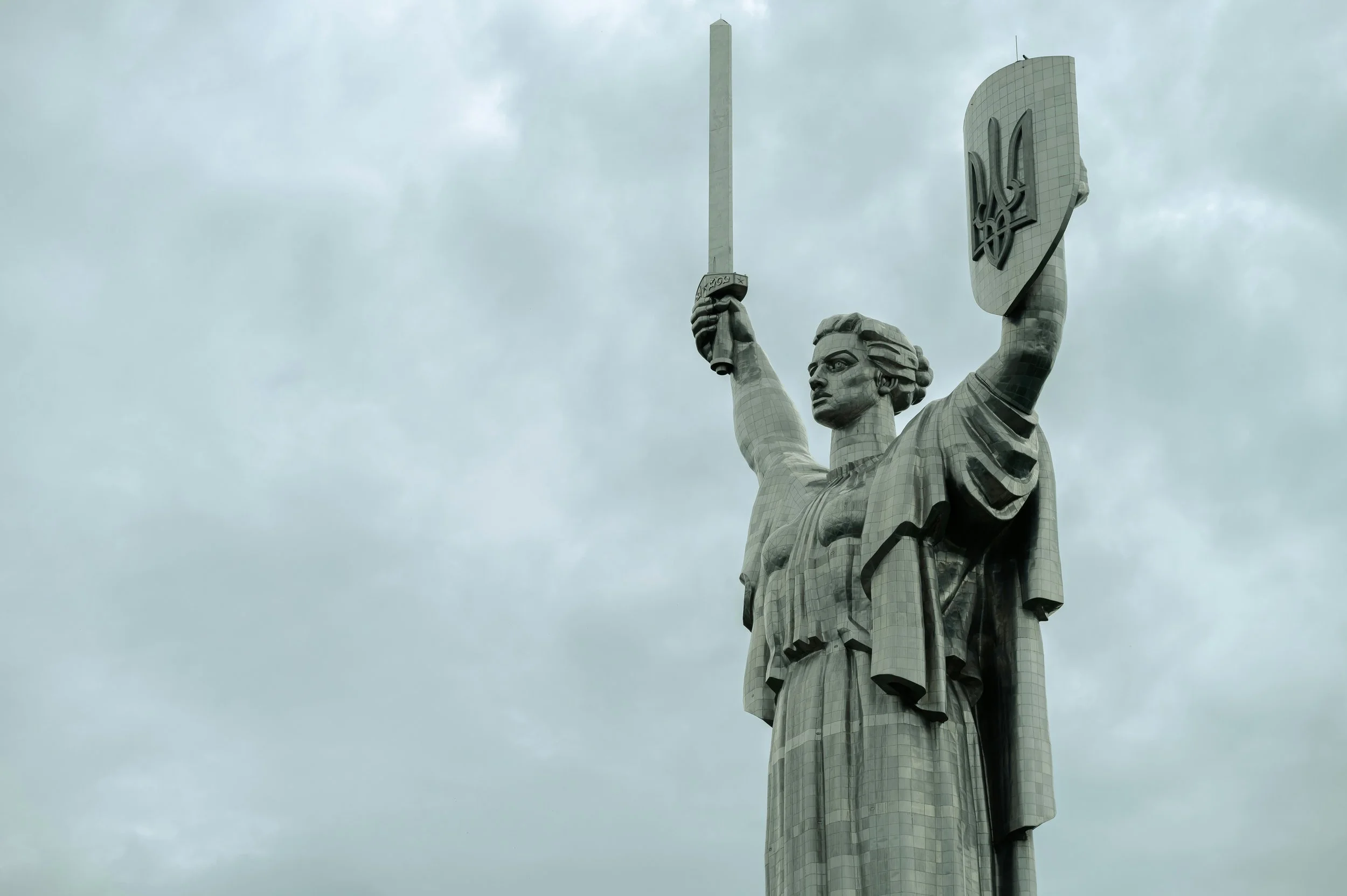
Photo by Volodymyr Leush on Unsplash.
Introduction: Ukraine’s Long Emergency
Russia’s full-scale invasion placed Ukraine in the kind of emergency for which constitutional systems reserve their most extraordinary legal tools. Martial law, introduced on 24 February 2022, has enabled the state to mobilize resources, restrict certain rights, reorganize public administration, and coordinate civilian and military institutions in ways that would be exceptional in peacetime. These measures have an obvious and continuing justification: the survival of the state and the defense of its territory and population.
Yet duration changes the constitutional problem. An emergency regime designed as temporary can remain legally temporary while becoming institutionally familiar. Procedures created for exceptional circumstances can become the normal way officials make decisions; special bodies can acquire durable administrative roles; restrictions introduced for urgent reasons can become embedded in routine governance. The central question is therefore no longer simply whether Ukraine may exercise extraordinary powers. Ukrainian law clearly permits such powers under defined conditions. The more difficult question is what happens when exception lasts long enough to shape the ordinary habits of the state.
This distinction matters. The normalization of emergency power is not the same thing as illegality, authoritarianism, or constitutional breakdown. A democratic state fighting an existential war must adapt, and adaptation may require centralized authority, accelerated procedures, secrecy, and temporary restrictions that would be difficult to justify in ordinary circumstances. The danger arises when the connection between a special power and the emergency that justified it becomes unclear, when exceptional procedures begin to perform ordinary governmental functions, or when institutions lose the capacity to return those powers to the ordinary constitutional framework.
Ukraine therefore offers an unusually important case for the study of states of exception. It is a constitutional democracy operating under prolonged martial law while its principal constitutional institutions continue to function. The Ukrainian experience shows that the key democratic challenge is not to eliminate exceptional authority, but to keep it legally bounded, functionally connected to the threat, reviewable, and reversible.
1. Martial Law Does Not Create a Legal Vaccum
The starting point for understanding Ukraine’s emergency order is that martial law does not suspend the Constitution. Article 64 of the Constitution permits restrictions on specified rights during martial law or a state of emergency, but it does not authorize an unlimited departure from constitutional government. The legal regime is therefore exceptional without being extra-legal.
The Law of Ukraine “On the Legal Regime of Martial Law” defines martial law as a special legal regime introduced in response to armed aggression, the threat of attack, or threats to state independence and territorial integrity. It permits additional powers for state authorities, military command, military administrations, and local self-government bodies, and authorizes measures necessary to repel aggression and maintain national security. Article 8 identifies the measures that may be used under the regime, including measures affecting public administration, property, infrastructure, labor relations, and public security.
This architecture is constitutionally significant because extraordinary competence has a legal source, a defined purpose, and identifiable institutional holders. Emergency does not itself become a free-standing source of governmental power. An authority must still be able to identify the legal basis for the measure it takes. This is a fundamental distinction between emergency government under law and government by emergency.
Presidential Decree No. 64/2022 introduced martial law throughout Ukraine from 5:30 a.m. on 24 February 2022, initially for thirty days, and the regime has subsequently been extended through constitutionally prescribed procedures. The repeated extensions do not by themselves make the regime unlawful. They do, however, create a structural issue that a short emergency does not: the state has now operated through exceptional mechanisms for a period long enough for those mechanisms to influence institutional behavior, administrative expectations, and the practical distribution of authority.
2. The Institutional Architecture of Wartime Governance
Ukraine’s wartime system is not a simple substitution of military government for civilian government. It is a layered structure in which the President, Verkhovna Rada, Cabinet of Ministers, central and local executive authorities, military command, military administrations, courts, and local self-government continue to interact. Martial law changes the intensity and organization of that interaction rather than abolishing the constitutional distribution of state power.
The President occupies a central role in national security and defense and initiates the introduction of martial law, subject to parliamentary approval. The Cabinet of Ministers remains responsible for the implementation of domestic and foreign policy and becomes particularly important in mobilizing resources, financing defense, maintaining critical infrastructure, and coordinating executive bodies. Parliament continues to legislate, approve the state budget, and exercise constitutionally assigned oversight functions. Courts remain part of the constitutional system and retain their role in reviewing the legality of public authority.
Military administrations illustrate most clearly how the emergency alters the architecture of governance. Ukrainian law defines them as temporary state bodies created to ensure the operation of the Constitution and laws, defense, civil protection, public security, the functioning of critical infrastructure, and the protection of citizens’ rights. Their competence can extend beyond narrowly military tasks into areas ordinarily associated with territorial administration and local governance.
This concentration of functions can be necessary. War rewards speed, coordination, and the ability to move resources across institutional boundaries. A fragmented administrative system may be unable to respond effectively to immediate security threats. But the same concentration makes clarity of responsibility more important, not less. When civilian administration, military command, and special wartime bodies share or coordinate authority, it can become difficult to identify who made a decision, under what legal competence, and through which mechanism that decision can be reviewed.
The constitutional problem is therefore not merely that particular institutions receive “more power.” The deeper transformation concerns the pathways through which decisions are made. Parallel channels of civilian administration and military coordination emerge; functions that are institutionally separated in peacetime may become operationally integrated; and temporary bodies can become central nodes of governance. The longer this architecture remains in place, the more important it becomes to distinguish wartime necessity from institutional inertia.
3. From Legalization to Normalization
A useful way to analyze prolonged emergency government is to distinguish legalization from normalization. Legalization is a formal legal act: the Constitution or legislation grants an authority a special competence for a defined emergency purpose. Normalization is an institutional process: repeated use causes that special competence to become a familiar, routine, or preferred method of governing.
The distinction prevents two opposite errors. The first is to assume that any expansion of executive or administrative power during war is inherently anti-democratic. That is untenable. Constitutional emergency regimes exist precisely because ordinary procedures may be inadequate in extraordinary circumstances. The second error is to assume that legality at the moment a power is created settles the constitutional question for as long as the emergency continues. It does not. A power may remain formally lawful while the circumstances, function, frequency, or institutional effects of its use change.
Time is therefore not merely a background fact. It is an independent constitutional variable. A measure that is plainly necessary for several weeks may require a different justification after several years. A temporary administrative structure may begin to accumulate functions. Officials may become dependent on accelerated procedures. Restrictions on transparency adopted to protect sensitive information may expand beyond information whose secrecy is operationally necessary. Special competence can migrate into areas that ordinary law is capable of governing.
Normalization does not require malicious intent. Institutions adapt to incentives. Procedures that are faster and more flexible are attractive to administrators; centralized channels can appear more efficient than dispersed ones; emergency rules can reduce transaction costs and political friction. The resulting risk is not necessarily a dramatic constitutional rupture. It may instead be gradual: exceptional governance becomes administratively easier than ordinary governance.
This is why the purpose of an emergency power matters as much as its legal form. A measure created to repel aggression, protect critical infrastructure, maintain public security, or preserve state functioning should remain connected to those purposes. If it becomes a convenient instrument for tasks that can reasonably be performed through ordinary legal mechanisms, the boundary between exception and normal government begins to erode.
4. The Guardrails: Legality, Necessity, Proportionality, Time, Accountability
A prolonged state of exception requires more than a one-time determination that an emergency exists. It requires continuing criteria for deciding whether particular extraordinary powers remain compatible with constitutional democracy. Five criteria are especially useful: legality, necessity, proportionality, temporal limitation, and accountability.
Legality is the threshold requirement. Every substantial restriction or expansion of governmental competence must have a legal basis. Martial law cannot operate as a general authorization for public authorities to act outside their statutory competence. The existence of war may explain why the legislature grants exceptional powers; it cannot replace the legal grant itself.
Necessity asks whether a particular exceptional measure remains connected to the threat it is intended to address. The relevant question is not simply whether Ukraine remains at war. It is whether this specific power, exercised in this specific way, continues to serve a wartime need that ordinary mechanisms cannot adequately meet. A broad emergency can contain narrower problems that change over time, and the justification for each extraordinary instrument should be capable of changing with them.
Proportionality addresses intensity. Even where a measure is lawful and necessary, its costs to rights, institutional autonomy, transparency, or local self-government should not exceed what is reasonably required to achieve the legitimate objective. The existence of an existential threat does not make every restriction proportionate. The stronger the interference, the stronger the justification should be.
Temporal limitation is particularly important in a prolonged emergency. Formal expiry dates and repeated extensions are one form of temporal control, but they are not sufficient on their own. Long-running powers should be periodically reassessed. Review should ask whether the original circumstances remain, whether the measure is still performing an exceptional function, and whether a less restrictive ordinary mechanism can now achieve the same result.
Accountability completes the framework. Wartime secrecy can legitimately limit public disclosure, but secrecy and accountability are not synonyms. Information that cannot safely be made public may still be subject to parliamentary, judicial, audit, or internal review. A democratic emergency order must be capable of protecting sensitive information without creating zones of governmental action that are effectively beyond scrutiny.
These five criteria should operate cumulatively. A measure that is legally authorized but no longer necessary presents a problem. A necessary measure without meaningful oversight presents another. A proportionate measure that becomes functionally permanent raises a different concern. The objective is not to impose peacetime procedure on wartime government, but to ensure that the exceptional character of extraordinary authority remains visible in law and practice.
5. Parliament, Courts, and the Difference Between Secrecy and Impunity
Ukraine’s constitutional continuity provides important safeguards against the normalization of exceptional power. The Verkhovna Rada continues to function under martial law. Parliamentary approval is part of the mechanism for introducing and extending the emergency regime, and Parliament retains legislative and budgetary responsibilities. This matters because wartime concentration of resources within the executive branch increases the importance of institutions capable of authorizing, limiting, and reviewing that concentration.
Budgetary oversight is a particularly important example. War necessarily directs enormous public resources toward defense, security, infrastructure, and social support. Operational secrecy may constrain what can be publicly disclosed, but it does not follow that expenditure should escape institutional scrutiny. Closed or classified oversight can still be oversight. The constitutional principle at stake is that necessity may change the form of accountability without eliminating accountability itself.
Judicial review serves a related function. Courts should not be expected to substitute their operational judgment for that of institutions responsible for defense. At the same time, deference to wartime decision-making cannot mean that executive discretion is legally unlimited. Courts remain capable of asking whether an authority possessed the relevant competence, pursued a lawful purpose, respected applicable procedures, and acted proportionately.
The distinction is essential to constitutional resilience. Emergency government often requires discretion because decisions must be made with incomplete information and under severe time pressure. But discretion and arbitrariness are not the same thing. The rule of law does not require that judges or legislators run military operations; it requires that extraordinary public power remain attributable to law and susceptible to meaningful institutional review.
6. The Overlooked Problem: Returning to Normal
Emergency law is usually designed around entry: who may declare an emergency, on what grounds, for how long, and with what powers. Prolonged emergencies reveal an equally important problem of exit. Ending martial law will not automatically restore the pre-war administrative order. Years of exceptional governance can leave behind procedures, institutional relationships, regulatory acts, expectations, and dependencies that survive the formal emergency.
Ukraine will therefore need to treat the return to ordinary constitutional government as a legal and institutional process rather than a single date. Special administrative practices should be reviewed. Powers transferred to temporary bodies should be mapped and, where appropriate, returned to ordinary institutions. Restrictions whose justification depended on wartime conditions should be reassessed. Emergency procedures for the use of public resources should either expire or be re-enacted through ordinary law if a continuing policy case exists for them.
The relationship between centralization and local self-government deserves particular attention. Military administrations and other special arrangements may be indispensable in territories exposed to immediate security risks or where ordinary institutions cannot function. But a system designed for defense should not become the default model of territorial governance after the conditions that justified it have passed. Restoring ordinary distributions of competence is part of restoring constitutional normality.
Exit also requires distinguishing useful institutional learning from emergency residue. Not every wartime innovation should disappear. Some procedures may prove more efficient, resilient, or technologically capable than their peacetime predecessors. But if an emergency-derived practice is worth preserving, the democratic method is to justify and enact it through ordinary legal processes rather than allow it to persist merely because institutions have grown accustomed to it.
7. Why Ukraine Matters Beyond Ukraine
Ukraine’s experience has significance far beyond its domestic constitutional debate. Much of the modern literature on emergency powers focuses on abuse: governments manufacturing crises, extending emergencies for political advantage, or using exceptional authorities to weaken opposition and accountability. Ukraine presents a different but equally important problem. The underlying emergency is real, severe, and existential. The need for extraordinary state capacity is not hypothetical.
That makes Ukraine a demanding test of constitutionalism. The central question is not how to prevent a government from responding to a crisis, but how to preserve constitutional limits while enabling a government to respond effectively to one. The case demonstrates that democratic resilience cannot be measured by the absence of exceptional powers. It must be measured by the state’s capacity to keep those powers lawful, purpose-bound, proportionate, reviewable, and ultimately reversible.
This also complicates any simple opposition between emergency power and democracy. A state unable to defend itself cannot preserve its constitutional order. Yet a constitutional order transformed indefinitely by the instruments of its own defense faces a different danger. The task is to maintain the distinction between adaptation and normalization: to allow institutions to change enough to survive the emergency without allowing emergency governance to become a self-sustaining model of government.
For comparative research on states of exception, Ukraine therefore provides a critical case of prolonged democratic emergency governance. It shows why the most important question may not be whether extraordinary powers exist, but whether institutions retain the capacity to explain why they are needed, to supervise how they are used, and to relinquish them when they are no longer necessary.
Conclusion: The Test Is Reversibility
The constitutional challenge of prolonged martial law is not solved by choosing between effective government and limited government. Ukraine requires both. The state must possess the authority and administrative capacity to defend itself, while the legal order must preserve the distinction between powers justified by emergency and powers appropriate to ordinary constitutional government.
The principal risk of normalization is gradual rather than dramatic. Extraordinary competence can become routine; temporary structures can become administratively indispensable; exceptional procedures can migrate into ordinary functions; oversight can weaken because secrecy becomes habitual rather than specifically justified. None of these outcomes is inevitable, and none follows simply from the duration of martial law. They are risks that arise when duration is not matched by review.
A durable framework for emergency governance should therefore ask five questions repeatedly: Is the power lawful? Is it still necessary? Is its use proportionate? Is its duration justified? Is it subject to meaningful accountability? These questions do not weaken wartime government. They help distinguish legitimate emergency capacity from the institutional entrenchment of exception.
Ultimately, the strongest evidence of constitutional resilience will come after the emergency. A democratic state demonstrates control over extraordinary power not only by using it lawfully during crisis, but by being able to dismantle, narrow, or translate it back into ordinary law when the crisis recedes. The real test of the state of exception is therefore reversibility: whether exceptional powers remain instruments of constitutional survival rather than becoming the architecture of normal government.
References:
1. Constitution of Ukraine, adopted 28 June 1996, Bulletin of the Verkhovna Rada of Ukraine, 1996, No. 30, Art. 141.
2. Law of Ukraine “On the Legal Regime of Martial Law,” No. 389-VIII of 12 May 2015.
3. Decree of the President of Ukraine No. 64/2022 of 24 February 2022, “On the Introduction of Martial Law in Ukraine.”
4. Law of Ukraine “On the Cabinet of Ministers of Ukraine,” No. 794-VII of 27 February 2014.
5. Law of Ukraine “On Local State Administrations,” No. 586-XIV of 9 April 1999.
6. Law of Ukraine “On Local Self-Government in Ukraine,” No. 280/97-VR of 21 May 1997.
7. Law of Ukraine “On National Security of Ukraine,” No. 2469-VIII of 21 June 2018.
8. Law of Ukraine “On the Defense of Ukraine,” No. 1932-XII of 6 December 1991.
9. Rabinovych, M., Brik, T., Darkovich, A., Hatsko, V., Savisko, M. “Ukrainian decentralization under martial law: challenges and opportunities.” Post-Soviet Affairs 41(5) (2025): 411–435.
10. Ovcharenko, O., Kozachenko, A., Kabalskyi, R., Savchuk, O. “The Judiciary in Ukraine and Challenges of Wartime: The Protection of Human Rights in Extraordinary Conditions and Prospects of Restoring Military Courts.” Israel Law Review 59 (2026): 44–70.
11. Trykhlib, K. “Constitutional Order and the Rule of Law in a Time of War in Ukraine.” International and Comparative Law Review 24(1) (2024): 241–255.
12. Kantor, N., Ivantsova, Z., Darahan, V., Velkov, A., Andreiev, D. “Legal Regulation of Ensuring Human Rights in Ukraine During The Introduction of Martial Law.” Jurnal Cita Hukum 12(1) (2024): 13–26.
13. Korentsov, O. “Current Issues in the Application of the Provisions of the Law of Ukraine ‘On the Legal Regime of Martial Law’.” Problems of Legality 167 (2024): 98–129.
14. Stefanchishen, R., Ihniatiev, A., Pasechnyk, O. “Centralisation of Powers of Public Administration Entities under Martial Law as a Guarantee of Economic and Legal Stability of the State Functioning.” Baltic Journal of Economic Studies 10(4) (2024): 352–360.
About the author:
Artur Voytseshchuk, PhD in Law, is a Ukrainian legal scholar and researcher whose work focuses on military criminal law, wartime governance, emergency powers, transitional justice, and the legal challenges arising from armed conflict. He holds a PhD in Law from the Leonid Yuzkov Khmelnytskyi University of Management and Law. His doctoral research examines the loss of military property under Ukrainian criminal law, with particular attention to Article 413 of the Criminal Code of Ukraine and the difficulties of applying traditional legal and accountability frameworks under conditions of large-scale war.
His broader research interests include military justice, martial law, accountability during armed conflict, post-occupation governance, reconstruction of state institutions in liberated territories, transitional justice, and the relationship between legal accountability and institutional effectiveness during national emergencies. Voytseshchuk is particularly interested in how democratic states can preserve the rule of law, constitutional order, and institutional resilience during wartime, while ensuring that legal and administrative frameworks remain capable of responding to rapidly changing security conditions.
Before focusing on his current legal and academic work, he worked in Ukraine’s public sector as a state auditor-inspector, including work involving large taxpayers and financial institutions. He holds master’s degrees in Law; Finance, Banking and Insurance; and Law Enforcement, and participated in the Erasmus+ programme at Inholland University of Applied Sciences in the Netherlands. His academic publications address military criminal and administrative law, the legal regulation and safeguarding of military property, and international legal responsibility for war crimes. His current research seeks to connect Ukrainian wartime legal experience with broader comparative questions of emergency governance, constitutional resilience, transitional justice, and the preservation of democratic institutions under conditions of war.
