

All Content
Welcome to the Institute for the Study of States of Exception (ISSE) main content page, a single source for all posts from the Institute, including commentary on global events, book reviews, academic literature, links to our podcasts, and additional resources. Check back regularly for more content from us.
“Sovereign is he who decides the exception.”
— Carl Schmitt (Political Theology: Four Chapters on the Concept of Sovereignty, 1922)
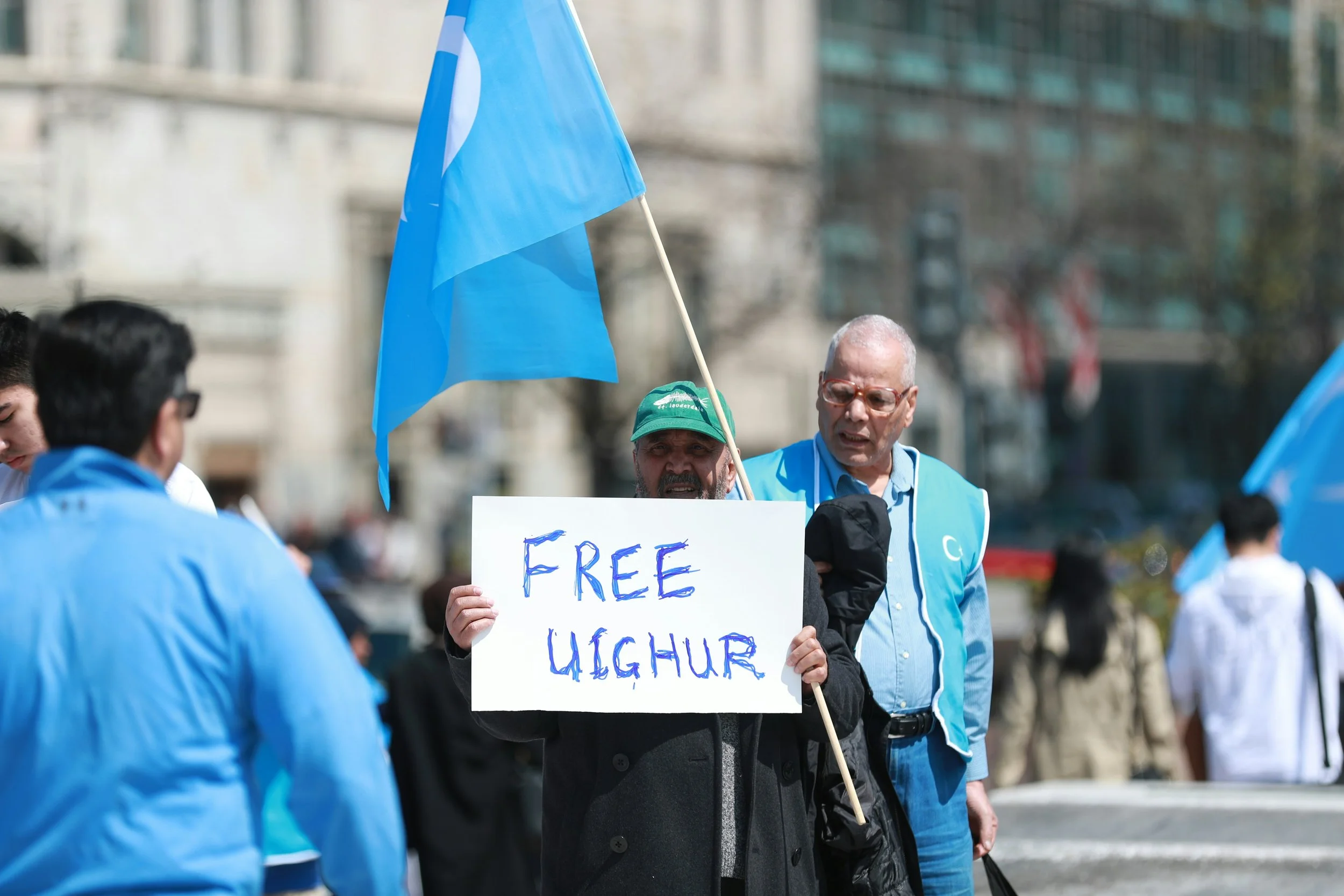
Human Rights Watch: Protected No More - Uyghurs in Türkiye
According to Human Rights Watch, Türkiye’s treatment of Uyghurs has increasingly assumed the character of an administrative state of exception, where broad and opaque “public security” powers override established legal protections. Turkish authorities arbitrarily assign “restriction codes”—often without evidence—to label Uyghurs as security threats, triggering detention, denial of residency or citizenship, and potential deportation. These codes function as emergency-style mechanisms that bypass due process, enabling detention in deportation centers where Uyghurs face pressure to sign “voluntary return” forms and, in some cases, mistreatment. Courts routinely uphold deportation orders on the basis of these codes alone and have discounted the prohibition against refoulement, despite clear evidence that Uyghurs face persecution and torture if returned to China. The reliance on foreign intelligence, including Chinese-provided lists branding peaceful activists as “terrorists,” further entrenches a security paradigm that suspends normal legal standards and undermines long-standing protections for Uyghurs. Overall, the report shows how Türkiye’s exceptional security authorities have created pervasive uncertainty for Uyghurs, eroded their legal status, and exposed them to serious risks of refoulement.

Analysis of Executive Decree PCM-29-22 (The State of Exception)
Report by the Honduran Human Rights Commission (CONADEH) on the first period of the country's "State of Emergency" decree. The data analyzed here show a serious discrepancy between the information that was being officially communicated by the National Police to the public and the data that CONADEH has been able to verify. This includes evidence that 95% of detentions during this period were for minor offenses, and only 1% of detentions were related to the crime of extortion (which was, officially, the rationale for the suspension of rights that came with the Decree). In addition, the identities of some people detained were not recorded, and detentions occurred far beyond the zone designated as part of the Decree. It is highly worrying for CONADEH that in view of these data, the State of Emergency has been extended. This extension necessarily implies two scenarios: either 1) these data were not analyzed, meaning the State's duty to build a broad and sufficient justification capable of arguing the suitability, necessity, and proportionality of the extension of the measure was not taken seriously; or 2) the information presented here was ignored, constituting an excessively discretionary decision on the part of the corresponding authorities.
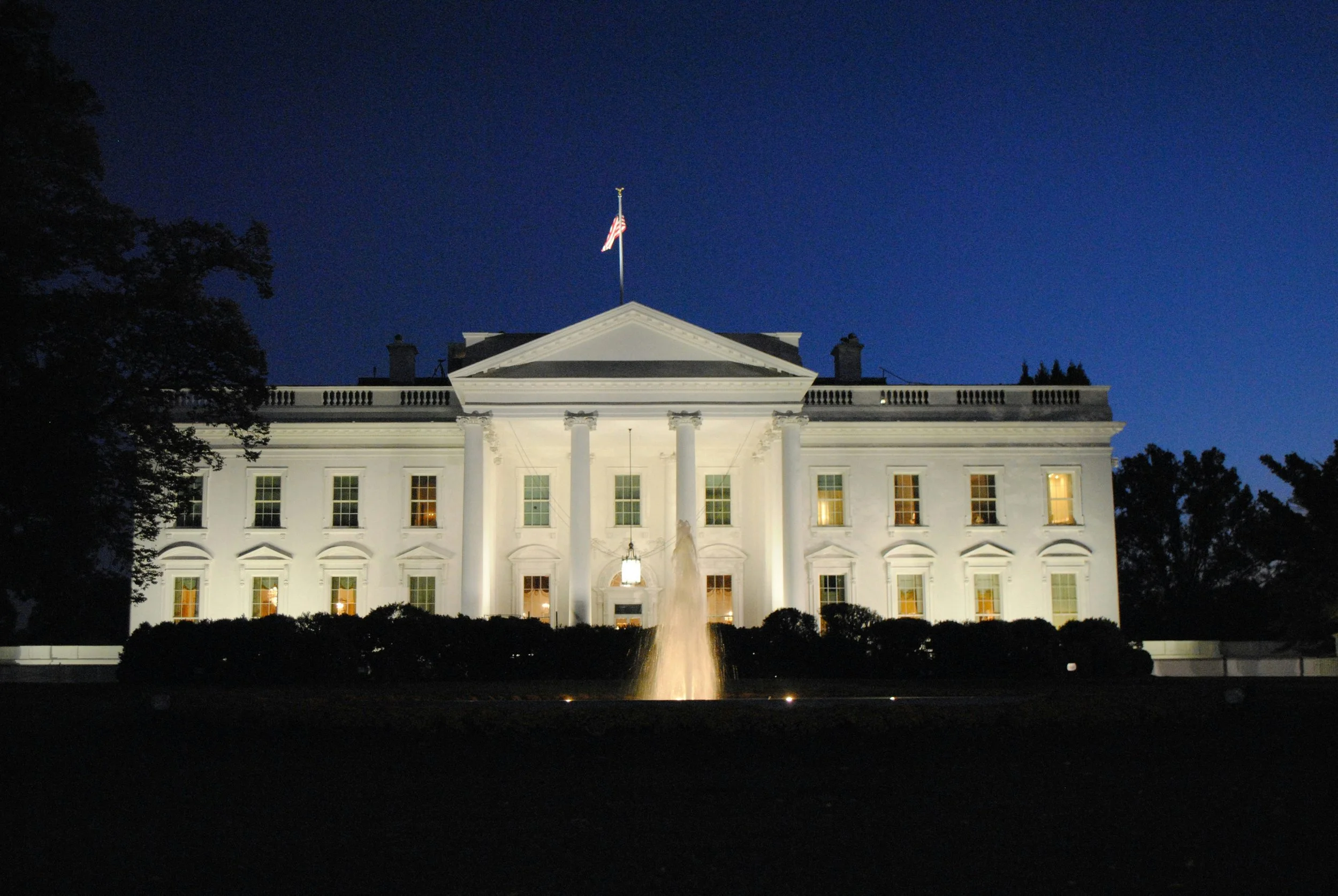
What Trump can and can’t do with the Insurrection Act - Demystifying the most ominous law in America
In the United States, the military is not used for domestic law enforcement. That’s a bedrock civic principle, one that separates our democracy from dictatorships around the world. Our troops serve to protect the American people from harm coming from abroad, not to police people at home.
Legally speaking, though, there is one glaring exception: The Insurrection Act.

De batazos, bloqueos y llamadas
Tiempo News recently highlighted the creation of the ISSE in response to the growing use of emergency powers as a recurring tool of political governance.

El poder en tiempos de excepción
Featured in El Tiempo Latino, ISSE examined the growing use of emergency powers in democratic societies. The article highlights the importance of monitoring exceptional measures before they become permanent features of governance.

What to look for in the November 5, 2025, oral arguments before the U.S. Supreme Court in the IEEPA tariffs case
Oral arguments are scheduled for November 5, 2025, in V.O.S. Selections, Inc. v. United States, also known as the Tariffs Case or the International Emergency Economic Powers Act (IEEPA) case. The fundamental issue at stake is whether the President has authority under IEEPA’s grant of emergency powers to rewrite the United States tariff schedule. While IEEPA grants the President broad authority to “regulate . . . importation or exportation” of property as necessary to address “unusual and external threat(s)”, IEEPA does not specifically grant the authority to impose tariffs. The ability to impose tariffs has traditionally been viewed as a core aspect of Congress’s Article 1 authority to collect taxes, duties, imposts and excises, and to raise revenue.
The IEEPA Tariffs Are Based on Pretext
On April 2, President Trump declared that the U.S. trade deficit in goods was a national emergency and raised tariffs to the highest level in 100 years to address it. Three courts have now ruled that those tariffs are illegal, and an appeal by the government will soon be heard by the Supreme Court. As I write elsewhere, the decisions striking down the tariffs are persuasive and should be upheld. But each also ignores a key question: whether the U.S. trade deficit constitutes an “unusual and extraordinary threat” that justifies emergency measures in the first place.

Emergency Powers for Good
Emergency powers are widely, and justly, criticized as threats to the rule of law. In the United States, forty-three declared emergencies give the executive vast authority to exercise power unencumbered by standard legal and procedural requirements. A long tradition of executive use of emergency powers to erode civil liberties amplifies fears of executive overreach.
Yet this, we argue, is only part of the picture. We examine how emergency powers can be used for good. We argue that under certain limited conditions, political actors can legitimately invoke emergency powers to transform public policy. In addition to widely accepted requirements of crisis severity, transparency, and time limits, we argue that broad consensus and a reformulated non-discrimination requirement are essential to the proper use of emergency powers for societal transformation.

Can Emergency Powers Be Leveraged to Create Change Beyond a Crisis?
This episode features UC Berkeley Law Professors Katerina Linos and Elena Chachko discussing their paper in the William & Mary Law Review, “Emergency Powers for Good.” In the article and a blog post on “Lawfare,” they argue that emergency powers — often associated with overreach and authoritarianism — can be used in legitimate and transformative ways.

The United Nations and States of Exception
The political and legal problem of a state of exception, whereby a state deviates from its normal constitutional and legal order in response to a real or perceived emergency, has generated much debate. Critics contend that the use of a state of exception really is an exception that swallows the rule, with the potential to corrode the entire legal order. The first part of this article explores international law’s attempt to put limits upon countries' use of state of exception, as enforced by the Human Rights Committee of the United Nations. Secondly, the author looks at the broader question of whether or not the U.N., as a super-state, itself uses states of exception, and what, if any, limits are placed upon it.

Lawfare Daily: Bob Bauer and Liza Goitein on Emergency Powers Reform
Bob Bauer, Professor of Practice and Distinguished Scholar in Residence at New York University School of Law, and Liza Goitein, Senior Director of Liberty & National Security at the Brennan Center, join Kevin Frazier, Assistant Professor at St. Thomas University College of Law and a Tarbell Fellow at Lawfare, to review the emergency powers afforded to the president under the National Emergency Act, International Emergency Economic Powers Act, and the Insurrection Act. The trio also inspect ongoing bipartisan efforts to reform emergency powers.

States of Exception and Their Targets: Racialized Groups, Activists, and the Civilian Population
The article deals with the history of state exception in France since the Algerian War. From this point of view, what is happening in France falls into two overlapping genealogies of exception: a colonial genealogy of exceptionalist logics, in which Algeria plays a central part; and a more metropolitan genealogy of political repression that could be traced back to the monarchy. The author thus divides her remarks into three sections. First, she addresses the double genealogy of exception in France; second, the discriminatory character of the exception; and last, the normalization of exception.

Locke and the State of Exception: Towards a Modern Understanding of Emergency Government
Modern states have almost without exception developed constitutional arrangements to protect themselves from threats to their continued existence. The most common of these arrangements is the state of exception. The state of exception is proclaimed when the constitutional order as such is at stake, for example, at the threat of foreign invasion, civil strife, or a large-scale terrorist attack. The proclamation of the state of exception leads to a suspension of rights and a concentration of power in the executive, enabling it to respond quickly and effectively to the threat. Although the state of exception may sometimes be necessary, a problem is that those invested with emergency powers may themselves become a threat to the constitutional order meant to be defended. In fact, modern history shows numerous examples of governments using the state of exception as a pretext for violating rights or even for establishing a more authoritarian regime.

Welcome to the Institute.
Greetings! It is with deep humility and a strong sense of purpose that I formally welcome you to the Institute for the Study of States of Exception (ISSE). ISSE is a 501(c)(3) nonprofit organization dedicated to advancing scholarship and dialogue on the misuse and abuse of states of exception worldwide–scenarios when laws or even entire constitutions are suspended under purported emergency circumstances, but in reality are intentionally framed improperly to enable democratic backsliding.
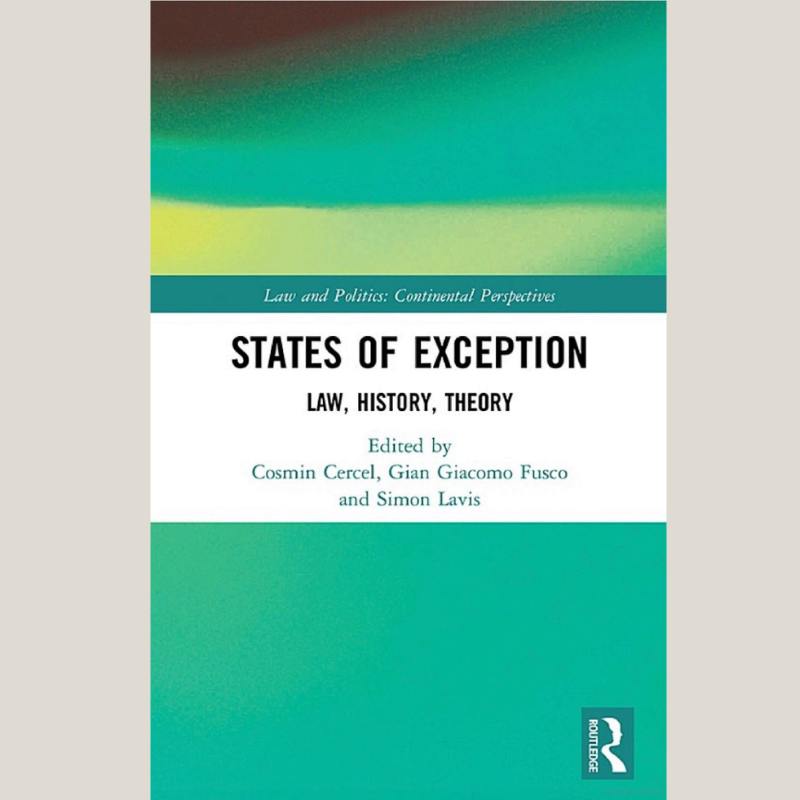
States of Exception: Law, History, Theory
This book addresses the relevance of the state of exception for the analysis of law, while reflecting on the deeper symbolic and jurisprudential significance of the coalescence between law and force.
The concept of the state of exception has become a central topos in political and legal philosophy as well as in critical theory. The theoretical apparatus of the state of exception sharply captures the uneasy relationship between law, life and politics in the contemporary global setting, while also challenging the comforting narratives that uncritically connect democracy with the tradition of the rule of law. Drawing on critical legal theory, continental jurisprudence, political philosophy and history, this book explores the genealogy of the concept of the state of exception and reflects on its legal embodiment in past and present contexts – including Weimar and Nazi Germany, contemporary Europe and Turkey. In doing so, it explores the disruptive force of the exception for legal and political thought, as it recuperates its contemporary critical potential…
Can the president declare a national emergency without limits
In this episode of “It’s the Law,” UC Berkeley School of Law Dean Erwin Chemerinsky breaks down the answer and explains that the Constitution is meant to limit what the government can do, and those limits apply to emergencies as well…

One Week of Trump’s DC Takeover Attempt: An analysis of the president’s use of military, police, and security services in the nation’s capital - Just Security
A week ago, President Donald Trump and members of his cabinet announced a takeover of law enforcement functions in Washington, D.C. using three tools: deployment of elements of the D.C. National Guard (and National Guard troops from several cooperating states as well), invocation of a statutory emergency power to requisition the services of the city’s Metropolitan Police Department, and a surge of federal law enforcement to the city’s streets, including Department of Homeland Security, Federal Bureau of Investigation, and other federal agents. Over the past week, 800 D.C. National Guardsmen have been mobilized for operations in the city, with hundreds more state National Guardsmen on their way, and 500 newly deployed immigration and other federal agents are patrolling the streets or have set up checkpoints. At the same time, the district and the White House have engaged in a power struggle over control of the city’s police department…

Presidential emergency powers, explained - Protect Democracy
National emergencies are critical tools for addressing sudden and unforeseen events — often situations that require an immediate, decisive response to address. In our constitutional system, a national emergency declaration allows the president to temporarily use certain authorities that Congress has previously approved. Congress delegated this authority to the president because it sometimes cannot act quickly enough to respond to certain kinds of situations, such as natural disasters and public health emergencies. Upon declaring a national emergency, over 130 special authorities — such as the authority to shut down communications facilities or draw down equipment from national defense stockpiles— are immediately unlocked that enable a president to intervene in ways that are unavailable to them outside of an emergency declaration.
Emergency Powers of the President - Civics 101: A Podcast, New Hampshire Public Radio
If you want to learn about economic sanctions, which are the most common of the president’s emergency powers, and one non-conflict way to exert pressure on a foreign power, check out New Hampshire Public Radio’s Civics 101 podcast episode on emergency powers. You’ll also learn about certain military powers the president has under an emergency declaration. Emergency powers are designed for when plans need to change, and fast, by allowing the president to override certain Constitutional provisions in a time of crisis. But in the last century, national emergencies have gone from a rarity to a tool that presidents use dozens of times while in office. We talk about what a president can (and cannot) do during a state of emergency, and how Congress has tried to put checks on that power, with help from Kim Lane Scheppele, author of Law in a Time of Emergency…

Emergency Powers Project - Brennan Center for Justice
Emergency powers have existed in countries around the world for centuries. Their purpose is simple: to temporarily enhance executive power during unexpected crises that are moving too fast for Congress to respond. The Brennan Center’s original research cataloged 123 statutory authorities that become available to the president when he declares a national emergency. Many are measured and sensible, but others seem like the stuff of authoritarian regimes: giving the president the power to take over domestic communications, seize Americans’ bank accounts, and deploy U.S. troops to any foreign country. Given how broad these powers are, it is critical to have adequate safeguards in place to prevent abuse…