

All Content
Welcome to the Institute for the Study of States of Exception (ISSE) main content page, a single source for all posts from the Institute, including commentary on global events, book reviews, academic literature, links to our podcasts, and additional resources. Check back regularly for more content from us.
“Sovereign is he who decides the exception.”
— Carl Schmitt (Political Theology: Four Chapters on the Concept of Sovereignty, 1922)

Declaration of a crime emergency in the District of Columbia
On December 4, 2025, the three judge U.S. Court of Appeals for the District of Columbia Circuit granted the Trump Administrations’s request to halt a lower court judge’s November 20, 2025, order concluding that President Trump’s deployment of 2000 National Guard troops to Washington, D.C., was illegal. The November 20 order had been postponed by the lower court’s judge from coming into effect until December 11, 2025, in order to give the Trump Administration time to appeal the decision. Initially, the D.C. attorney general had filed suit in September over the deployment, following President Trump’s August announcement that he would take over the city’s police department in conjunction with the National Guard deployments. As a result of the December 4, 2025, ruling, this suit filed by the D.C. attorney general will now continue.
ISSE comments on Former JAGs Working Group statement on September 2, 2025 lethal strikes
On November 29, 2025, the Former JAGs Working Group issued a statement concerning the lethal strikes taken by the US Military on September 2, 2025, against a civilian boat allegedly carrying narcotics. The statement, which is linked here, is unequivocal in its conclusion that if the second strike, which targeted two survivors of the initial strike, occurred as was reported by both the Washington Post and CNN, then the giving and execution of the order to kill the survivors constituted a war crime, murder, or both.
From the point of view of ISSE, the September 2 strike that reportedly killed eleven civilians, and subsequent strikes against civilian boats that are reported to have killed over seventy additional civilians, are connected to, and logically flow from, the administration's use of emergency powers.
Emergency powers during COVID-19: when democracies stepped outside normal bounds
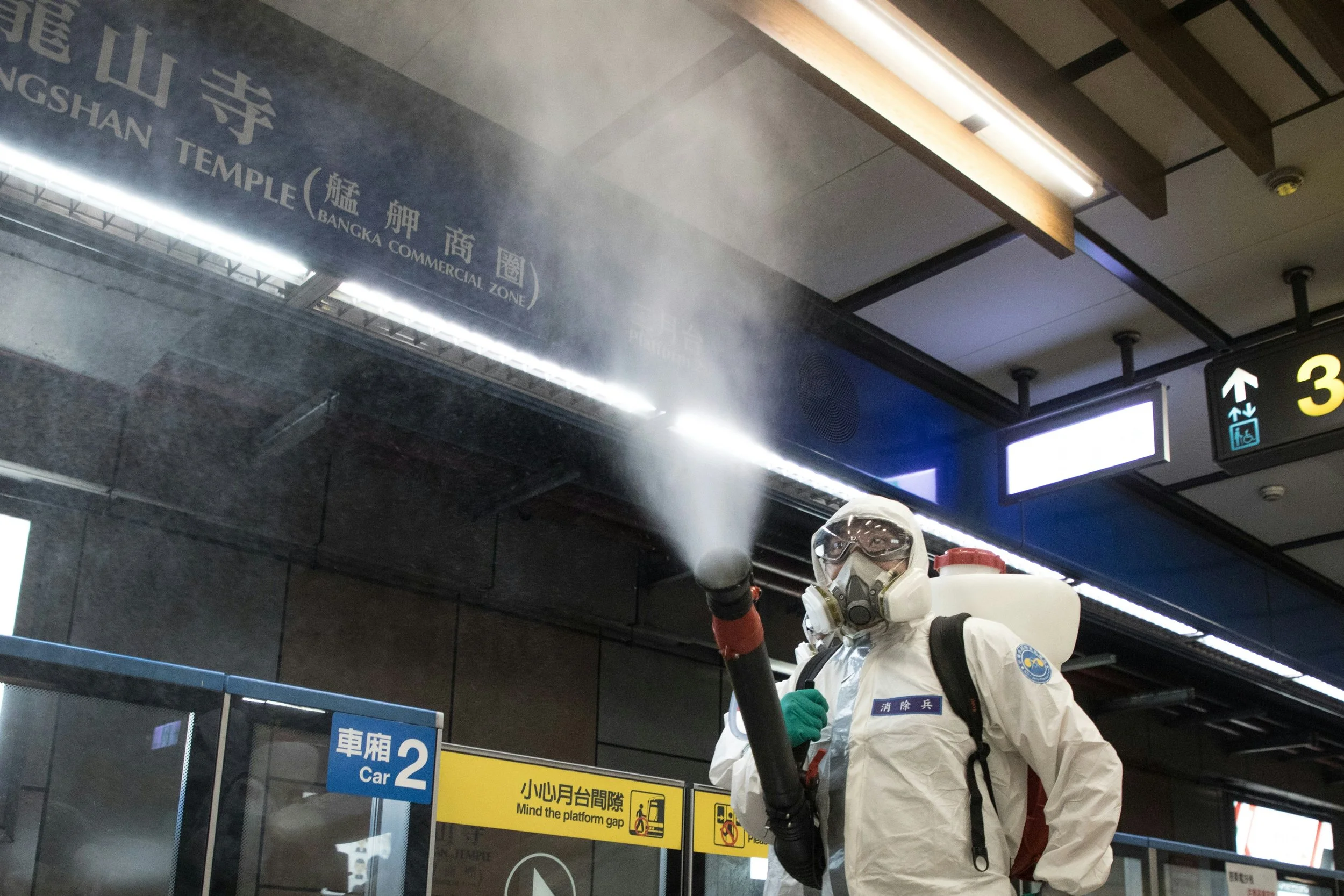
When COVID-19 swept the world, governments invoked sweeping emergency powers and tools meant for war or catastrophe to restrict movement, control information, and consolidate authority. The pandemic tested the balance between public health and civil liberties, revealing how quickly exceptional emergency powers could become normalized.
The pandemic forced governments to navigate the tension between urgency and accountability. Rapid action saved lives, but emergency governance could further erode trust in institutions where transparency was weak. And once leaders exercised exceptional powers, rolling them back proved politically difficult.

What to look for in the November 5, 2025, oral arguments before the U.S. Supreme Court in the IEEPA tariffs case
Oral arguments are scheduled for November 5, 2025, in V.O.S. Selections, Inc. v. United States, also known as the Tariffs Case or the International Emergency Economic Powers Act (IEEPA) case. The fundamental issue at stake is whether the President has authority under IEEPA’s grant of emergency powers to rewrite the United States tariff schedule. While IEEPA grants the President broad authority to “regulate . . . importation or exportation” of property as necessary to address “unusual and external threat(s)”, IEEPA does not specifically grant the authority to impose tariffs. The ability to impose tariffs has traditionally been viewed as a core aspect of Congress’s Article 1 authority to collect taxes, duties, imposts and excises, and to raise revenue.
The IEEPA Tariffs Are Based on Pretext
On April 2, President Trump declared that the U.S. trade deficit in goods was a national emergency and raised tariffs to the highest level in 100 years to address it. Three courts have now ruled that those tariffs are illegal, and an appeal by the government will soon be heard by the Supreme Court. As I write elsewhere, the decisions striking down the tariffs are persuasive and should be upheld. But each also ignores a key question: whether the U.S. trade deficit constitutes an “unusual and extraordinary threat” that justifies emergency measures in the first place.

One Week of Trump’s DC Takeover Attempt: An analysis of the president’s use of military, police, and security services in the nation’s capital - Just Security
A week ago, President Donald Trump and members of his cabinet announced a takeover of law enforcement functions in Washington, D.C. using three tools: deployment of elements of the D.C. National Guard (and National Guard troops from several cooperating states as well), invocation of a statutory emergency power to requisition the services of the city’s Metropolitan Police Department, and a surge of federal law enforcement to the city’s streets, including Department of Homeland Security, Federal Bureau of Investigation, and other federal agents. Over the past week, 800 D.C. National Guardsmen have been mobilized for operations in the city, with hundreds more state National Guardsmen on their way, and 500 newly deployed immigration and other federal agents are patrolling the streets or have set up checkpoints. At the same time, the district and the White House have engaged in a power struggle over control of the city’s police department…

Unprecedented use of “emergency” power - Brennan Center for Justice
Not even a year into his second term, President Trump has (as of 11 August 2025) declared 11 national emergencies, exceeding every president’s single-term total except for his own previous record of 13 national emergency declarations.
An embedded chart in this report depicts National emergencies declared annually by U.S. Presidents, from 1979 to 2025 (as of 11 August 2025)…
El Salvador opens path for Nayib Bukele to stay in power indefinitely
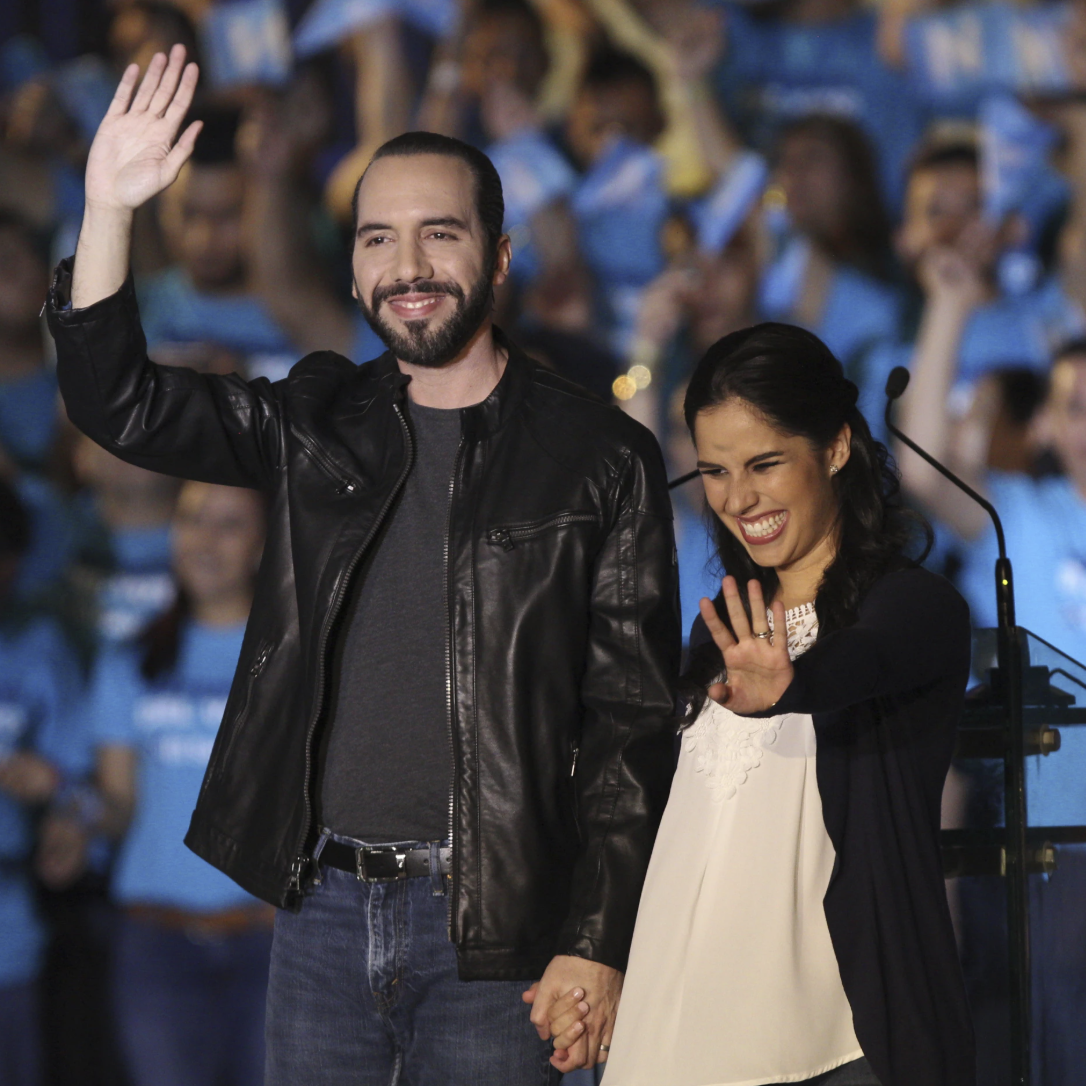
Per reporting from the Associated Press, on 31 July 2025, El Salvador's Legislative Assembly pushed through a constitutional reform overnight eliminating presidential term limits, fueling concerns that it paves the way for President Nayib Bukele to indefinitely stay in power…

Donald Trump keeps declaring national emergencies. Why?
The Vox article, “Donald Trump keeps declaring national emergencies. Why?” published on May 18, 2025, examines President Trump’s unprecedented use of national emergency declarations during the first 100 days of his second term. As of this writing, he has declared eight national emergencies across various domains, including the southern border, energy, trade, drug trafficking, and the International Criminal Court. These declarations grant him access to special powers outlined in over 150 legal provisions, enabling actions beyond or against congressional authorization. The article features insights from Elizabeth Goitein of the Brennan Center for Justice, who discusses the history and potential for misuse of these powers, especially given the limited checks on presidential authority following a 1983 Supreme Court ruling that removed Congress’s ability to veto emergency declarations…

El Salvador’s Prolonged State of Emergency
According to a 2024 academic analysis published by the Columbia Undergraduate Law Review, El Salvador has continuously extended its state of emergency since March 27, 2022. , using vague constitutional language that allows indefinite suspension of civil liberties. The Salvadoran constitution permits 30-day emergency declarations but includes a loophole allowing renewal if “circumstances continue.” Despite a reported 70% drop in homicides by 2023, the emergency remains in place, now reauthorized more than two dozen times. Under this regime, over two percent of the adult population has been incarcerated, with numerous reports of arbitrary detention, denial of due process, and alleged torture in state custody. The article contrasts El Salvador’s system with South Africa’s constitutional framework, offering it as one model for more accountable governance that integrates checks on emergency power…
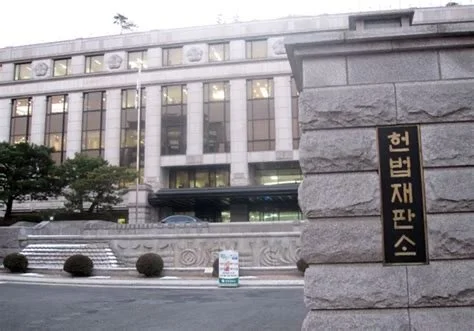
South Korean Constitutional Court rules December 2024 Martial Law order improper
According to The Guardian, on April 4, 2025, South Korea’s President Yoon Suk Yeol was removed from office following a unanimous Constitutional Court decision. The court ruled that Yoon’s December martial law order constituted a “grave betrayal of the trust of the people” and violated the proper exercise of emergency powers. As a result, interim leader Han Duck-soo has been appointed to govern until a new president is elected within 60 days. In a brief statement, President Yoon apologized and acknowledged the court’s decision. The 111-day impeachment process, set against rising concerns for the country’s democratic future, culminated in this decisive action. Additionally, the report notes that Yoon may face a separate criminal trial related to charges of insurrection. South Korea’s conservative party stated that it “solemnly accepts” the outcome, while opposition leaders hailed the ruling as a victory for democracy…