
Spain Activates National Civil Protection Emergency for Major Wildfires
July 2026 | Emergency Monitor
Country: Spain
Emergency Type: Emergency of National Interest
Legal Authority: Law 17/2015 on the National Civil Protection System; declared by Interior Minister Fernando Grande-Marlaska
Date Declared: July 23, 2026
Duration: Until formally terminated following restoration of normal conditions
What Happened?
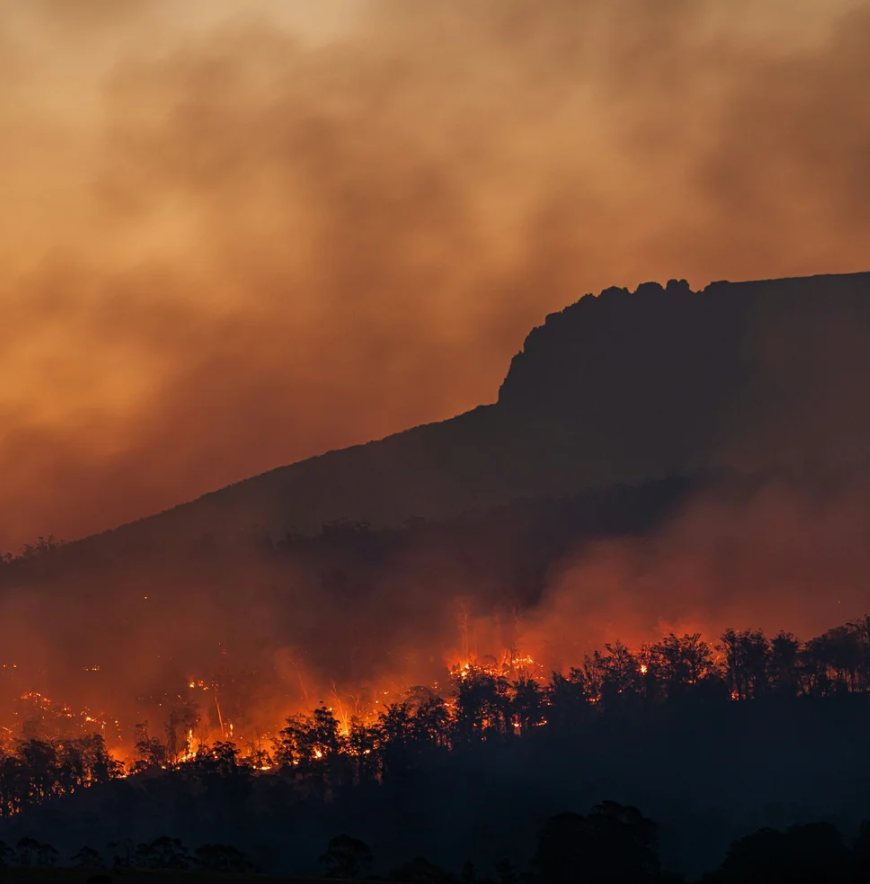
On July 23, 2026, Spain's Interior Minister, Fernando Grande-Marlaska, declared an Emergency of National Interest in response to rapidly expanding wildfires affecting the Community of Madrid and the neighboring province of Ávila. The declaration was later extended to the province of Toledo as the emergency evolved. The decision followed the convergence of several large wildfire fronts west of Madrid during an intense heat wave accompanied by high temperatures, low humidity, and strong winds. Thousands of residents were evacuated or ordered to shelter in place as emergency services struggled to contain fires that threatened residential communities, transportation corridors, and critical infrastructure. The declaration marked the first time Spain had activated its highest level of national civil protection coordination specifically in response to a wildfire emergency.
Why Was the Emergency Declared?
Spain's National Civil Protection System is designed to allow the national government to assume unified coordination when an emergency exceeds the operational capacity of regional authorities or affects multiple autonomous communities. According to the Interior Ministry, several factors justified the declaration:
Simultaneous large wildfires affecting more than one autonomous community.
Rapid fire growth fueled by extreme weather conditions.
Significant threats to densely populated areas west of Madrid.
Large-scale preventive evacuations.
The need to coordinate substantial national resources alongside regional emergency services.
Interior Minister Fernando Grande-Marlaska stated that the concentration of population in the affected areas—including numerous seasonal residences—required exceptional coordination to protect lives and property.
What Powers Does the Declaration Grant?
The declaration does not create a constitutional state of emergency or suspend constitutional rights. Instead, it activates Spain's highest level of civil protection coordination under Law 17/2015.
The declaration authorizes the national government to:
Place overall coordination of the emergency response under the Ministry of the Interior.
Appoint the Commander of Spain's Military Emergency Unit (Unidad Militar de Emergencias, UME) as Operational Director of the emergency response.
Coordinate personnel, equipment, and logistical resources drawn from national, regional, and local authorities.
Mobilize additional state resources wherever necessary.
Direct evacuation operations and other protective measures for affected populations.
Coordinate interregional assistance as the emergency develops.
The measure is intended to unify command across multiple jurisdictions rather than replace ordinary constitutional governance.
Current Situation
The emergency remains active as of July 28, 2026, and firefighters continue battling several major wildfire complexes across central Spain. Strong winds and persistent high temperatures have complicated containment efforts, while emergency personnel supported by aircraft, helicopters, heavy machinery, and Military Emergency Unit deployments continue working to protect communities and critical infrastructure.
Although many residents have returned to their homes, tens of thousands of people have been affected by evacuation orders or shelter-in-place directives during the course of the emergency. Authorities continue to monitor changing weather conditions closely as firefighters work to prevent additional fire fronts from threatening populated areas. The declaration has also highlighted the growing operational challenges posed by increasingly severe wildfire seasons throughout southern Europe.
ISSE Analysis
Spain's declaration illustrates an important form of emergency governance that differs from both constitutional states of emergency and ordinary disaster response. Rather than invoking one of the emergency regimes established under Spain's Constitution, the government activated an existing statutory mechanism that temporarily centralizes coordination of disaster response under national authority. The constitutional order remains unchanged, and ordinary civil liberties continue to apply. What changes is the distribution of operational authority within Spain's highly decentralized system of government. This distinction is significant. Spain's autonomous communities ordinarily exercise primary responsibility for civil protection and emergency management. An Emergency of National Interest allows the national government to assume unified direction when an emergency transcends regional boundaries or exceeds regional response capacity. The declaration also reflects an emerging challenge for democratic governance. As climate-amplified disasters become larger, more geographically extensive, and increasingly resource-intensive, governments may find themselves relying more frequently on extraordinary coordination mechanisms that were originally designed for exceptional circumstances. For ISSE, this case demonstrates that exceptional governance is not always about the suspension of rights or expansion of executive coercive power. It may also involve temporary reallocation of governmental authority in order to coordinate responses to crises that exceed the capacity of ordinary institutions.
Why This Matters
Major natural disasters increasingly test not only emergency services but also the legal frameworks through which democratic governments organize crisis response. Spain's activation of an Emergency of National Interest illustrates how existing statutory mechanisms can temporarily centralize authority while leaving the constitutional order intact. As climate-amplified disasters become more frequent across Europe, monitoring when these powers are invoked, how long they remain in force, and how authority returns to regional institutions will become an increasingly important part of understanding contemporary emergency governance.
Photo by Matt Palmer on Unsplash.
