
We Condemn, Therefore We Recreate Modi's India and the Shadow of the Emergency 1975
We Condemn, Therefore We Recreate Modi's India and the Shadow of the Emergency 1975
Journal Article: We Condemn, Therefore We Recreate Modi's India and the Shadow of the Emergency 1975
Journal: Journal of Extreme Anthropology. Journal of Extreme Anthropology is an international, peer-reviewed, interdisciplinary, open-access and indexed journal that publishes articles written in the fields of anthropology, social sciences, humanities, philosophy and critical theory focusing in particular on extreme subjects, practices and theory.
Date of Publication: June 1, 2026
Author: Shruti Gokhale. Gokhale holds a PhD in Anthropology from the University of California, Santa Cruz. Her research spans law, memory, and political life in India, with a focus on affect, institutional processes, and the everyday workings of democracy and its contradictions.
The article can be found here, and the PDF of the article can be downloaded on the same page, or here.
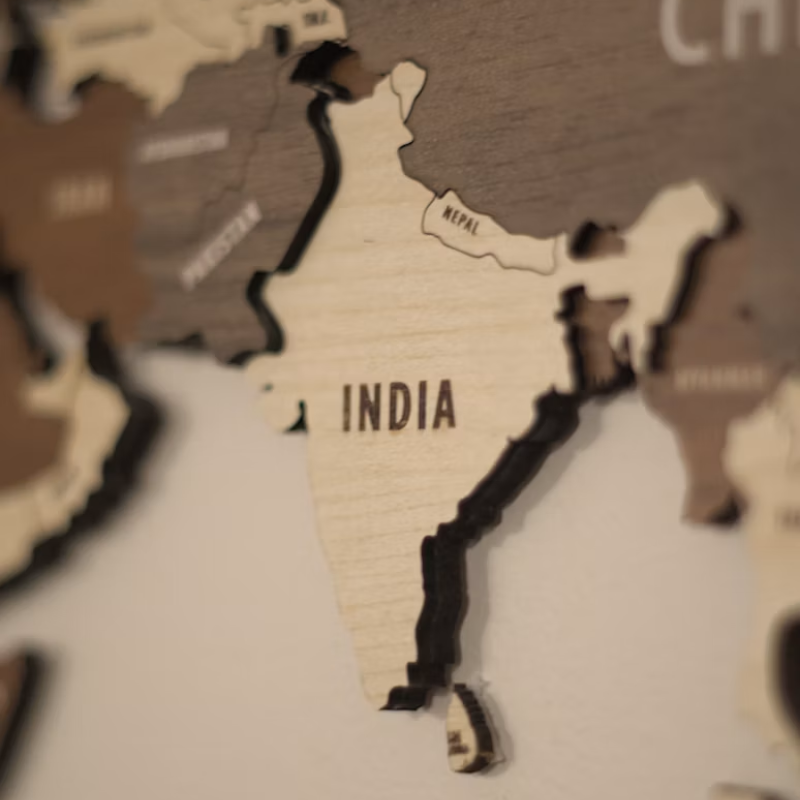
Photo by Will Goodman on Unsplash.
Abstract: In December 2024, during a parliamentary debate marking 75 years of the Indian Constitution, Prime Minister Narendra Modi and leaders of the Bharatiya Janata Party (BJP) repeatedly invoked the 1975 Emergency as the 'darkest' moment in India's democratic history. This article argues that such condemnation does not simply distance the present from the past but enables its reactivation. Through a sustained political and symbolic return to the Emergency, the regime performs rupture even as it reproduces its techniques: the repression of dissent, the management of media, the construction of internal enemies, and the gradual erosion of democratic norms. The article re-conceptualizes this dynamic through the lens of nostalgia. Unlike familiar forms of authoritarian nostalgia that invoke a glorified past, the Indian case mobilizes a condemned and traumatic one. Nostalgia here does not operate as longing, but as a political technology: a mode of attachment that allows the past to be repudiated in discourse while its governing logics are retained in practice. In this configuration, condemnation becomes the condition of repetition. This dynamic also resonates with the logic of haunting, where unresolved violence returns not simply as memory but as an active force shaping the present. Drawing on ethnographic fieldwork, autoethnography, archival sources, and legal analysis, the article traces how the Emergency persists not only as memory but as an operational script embedded in contemporary governance. It further shows how this persistence is sustained through affective attachment, even as it is disavowed. The Emergency thus functions simultaneously as moral alibi and governing template, shaping what is widely described as an 'undeclared Emergency' in the present.
