
Populism through the case of South Korea under President Yoon Suk Yeol's administration (2022 – 2025)
Populism through the case of South Korea under President Yoon Suk Yeol’s administration (2022-2025)
Journal: Social Sciences & Humanities Open (SSHO), which is a fully open access scientific journal covering all areas of the Social Sciences and Humanities. More on the Journal can be found here.
Date of Publication: December 2026 for full journal issue.
Authors: Ta Thi Nguyet Trang and Dang Thuy Linh. Both authors are affiliated with VNU University of Social Sciences and Humanities.
The article can be downloaded from here, and a PDF of the article can be found here.
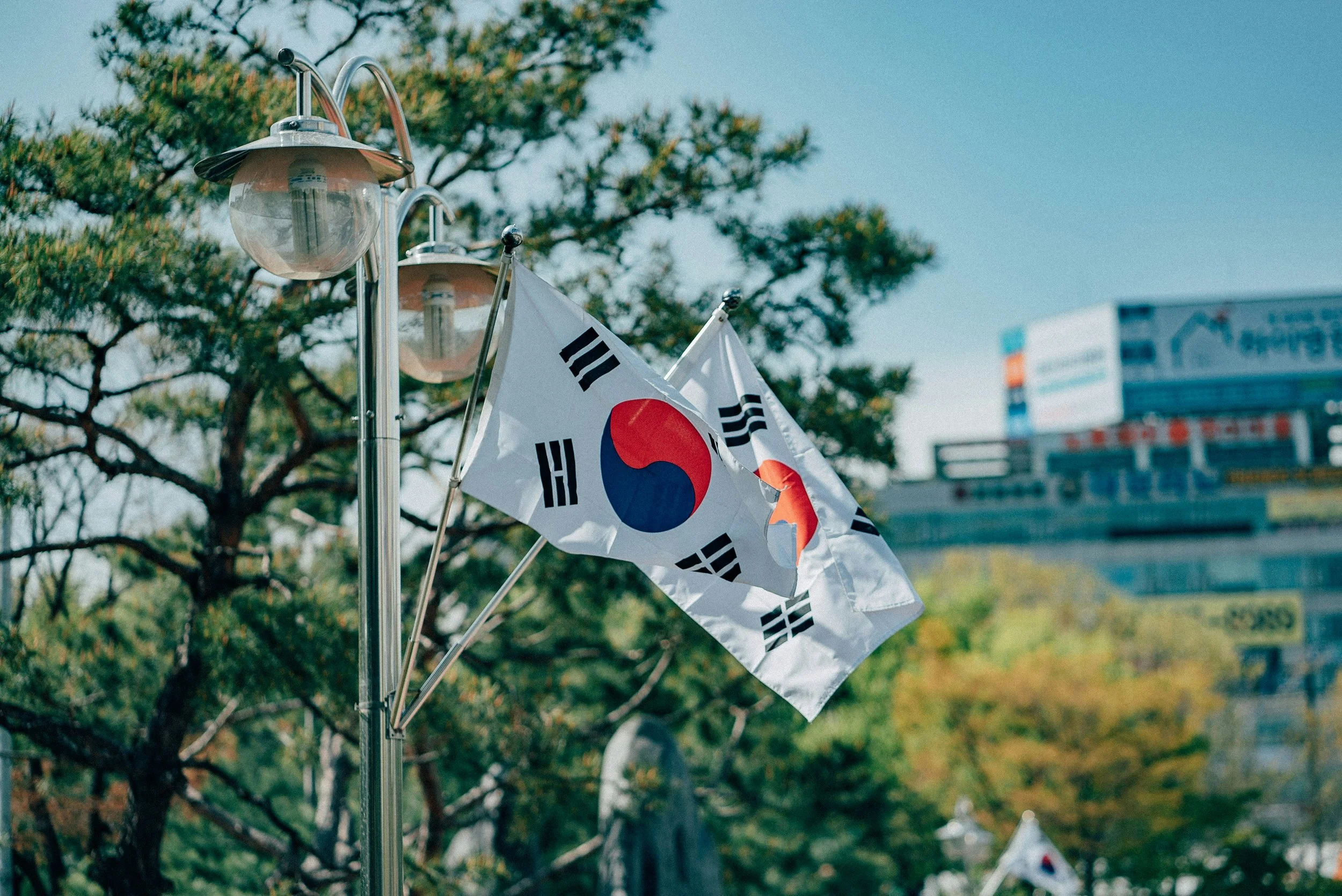
Photo by Daniel Bernard on Unsplash.
Abstract: The dramatic rise and fall of President Yoon Suk Yeol in South Korea (2022–2025) offers a unique lens through which to examine the conceptual and typological boundaries of populism. Yoon's administration combined classic populist anti-elite rhetoric with exclusionary attacks on perceived “enemies of the people,” culminating in a constitutional crisis when he declared martial law in December 2024. This study employs the South Korean case as a critical case to refine the prevailing populism theory by proposing and operationalizing a binary typology distinguishing “tamed” from “radical” populism. It integrates ideational, discursive, and stylistic approaches to demonstrate how populism in power can oscillate between a constitutionally constrained, inclusive, and a radical, exclusionary form. The primary contribution is conceptual: the tamed/radical distinction adds an institutional-procedural axis to existing typologies and complements the established inclusionary/exclusionary and democratic/anti-pluralist frameworks. Empirically, this study provides a systematic three-approach (ideational, discursive, and performative) analysis of the complete administrative arc of Yoon Suk Yeol's presidency, from inauguration through the constitutional resolution of the December 2024 martial law crisis, extending and systematizing the partial treatments already present in Korean populism literature. The analysis shows that South Korea's experience challenges the assumption that radical populism is confined to ethnically exclusionary movements or institutionally weak democracies. The proposed typology requires broader comparative testing before strong generalizations are warranted; its utility here is illustrative and theory-extending rather than universalizing.
Why ISSE Is Recommending This Article: This article offers an important contribution to the growing literature examining the relationship between populism, democratic resilience, and exceptional executive authority. Using South Korea's 2024 martial law crisis as its central case study, the authors argue that populist movements can evolve from constitutionally constrained forms of political mobilization into more radical variants that seek to override democratic institutions through extraordinary measures. The article demonstrates how emergency powers may emerge not only from external crises but also from political narratives that frame ordinary democratic opposition as an existential threat to the state. More broadly, it illustrates how constitutional institutions, judicial review, and civic mobilization can serve as critical safeguards against the normalization of exceptional governance, even after extraordinary powers have been invoked.
