

All Content
Welcome to the Institute for the Study of States of Exception (ISSE) main content page, a single source for all posts from the Institute, including commentary on global events, book reviews, academic literature, links to our podcasts, and additional resources. Check back regularly for more content from us.
“Sovereign is he who decides the exception.”
— Carl Schmitt (Political Theology: Four Chapters on the Concept of Sovereignty, 1922)
The Legal Anatomy of the Body: Health, Rights, and Politics in Times
This interdisciplinary volume explores how public health, digital governance, surveillance, and constitutional authority increasingly intersect through the legal framework of emergency and exception. Spanning law, political theory, medicine, and technology studies, it examines how temporary emergency measures can become embedded within ordinary governance, reshaping the relationship between the state, the body, and fundamental rights.
Carl Schmitt in the Middle East: Unstable Decisionism and the Failure of Political Orders - Samuel Mace
In this new book, ISSE Senior Fellow Samuel Mace critically examines Carl Schmitt's theory of decisionism through the political experience of the modern Middle East, arguing that regimes built upon exceptional authority often generate long-term instability rather than durable political order. The book offers a significant contribution to the study of states of exception by reassessing one of the twentieth century's most influential theorists of emergency power while illuminating the practical consequences of decisionist governance.
The Executive Unbound: After the Madisonian Republic
In this influential and controversial book, Eric Posner and Adrian Vermeule argue that the traditional Madisonian system of checks and balances has been largely superseded by an executive-centered form of governance in which political and public-opinion-based constraints matter more than formal legal limits. The authors contend that the complexity of modern government inevitably concentrates authority in the executive branch and that fears of excessive presidential power are often overstated. Particularly relevant to ISSE’s work, the book raises fundamental questions about executive authority, emergency governance, constitutional constraint, and whether the growth of executive power reflects a constitutional danger, a practical necessity, or an enduring feature of the modern state.
Emergency and EU Law: The Case of Covid-19, Climate Change and Migration
From the Book Preface: The concept for this edited volume emerged during a time when the world was gradually moving away from the emergency measures implemented in response to the Covid-19 pandemic. One of us spent much of the pandemic in the UK, while the other was in Sweden, each of us witnessing very different governmental responses. Having worked together in Lund during the 2015 European migration crisis that saw more than one million people seek asylum in Europe, this had not been our first encounter with emergency measures. During this period, Sweden imposed border controls and ID checks on the Öresund Bridge that connects Lund to Denmark and the rest of the European continent. Sweden was not alone in enacting emergency measures in the form of restrictions on movement within the Schengen Area – Denmark enforced similar measures at its border with Germany, and Germany did the same on its border with Austria. As EU law scholars, we were curious about the impact that emergencies have on the EU: a jurisdiction built on solidarity, free movement and the rule of law.
More precisely, we got to debating the question in which circumstances, if any, fundamental rights could legitimately be suspended in the face of an emergency. And if there were to be such a suspension, who should take responsibility for safeguarding that this exercise of power did not erode procedural and substantive fundamental rights: the EU or national courts, the EU or national parliaments, the public or a different body altogether? What role might proportionality play in balancing different rights in cases of emergency? Sitting in Sweden, which lacks formal constitutional provisions for declaring a state of emergency (except in the case of war), it quickly became apparent that a definition of what counts as an emergency is crucial: could it be that what is to be labelled an ‘emergency’ in one country is approached as a ‘crisis’ in another? What might be the legal implications of such divergencies? Even if we could rally around a common definition of what constitutes an emergency, should we approach the migration crises, the Covid-19 pandemic, and climate change the same way?
The End of Law - Political Theology and the Crisis of Sovereignty
This book examines how Gustav Radbruch, H. L. A. Hart, and Ernst-Wolfgang Böckenförde each addressed the question of the end of law, its function, and its normative foundation within the context of the modern legal and political order. Through a politico-theological reading, it highlights the tension between legal validity and moral legitimacy, as well as the extent to which law can maintain public order without compromising its own claim to justice.
The analysis of Radbruch, Hart, and Böckenförde sheds light on how valid law can become unjust, demanding actions that may conflict with individual judgment or morality. It raises questions about natural law, the relationship between morality and law, and law’s ultimate purpose, suggesting that law and politics represent, at best, a relative good. It addresses the broader crisis of legal authority and state sovereignty, the expanding reach of state power, and whether law should instruct, command, or ultimately point beyond itself.
The End of Law is of interest to scholars in legal theory, political theology, and the philosophy of law.
Law and the Exception: Towards a New Paradigm
This book proposes a paradigm shift in the way that ‘the state of exception’–as it is usually named in legal and political theory–is to be understood. Building on the assumption that the exception is a heuristic idea that is still a relevant category for a critical deconstruction of law, this book argues that it needs to be rethought outside the boundaries of its traditional understanding. To this end, the book offers two strategies. First, it develops the ideas of ‘exceptionality’ and ‘exceptionalisation’ in order to grasp how measures, norms and mechanisms that clearly have an exceptional character are no longer confined within the boundaries of classic institutions such as the state of exception, martial law, the state of emergency and so on. As demonstrated recently during the COVID-19 pandemic, legal systems may dissimulate the exceptional as the normal, avoiding the use of formal states of exception and adopting measures that are of exceptional nature. This book maintains that it is necessary to think of ‘exceptionality’ outside of its usual legal footholds. Emergency laws are considered here as part of a more general sphere of exceptionality that must be understood as the product of a process of the accumulation of symbols, practices, notions and images that are only partially expressed through law, despite having long populated the legal imagination. Second, the book offers an analysis of the inner exceptional life of liberal constitutionalism: the subterranean authoritarian drives dissimulated by the rule of law.
This book will interest scholars and researchers in legal and political theory, as well as continental philosophy.
Book Review by Vik Kanwar - State of Exception (Stato di eccezione). Translated by Kevin Attell
Agamben has long argued, in a formulation best distilled in his book Homo Sacer: Sovereign Power and Bare Life, that the “camp”—be it concentration camp or refugee camp—is the paradigm of political modernity insofar as legal categories and the idea of sovereignty have served as a justification for abandoning ‘‘enemy bodies’’ to zones outside strict legality. In Homo Sacer, Agamben is steeped in the most dystopian and rights-skeptical thought of theorists such as Michel Foucault, Walter Benjamin, Hannah Arendt, and Carl Schmitt, yet he still emerges with a relatively redemptive ethical sensibility, one that would be appealing to those who seek to defend human dignity against cruelty. Certainly, his persistent invocation of the Holocaust to dramatize modern forms of exclusion and outlawry puts him in the company of twentieth-century ethicists ranging from Emmanuel Levinas to Judith Shklar, who drew upon the Holocaust as the ultimate experiential grounding for their theories. In my view, Agamben can be read as a philosopher of deep ethical concern and originality but, to read him charitably, one must become accustomed to his signature rhetorical devices of hyperbole, paradox, and “indistinction” (whereby Agamben frames conceptual opposites, such as security and insecurity, rights and repression, or public and private, as deeply intertwined). It is helpful to approach a number of these conceits as thought experiments. For example, the use of hyperbole is not very different from “slippery slope” arguments. As for paradox and indistinction ...it seems fair to say that states of exception—perhaps more so than any other subject matter of legal theory—constitute an area of inquiry where these discursive vices can actually be seen as virtues. The language of indistinction and undecidability is often descriptively appropriate, and this is evident in numerous scholarly accounts of the blurred distinctions between war and crime, sovereignty and territorial control, combatant and civilian, legal and political decisions, all of which have increased since September 11, 2001.
In Agamben’s new book, State of Exception, a sequel to Homo Sacer, he draws explicitly on lectures delivered in New York and elsewhere in the years since 9/11, repeating the central themes of his past work and transposing them to a different key. Here, rather than speaking of the “camp,” he argues that the “state of exception” is a primal form of modern government. While innumerable debates and insights may be drawn from this slim volume, I will limit this review to three areas: (a) Agamben’s historical account of the state of exception, including his most controversial claim, in which he finds a basis for the practice not in the Roman dictatorship but in an obscure public ritual known as iustitium; (b) recent constitutional theory that refutes Agamben’s statement that the state of exception (even as he redefines it) has been ignored as a “question of public law”; and, finally, (c) the curious absence of Agamben’s distinctive theories of “spaces of exception,” which had been productively developed in earlier works but are muted here in service of a larger ethical thesis.
States of Exception: Theory and Practice
The concept of “state of exception” has a rich historical background and has become increasingly prevalent in contemporary discourse. This term is commonly used to draw attention to the current political and legal conditions, emphasizing an extraordinary event or process. However, behind this expression lies a complex concept and a detailed historiography.
Throughout history, the state of exception has been utilized as a means to safeguard the threatened sovereignty of the State and its institutions, sometimes even leading to the suspension of certain rights and guarantees. This state exists at the intersection of a crisis and enduring governmental practices, with the potential to evolve into dictatorships in extreme cases.
In essence, the state of exception represents a delicate balance between maintaining order and protecting individual freedoms. It serves as a critical tool for governments to navigate through times of uncertainty and crisis, while also posing significant challenges to the principles of democracy and rule of law.
This book endeavors to provide a comprehensive examination of the term “states of exception” and its significance in various fields such as politics, law, history, philosophy, and sociology. By offering a conceptual analysis of the term, its historical application, and implications, as well as an international historiographical perspective, this book aims to shed light on the complexities surrounding this topic.
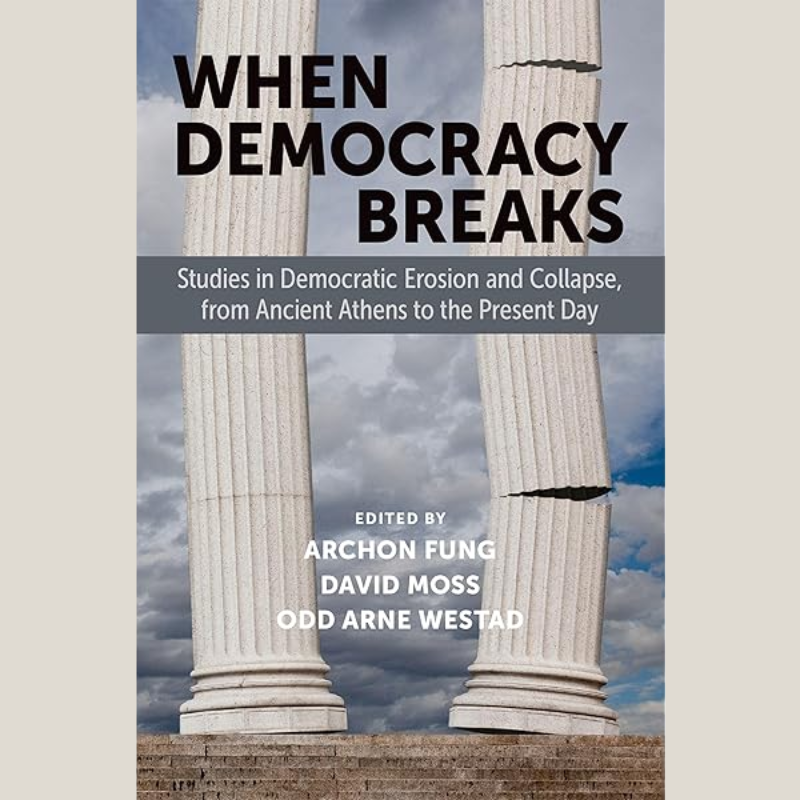
The Indian Emergency (1975-1977) in Historical Perspective - from the book When Democracy Breaks
Democracy and authoritarianism have been historically bound in a complex and sometimes intimate relationship. The global emergence of quite a few democratically elected authoritarian leaders today has made explicit what had always been an underlying feature of the history of democratic practice. The authoritarian strain was perhaps more marked in countries aspiring to democracy by shedding an inheritance of colonial despotism. India’s experiment with democracy after winning independence from British rule offers a fascinating case study of the struggle to establish democratic norms amid the lure of falling back on the structures of an authoritarian legacy.
States of Exception: Law, History, Theory
This book addresses the relevance of the state of exception for the analysis of law, while reflecting on the deeper symbolic and jurisprudential significance of the coalescence between law and force.
The concept of the state of exception has become a central topos in political and legal philosophy as well as in critical theory. The theoretical apparatus of the state of exception sharply captures the uneasy relationship between law, life and politics in the contemporary global setting, while also challenging the comforting narratives that uncritically connect democracy with the tradition of the rule of law. Drawing on critical legal theory, continental jurisprudence, political philosophy and history, this book explores the genealogy of the concept of the state of exception and reflects on its legal embodiment in past and present contexts – including Weimar and Nazi Germany, contemporary Europe and Turkey. In doing so, it explores the disruptive force of the exception for legal and political thought, as it recuperates its contemporary critical potential…
What’s in a Name? European Uses of States of Exception During COVID-19, from the book Covid-19 Containment Policies in Europe
The COVID-19 pandemic has led a large range of European governments to rely on emergency powers to try to contain the pandemic. While emergency legislation grants the executive with more extensive powers to handle an immediate threat to the survival of a community, the extent of such powers, their modalities of activation as well as the monitoring and other roles of counterpowers vary from one country to the next. This chapter analyses the diversity of practices and legal provisions hidden behind the reference to a “state of emergency.” It first shows that the legal basis of such provisions differs. While some governments activated constitutional provisions, others relied on pre-existing crisis-management legal frameworks. Second, the timing and duration of emergency measures ranged from 65 days (Estonia) to 861 (France). It then assesses whether differences in the legal framework used translated into differences in the stringency of the measures introduced. On the one hand, state of emergency provisions shield democracy against a concentration of powers in the hands of the executive better than disaster-management legislation does. On the other hand, the activation of emergency powers also coincides with more stringent restrictions of fundamental rights. In strengthening legal preparedness to future crises, policy makers need to be particularly cautious in devising legal arsenals that maintain high levels of democratic governance and oversight in crisis times…
Political Theology
Carl Schmitt’s influential treatise, Political Theology (1922), represents a seminal and provocative contribution to political theory, particularly in its exploration of sovereignty, law, and states of exception. It remains a pivotal, yet contentious work for understanding the mechanics of sovereign power and the legal foundations of states of exception. Schmitt's central thesis, that the sovereign is defined primarily by the authority to decide upon exceptions or extraordinary circumstances, recasts traditional understandings of political legitimacy and authority…

State of Exception
Giorgio Agamben’s State of Exception (2005) is among the most influential texts in contemporary political philosophy addressing the implications of emergency powers and their relationship to democratic governance. Agamben not only builds upon but fundamentally reconfigures Carl Schmitt's seminal theory of sovereignty, meticulously unpacking what he identifies as the central paradox facing modern states: how democratic governments suspend the law purportedly in its defense. For Agamben, the state of exception represents a "zone of indistinction" where the boundaries between law and lawlessness, democracy and authoritarianism, become dangerously blurred…
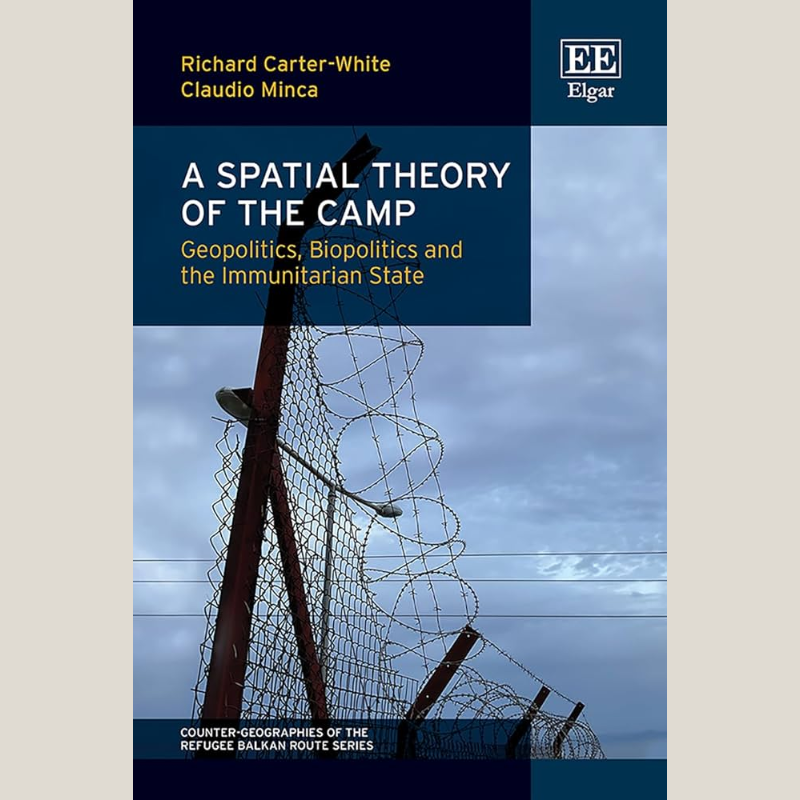
A Spatial Theory of the Camp: Geopolitics, Biopolitics and the Immunitarian State
From concentration camps to refugee settlements, there is little consensus about what exactly defines ‘the camp’. This timely and comprehensive book adopts a geographical perspective to develop a spatial theory of the camp, advancing the interdisciplinary field of camp studies. Richard Carter-White and Claudio Minca explore the spatial logics and practices that unite different camps, demonstrating why the camp has become such an integral tool of contemporary governance and what this reveals about the geopolitics and biopolitics of the modern nation-state…
Necropolitics
In Necropolitics (2019), Achille Mbembe, expanding upon a 2003 essay of the same name, offers a profound reconceptualization of sovereign power that significantly advances our understanding of states of exception. Building upon Michel Foucault's biopolitics, Mbembe introduces "necropolitics"—the politics of death whereby sovereign power, deeply entrenched in colonial and racial hierarchies, dictates who may live and who must die. What distinguishes Mbembe's intervention is his insistence that states of exception have evolved beyond temporary suspensions of normal legal order (as theorized by Carl Schmitt and Giorgio Agamben) into permanent techniques of governance, particularly for subjugated populations…
Emergency Provisions and Constitutional Safeguards in India, from the book Contours of Contemporary Legal Research: A Multidisciplinary Perspective: Volume 1: Foundations and Frontiers of Public Law
Emergency provisions in the Indian Constitution establish a framework that allows the government to respond to crises threatening the sovereignty, integrity, security, or the constitutional machinery of the nation. This framework, articulated in Part XVIII of the Constitution, is categorized into three types: National Emergency, State Emergency (President's Rule), and Financial Emergency. Each type has its own specific criteria and implications for the political and civil rights of citizens. The safeguards embedded in these provisions aim to ensure that the use of emergency powers is not arbitrary, protecting democracy from potential misuse. This paper examines the historical context, rationale, and implications of these provisions, alongside the constitutional safeguards designed to prevent abuse of power…
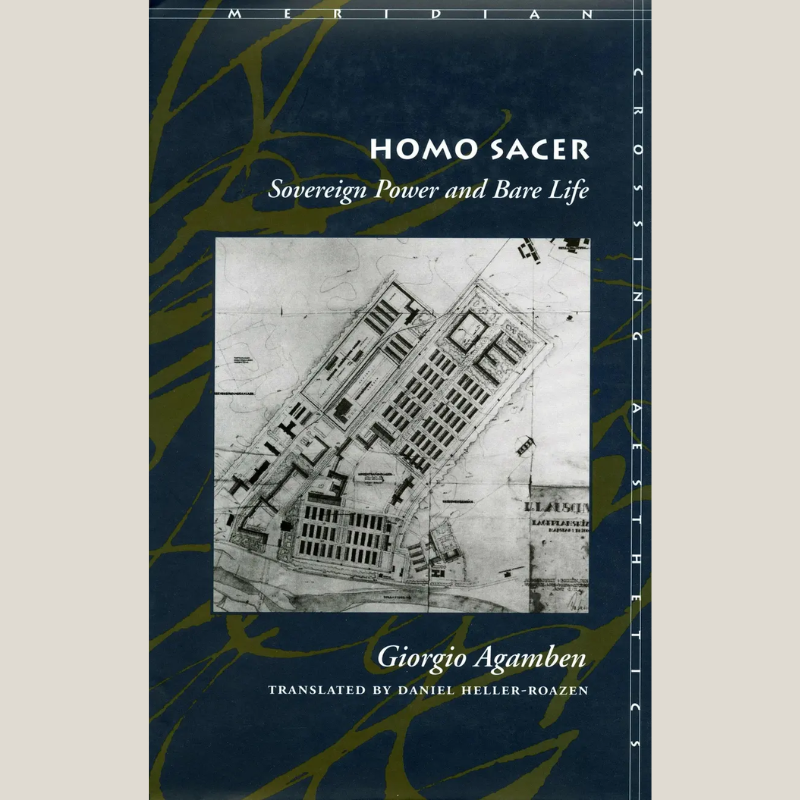
Homo Sacer
Giorgio Agamben’s Homo Sacer: Sovereign Power and Bare Life (1995) stands as a watershed text in political philosophy, offering an incisive analysis of how states of exception can threaten democratic governance. Building on Carl Schmitt's provocative claim that "the sovereign is he who decides on the exception," Agamben uncovers the troubling paradox at the heart of modern political systems: that the legal order in fact depends on the power to suspend itself…
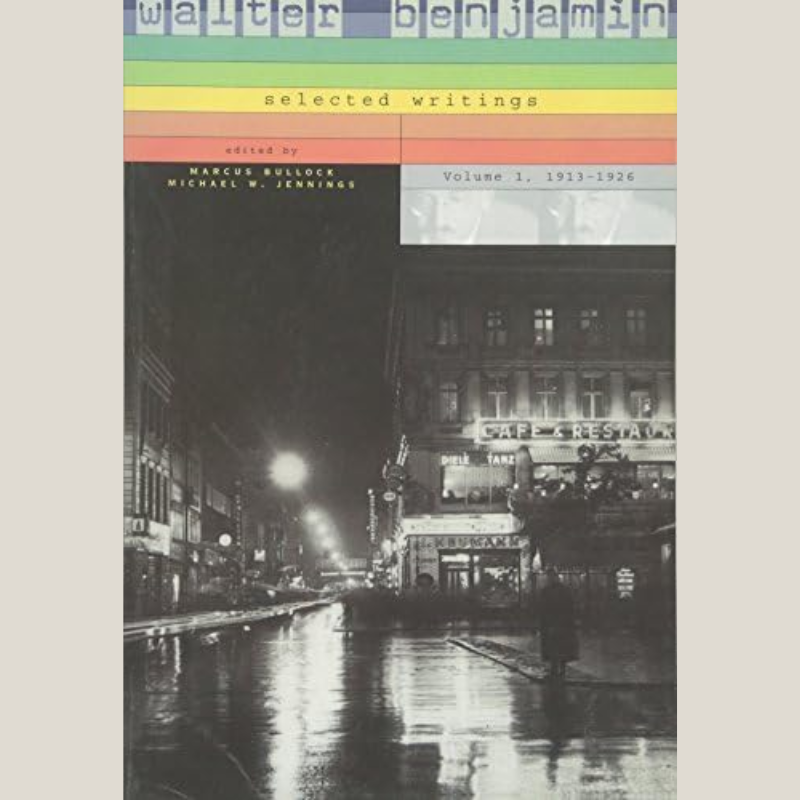
Critique of Violence
Walter Benjamin’s 1921 essay Critique of Violence offers a profound philosophical investigation that has become foundational to understanding the complex relationships between law, violence, and sovereign power. The essay's significance to studies of states of exception lies in Benjamin's careful dissection of violence's role in legal frameworks—not as aberrations, but as structural features of political systems themselves…
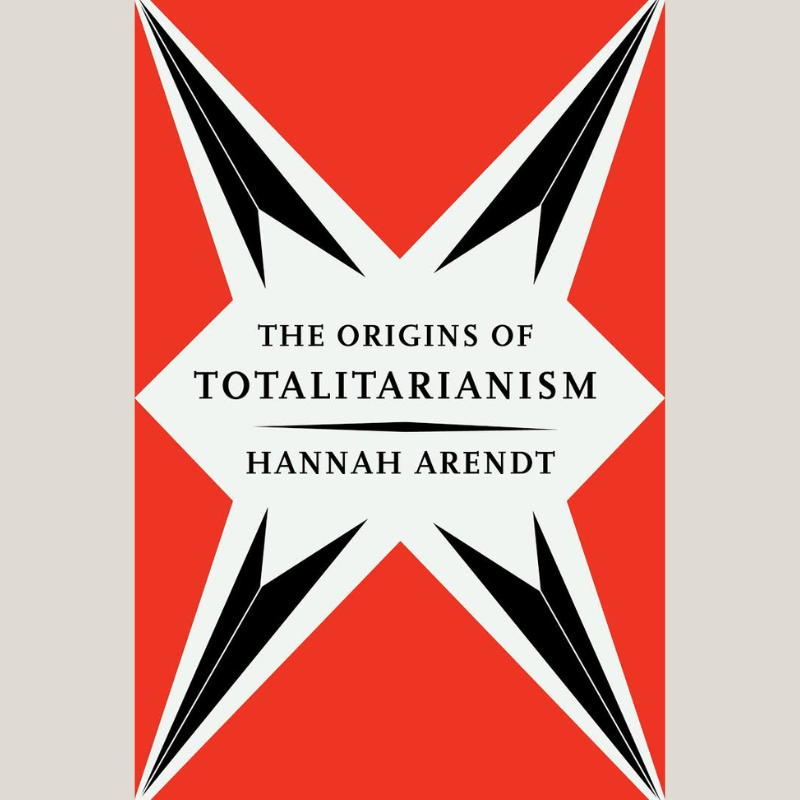
Origins of Totalitarianism
Hannah Arendt’s The Origins of Totalitarianism (1951) stands as a foundational text for understanding how democratic societies can transform into totalitarian regimes. While Arendt doesn't explicitly employ the term state of exception her work foreshadows the concept, detailing how the seemingly temporary suspension of legal protections during crises can become a permanent feature of authoritarian rule. Her work meticulously traces how factors such as European colonialism, antisemitism, and the manipulative use of ideological propaganda facilitated unprecedented concentrations of executive power in Nazi Germany and Stalinist Russia…